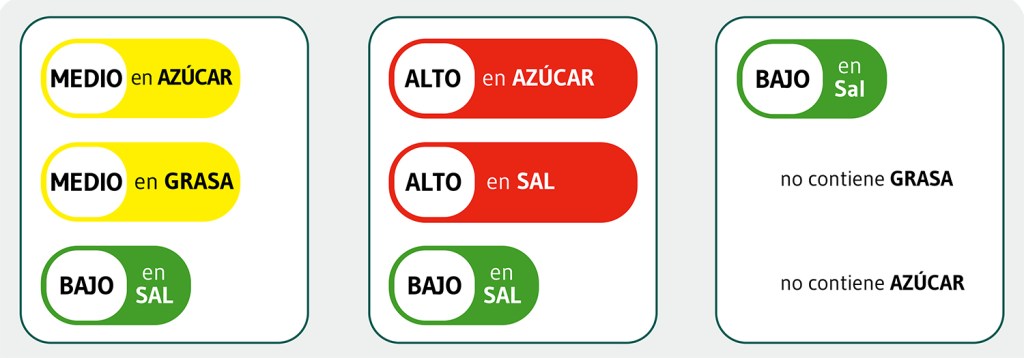
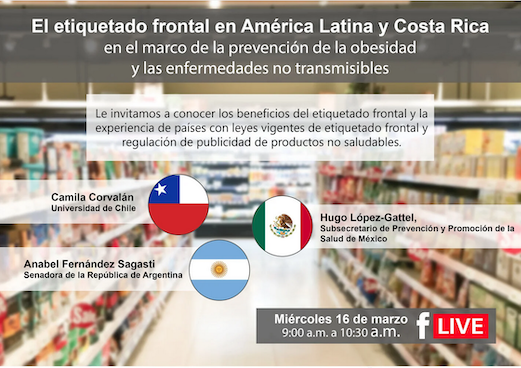
Objective: To contribute to the discussion on the aspects concerning front labeling regulations of food products and non-alcoholic beverages, presenting the international experience generated in the countries of the region, sharing lessons learned and new evidence obtained. We seek to sensitize national stakeholders from all sectors on the public health impact of measures such as front-of-pack nutrition labeling to improve nutrition and contribute to stop the increase of overweight and obesity and non-communicable diseases in the population.
Month: March 2022
Article: Misleading Labeling and Product Quality
Author: Frances Xu Lee, 2022.
Using a positive term in labeling a product may mislead buyers into expecting the product to have a higher quality than the true quality. However, given the limitation that the labeling language has to be simple, completely eliminating inflation of the buyers’ beliefs by a positive term will also eliminate information transmission of the product quality. Information transmission is needed to motivate the seller to invest in the quality in the first place. A “reasonable consumer” standard that holds any labeling that has misled a reasonable consumer liable results in too little use of the positive term and too little effort in providing the quality valuable to the buyers.

The Americas – Costa Rica: New law on the use of hemp for industrial purposes in food and beverages
The President of the Republic, Carlos Alvarado, signed the “Law of Cannabis for Medicinal and Therapeutic Use and Hemp for Food and Industrial Use” No. 10,113 after the efforts of the Legislative Assembly to approve the bill in second debate, considering the partial veto issued by the Executive Branch that allowed correcting some inconsistencies in the original text.
One of its objectives is to authorize the production, industrialization and commercialization of hemp for industrial and food use and cannabis for exclusively medicinal and therapeutic purposes, and its derivative products.
The executive has expressed its commitment to have the regulation ready before the end of the current administration.

Article – Ecuador: Public Policies, Traffic Light Signpost Labeling, and Their Implications: The Case of Ecuador
This study analyzes the traffic light signpost labeling that is included in processed foods, through which consumers are informed about added fat, sugar, and salt levels. At the same time, the awareness and use that the public make of this labeling, introduced by the Ecuadorian government as part of their Good Living health program, was also studied. A questionnaire was given to some 419 students from Ambato, Ecuador of both genders and from different economic circumstances. Subsequently, a descriptive analysis of the collected data was carried out, and through inferential statistics, relationships were established between the responses to the questionnaire and the factors identified. The results showed that most people are aware of traffic light signpost labeling at the time of purchase, although some consumers tend to mistakenly associate the indicators (green, yellow, red) with the food-hazard levels of the products. The opinions surveyed demonstrated a vague meaning and usefulness associated with the traffic light system.

The Americas – Argentina: Amendment to the Argentine Food Code on the quality requirements for table salt
By means of Joint Resolution 32/2021, amendments to the Codiga Alimentario Angentino (CAA in Spanish) on the requirements for table salt are incorporated through the modification of articles:
- 1265: Process of elaboration and quality parameters.
- 1266: Denomination according to granulometry.
- 1272: Iodine content and permitted food additives.
Salt intended for industrial use, food or otherwise, is excluded from the above obligation and in such cases the legend “Industrial use” must be entered.
- 1275: Use of packaging and labeling.