Peru – Clarification on food additive sanitary authorization applications

The General Directorate of Environmental Health (DIGESA in Spanish) issued the COMMUNICATION N°16-2022-DIGESA/MINSA on Clarification on applications for sanitary authorizations of food additives.

  1. Directorial Resolution No. 0067-2022/DIGESA/SA of May 17, 2022 annulled Directorial Resolution No. 0775-2003/DIGESA-SAF, which approved the Manual of Procedures for Sanitary Authorization of Food Additives.
  2. In this regard, it is brought to the attention of those concerned that Export Certificates may be requested to this health authority through the digital desk of the Ministry of Health (https://www.gob.pe/20416-acceder-a-mesa-de-partes?child=10886), in accordance with their right to request1.
  3. It should be noted that, according to the current legal framework, Peru does not require Sanitary Authorizations for Food Additives for the importation of industrialized foods.

Ecuador – NTE INEN 1500 (3R) Raw milk. Qualitative test methods for the determination of adulterants and contaminants

The Ecuadorian Standardization Service published the draft revision of INEN 1500 (3R) Raw Milk. Qualitative test methods for the determination of adulterants and contaminants. This standard establishes the qualitative test methods for the determination of certain adulterants and contaminants in raw milk.
Consultation end date: 2022-09-02

Ecuador – NTE INEN 9 (6R) Raw milk. Requirements

The Ecuadorian Standardization Service published the draft revision of NTE INEN 9 (6R) Raw Milk. Requirements. This standard establishes the requirements for raw cow’s milk intended for processing into edible dairy products.
Consultation end date: 2022-08-26

Chile – Draft food additive amendment and technical standard for food additives

This proposal has been prepared by the Advisory Working Group on Food Additives (03 February 2021, Exempt Decree No. 08, Ministry of Health). For its preparation, a “Food Classification System” has been established based on the principles of the Codex Alimentarius, adapting some of its headings, definitions and examples to the national reality and specifically to the provisions of DS 977/96, in order to allow the use of food additives in each food category.

The descriptors of the food categories established in the Technical Standard on Food Additives are not intended to be legal designations of the products for labeling, but serve to validate the additives and limits that are allowed in them. Likewise, the Food Category System is hierarchical in nature, which means that when the use of an additive is recognized in a general category, such use is recognized in all its subcategories, unless otherwise indicated.

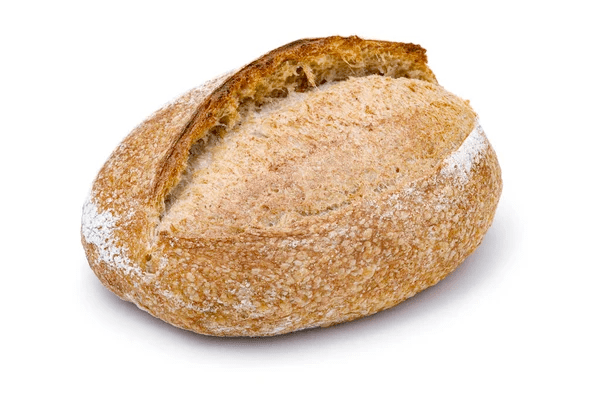
Argentina – Amendment to allow to include in the labeling of bread: Artisanal Bread

Article 725 tris is hereby incorporated into the Argentine Food Code (AAC) and shall be worded as follows: “Article 725 tris: The label of the different types of bread defined in this Chapter may include the legend “Bread… of Artisan Production”, indicating the name of the bread in question, provided that they comply with the following requirements:
a. That the elaboration is carried out preferably by means of manual processes; or by minimally mechanized, semi-automatic processes; and always under the control of an operator.

b. The production system shall be discontinuous and daily production.

c. If yeast is included, it must be wet yeast and in accordance with the definition in Article 1256 of this Code.

d. The fermentation process shall not be automated and if fermentation chambers are used, they shall be handled by an operator. The fermentation process must be discontinuous with a minimum time of 2 hours.