The Americas – Argentina: ANMAT bans the sale of food called salt based on crickets

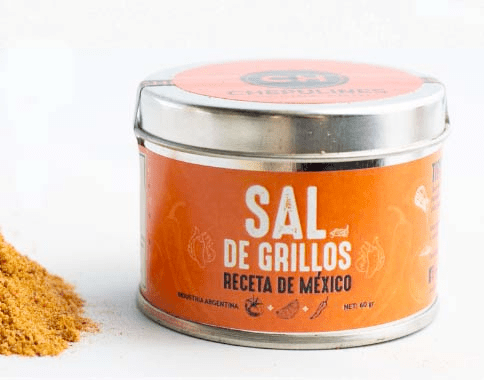
The National Administration of Medicines, Food and Medical Technology (ANMAT in Spanish), through Provision 2675/2022, banned the sale of a condiment used in Mexican cuisine throughout the country. It is a salt made from crickets of the brand Chapulines (crickets) whose label contains the following information: “Net weight 60 g, expiration 10 JUN 2022, Elaborated by Chapulines, City of Buenos Aires – CP 1425, Argentine Industry”.
The decision was taken after verifying that the product lacked sanitary registrations, resulting in a falsely labeled product and, consequently, illegal.
In Argentina, insects are not considered by the Argentine Food Code. But a group of researchers from Conicet and the Food Safety Network published last year a report on the nutritional profile of crickets for human consumption, which once approved by the National Food Institute (INAL in Spanish) would open the way for the development of the edible insects sector in the country.
Articles – Brazil: A comparative assessment of two different front-of-package nutrition label designs: A randomized experiment in Brazil

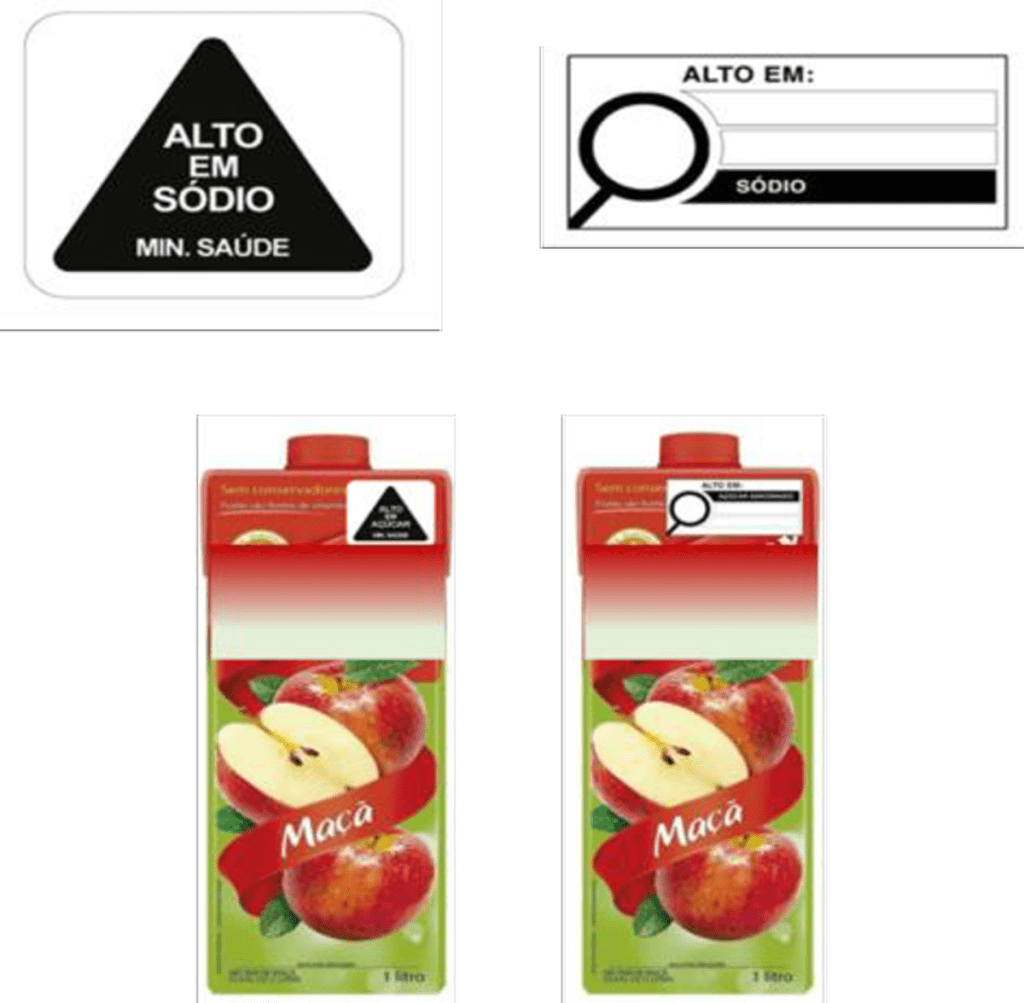
This study compares the effectiveness of different front-of-package label designs in a Brazilian sample (n = 1384). Eligible adults were randomized to one of two study arms and viewed images of snacks with either a triangular warning label (TL) or a rectangular ‘high in’ label with a magnifying glass (ML). They responded to a series of questions that captured label usefulness, understanding, and purchase intentions. Compared to participants in the ML arm, those in the TL arm agreed that the TL communicated important information [Mean (SD) – 5.47 (0.07) vs 4.49 (0.08), p-value <0.001], was a useful tool [Mean (SD) – 6.12 (0.06) vs 5.75 (0.07), p-value <0.001], and was easier to understand as measured subjectively [Mean (SD) – 4.96 (0.07) vs 4.44 (0.08), p-value <0.001]. However, both the TL and the ML performed similarly in communicating nutrient information as measured by the objective understanding of nutrient content [57.09% vs 54.65%, p-value 0.259]. The ML performed marginally better at improving purchase intentions [Mean (SD) – 2.57 (0.07) vs 2.79 (0.08), p-value <0.049]. The current study adds to the growing evidence base on the pathways through which FoP labels, particularly ‘high in’ labels, might influence consumer perceptions and behavior. It is also one of the first studies to provide evidence on the utility of the ML design for Brazil.

Articles – Uruguay: Consumer perspectives on the inclusion of nutritional warnings in retail food establishments

The present work aimed to assess Uruguayan consumers support of the inclusion of nutritional warnings on four types of retail food establishments and to obtain consumer insights on how the warnings could be implemented in such establishments. For this purpose, an online survey was conducted with a non-probabilistic sample of 547 participants recruited via an advertisement on social media. Participants were requested to indicate their degree of agreement with the implementation of nutritional warnings in bakeries, delicatessens, fast-food restaurants and while ordering food online, and to provide ideas on how to include this information for each establishment. Results suggested that the inclusion of nutritional warnings in retail food establishments was positively perceived by participants. Participants highlighted that warnings should be highly visible to customers while making purchase decisions, so they become a relevant cue for making food choices. In particular, the retail display case and menu boards were identified as key locations for warnings in bakeries, delicatessen, and fast food restaurants, respectively. These results contribute valuable insights on how to implement the extension of nutritional warnings to unpackaged foods or foods made and packaged at the point of purchase.