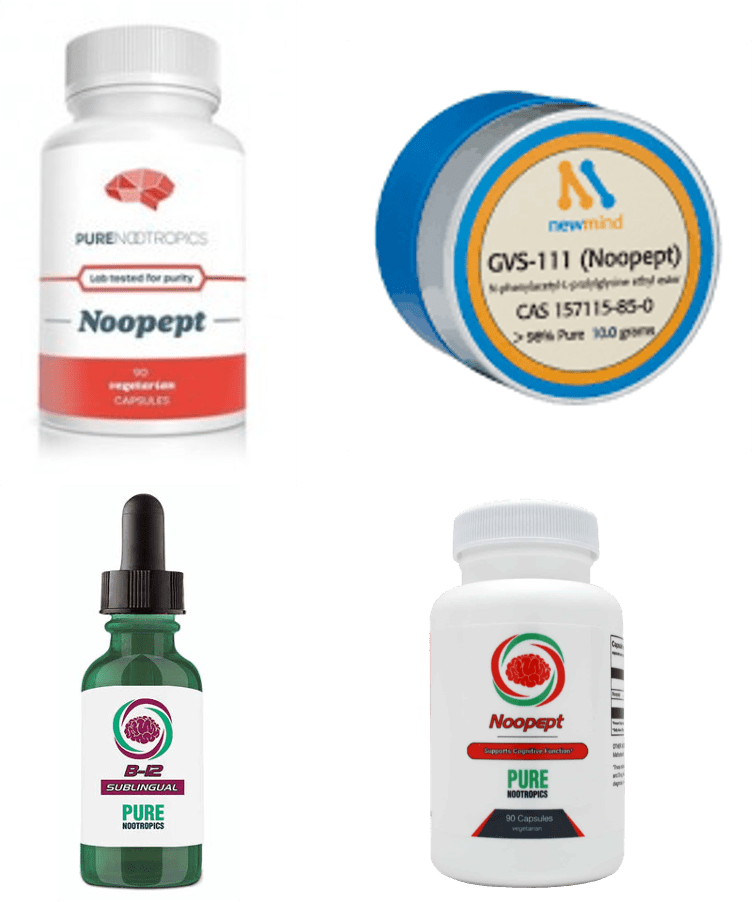
The National Administration of Medicines, Food and Medical Technology (ANMAT) banned the use, distribution and commercialization throughout the country of a series of supplements promoted for “focus, concentration and memory” in capsules, powders and drops. Provision 2105/2022 published this Tuesday in the Official Gazette indicates that these are the products “Newmind – Noopept – GVS -111 powder; Newmind – F-Phenibut powder; PURENOOTROPICS Noopept capsules; PURENOOTROPICS Noopept powder; NOOPEPT sublingual, PURE NOOTROPICS; B-12 sublingual PURENOOTROPICS; and PURENOOTROPICS BACOGNIZE Bacopa Monnier”.
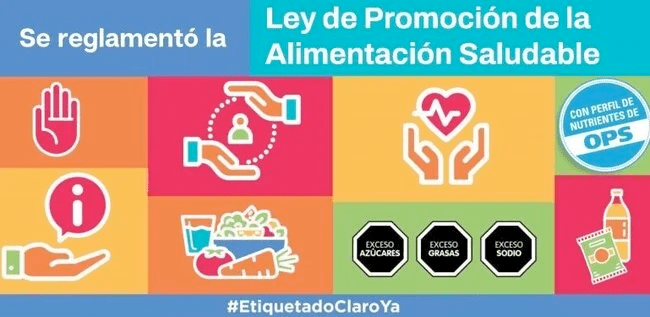
The Pan American Health Organization/World Health Organization (PAHO/WHO), UNICEF and the Food and Agriculture Organization of the United Nations (FAO) highlighted today the regulation by the Executive Power of the Law for the Promotion of Healthy Food, known as the Frontal Labeling Law, which is key to protecting the right to health and access to information about the products consumed by the population.
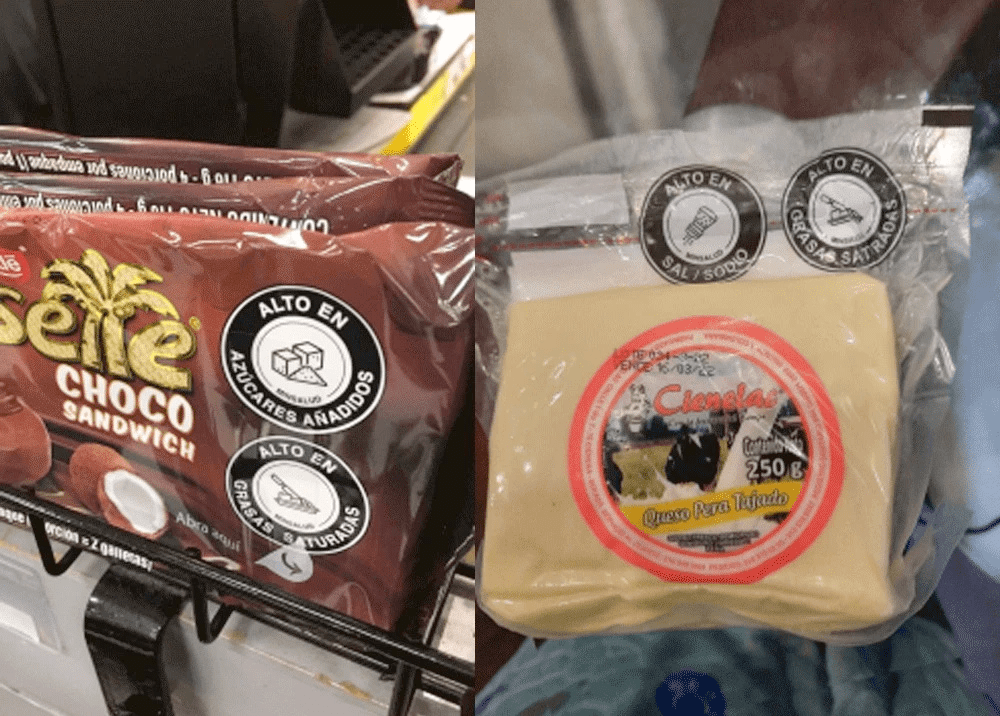
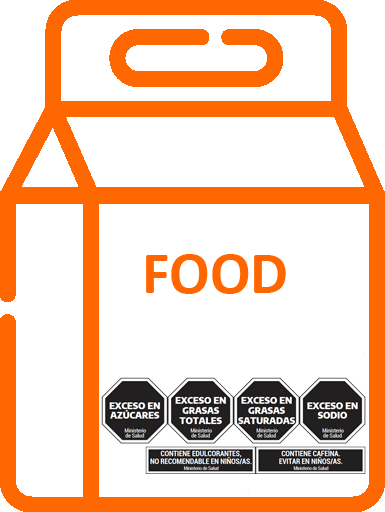
The rule establishes the obligation to carry warnings on the front of the packaging of processed and ultra-processed products -those with excess sugars, saturated fats, total fats and sodium- that children and adolescents consume to a greater extent than adults.
There are already some food packages with circular warning seals, in accordance with resolution 810 of the Ministry of Health, despite the fact that different social organizations have requested octagonal seals. However, the debate that has been generated in several instances is that after the resolution was issued in the Congress of the Republic, a law was issued that modified some guidelines. Among them, it was requested that the front seals be chosen based on the best scientific information, which according to the civil society are the octagonal seals.
The regulation of Law No 27,642 on Promotion of Healthy Eating was published in the Official Gazette through Decree No 151/2022.
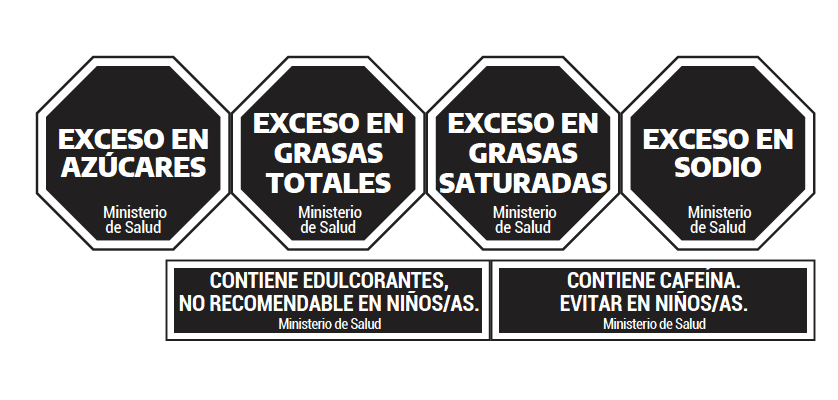
The Decree describes that the use of front labeling with black octagonal graphic warning system on packaged products “turns out to be the most visible, understandable, clear and effective to identify critical nutrients in excess, transmit a greater perception of health risk and a better performance to reduce the intention, both of consumption and purchase in the Argentine territory”.
The Decree describes that the use of front labeling with a black octagonal graphic warning system on packaged products “is the most visible, understandable, clear and effective way to identify critical nutrients in excess, to convey a greater perception of health risk and a better performance to reduce the intention of both consumption and purchase in the Argentine territory”.
Relevant aspects
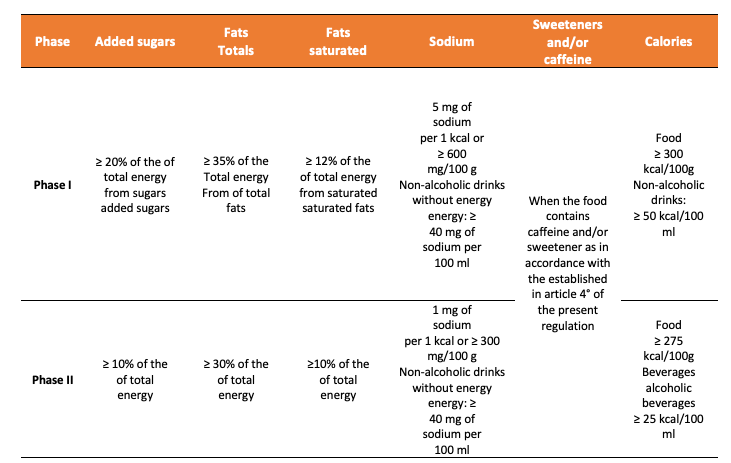
The criteria of the nutrient profile model are set according to the following cut-off points for critical nutrients (added sugars, saturated fat, total fat and sodium) and/or sweeteners and/or caffeine and/or calories, according to values proposed by PAHO, and other types of warnings such as the presence of sweeteners or caffeine.
Cut-off points for critical nutrients, sweeteners and caffeine
Within its scope are included the market players that manufacture, produce, process, fractionate, package, entrust to package or manufacture, distribute, market, import, that have put their brand or integrate the value chain and marketing of food and alcoholic beverages for human consumption” throughout the country.
Processed foods and beverages must bear black octagons of at least 5% of the size of the main face of the container when its composition exceeds a minimum threshold in each of these components.
Commercial premises or points of sale, whether physical or online” are also obliged to comply with the law.
Two Texas-based companies and their owner are banned from advertising or selling dietary supplements, and from making claims that their products treat, cure, or reduce the risk of disease, under a proposed settlement with the Federal Trade Commission.
“This order banning the respondents from the supplement industry should put an end to their long history of making baseless claims that their products can treat various diseases,” said Samuel Levine, Director of the FTC’s Bureau of Consumer Protection. “People with serious health concerns should rely on their health professionals, not advertisements.”


 infoAlimentario