Articles – Brazil: A comparative assessment of two different front-of-package nutrition label designs: A randomized experiment in Brazil

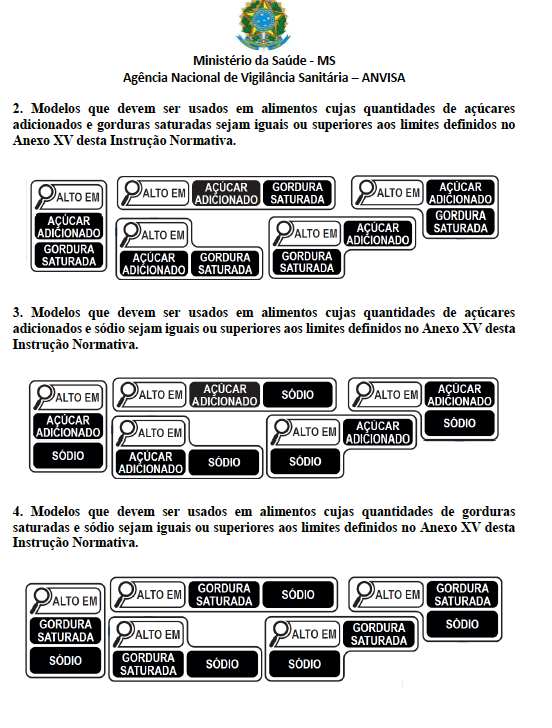
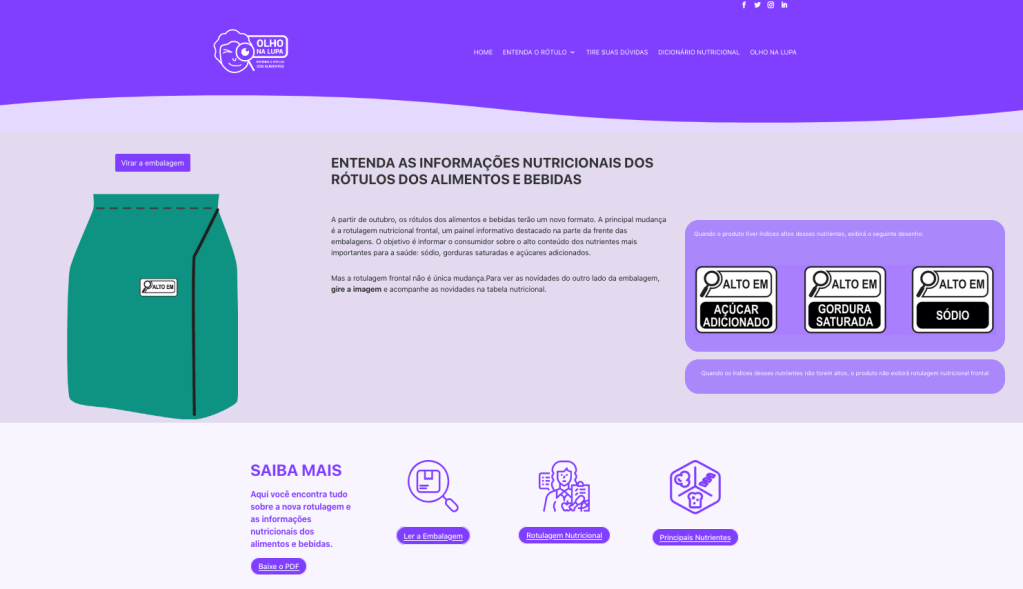
This study compares the effectiveness of different front-of-package label designs in a Brazilian sample (n = 1384). Eligible adults were randomized to one of two study arms and viewed images of snacks with either a triangular warning label (TL) or a rectangular ‘high in’ label with a magnifying glass (ML). They responded to a series of questions that captured label usefulness, understanding, and purchase intentions. Compared to participants in the ML arm, those in the TL arm agreed that the TL communicated important information [Mean (SD) – 5.47 (0.07) vs 4.49 (0.08), p-value <0.001], was a useful tool [Mean (SD) – 6.12 (0.06) vs 5.75 (0.07), p-value <0.001], and was easier to understand as measured subjectively [Mean (SD) – 4.96 (0.07) vs 4.44 (0.08), p-value <0.001]. However, both the TL and the ML performed similarly in communicating nutrient information as measured by the objective understanding of nutrient content [57.09% vs 54.65%, p-value 0.259]. The ML performed marginally better at improving purchase intentions [Mean (SD) – 2.57 (0.07) vs 2.79 (0.08), p-value <0.049]. The current study adds to the growing evidence base on the pathways through which FoP labels, particularly ‘high in’ labels, might influence consumer perceptions and behavior. It is also one of the first studies to provide evidence on the utility of the ML design for Brazil.

Articles – Uruguay: Consumer perspectives on the inclusion of nutritional warnings in retail food establishments

The present work aimed to assess Uruguayan consumers support of the inclusion of nutritional warnings on four types of retail food establishments and to obtain consumer insights on how the warnings could be implemented in such establishments. For this purpose, an online survey was conducted with a non-probabilistic sample of 547 participants recruited via an advertisement on social media. Participants were requested to indicate their degree of agreement with the implementation of nutritional warnings in bakeries, delicatessens, fast-food restaurants and while ordering food online, and to provide ideas on how to include this information for each establishment. Results suggested that the inclusion of nutritional warnings in retail food establishments was positively perceived by participants. Participants highlighted that warnings should be highly visible to customers while making purchase decisions, so they become a relevant cue for making food choices. In particular, the retail display case and menu boards were identified as key locations for warnings in bakeries, delicatessen, and fast food restaurants, respectively. These results contribute valuable insights on how to implement the extension of nutritional warnings to unpackaged foods or foods made and packaged at the point of purchase.

Around the World – Spain: AESAN warns of the presence of milk proteins not mentioned in the labeling of several alcoholic beverages

The Spanish Agency for Food Safety and Nutrition (AESAN in Spanish) has learned through the Coordinated System for the Rapid Exchange of Information (SCIRI) of an alert notification sent by the health authorities of Catalonia, regarding the presence of milk proteins not included in the labeling of various spirits.

The manufacturing company will notify all its customers and will proceed to relabel the products appropriately.

The Americas – Argentina: Products included and excluded by the Healthy Eating Promotion Law

Including

  • Analcoholic beverages and foods that are sold packaged and that during their manufacturing process have added sugars, sodium, fats or ingredients containing them.
  • Packaged products containing sweeteners or caffeine.

Excludes

  • Products without added sugars, fats and/or sodium that do not contain sweeteners and/or caffeine.
  • Dietary supplements, foods for specific medical purposes or formulas for infants, children up to 36 months of age.
  • Alcoholic beverages.
  • Products not packaged and/or not packaged for sale to the public.
  • Sugars, herbs, dried fruits, vegetable oils and common table salt.
  • Food prepared in restaurants or gastronomic stores.
  • Fractioned products at the point of sale and retailed at the consumer’s sight.


The Americas – MERCOSUR: Health ministers meet to discuss Trans Fatty Acids and Front-End Labeling

The first meeting dealt with the progress made by the countries in relation to the Policies implemented for the elimination of Industrially Produced Trans Fatty Acids from the Food Chain (TVFA in Spanish) and future actions to be taken in order to adopt and implement regulatory mechanisms for the elimination of TVFA from the food chain in the Americas.
On the second day, the country delegations presented their Policies and Strategies implemented on physical activity in the school environment, and progress regarding Front Labeling for packaged foods.