At the end of last week, the Ministry of Health announced the contracting of the University of Antioquia through its Department of Nutrition and Dietetics to study “the best scientific evidence available and free of conflict of interest” and, according to the conclusions, to move forward with the regulation of Law 2120, particularly in what has to do with labeling.
The objective of this research is to examine, collate and organize the main Brazilian regulations and food safety literature, highlighting key challenges for the Brazilian food industry. This is a qualitative study, using a specific procedure and an intentional sampling for data collection and analysis of open textual information. The results of this research show that there is some important challenges for the food industry, especially with regard to the general requirements that are applicable to any organization in the food chain, such as good manufacturing practices (GMP) standards and programs operational hygiene (SSOP), identification and analysis of risks of contamination and system hazard analysis and critical control points (HACCP).
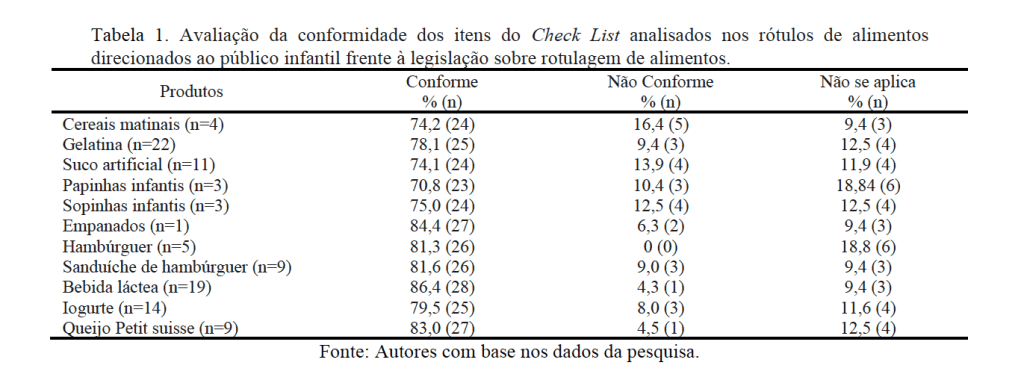
The offer of processed foods, especially the ultra-processed, is not recommended in the first years of life, since the consumption of these foods is associated with anemia, overweight and food allergies. The objective of this study was to evaluate the compliance of labels of processed foods intended for children with the Brazilian legislation in force and to analyze the levels of sodium, free sugars, sweeteners and total, saturated and trans fats described on the label. The nutrients were evaluated based on the PAHO Nutritional Profile Model. The results of the evaluation showed that the labels showed some non-compliance with the standards required by current legislation on food labeling.
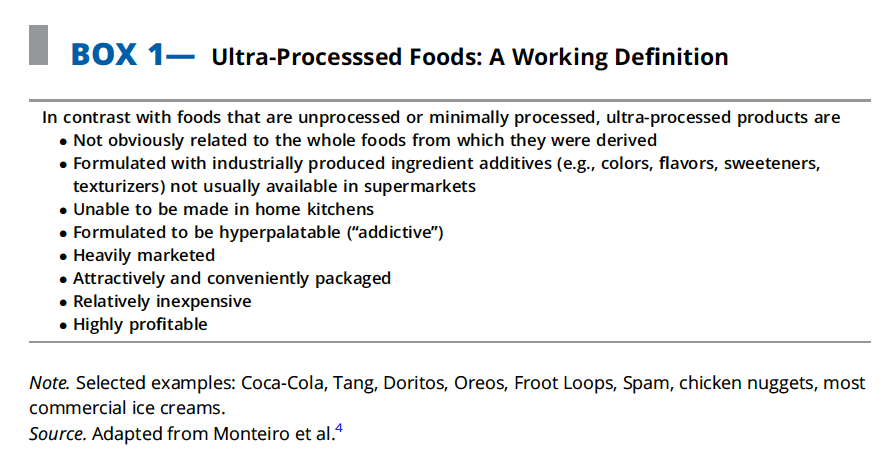
The coronavirus pandemic reveals an urgent need: the marketing of ultra-processed “junk” food must be stopped. Until now, the food industry has gotten away with pushing consumption of high-calorie, highly processed products—as often and in as many places as possible, and in increasingly large amounts—all in the name of profit In this business-first food environment, obesity and its associated type 2 diabetes, coronary heart disease, and, these days, severe outcomes from COVID-19, are collateral damage. Because poor health more strongly affects the most vulnerable members of society, public health advocates ought to be demanding immediate, forceful government action to discourage food industry production and marketing of unhealthful products.
The Ministry of Agriculture, Livestock and Supply of Brazil published in the Official Gazette SDA Regulation No. 577, the technical regulation draft on the starch addition to cheese.
The main content of the draft regulation is: it is proposed to allow starch and modified starch to be used as raw materials in cheese with water content greater than or equal to 55g/100g, and the maximum amount of final product is 1% (mass fraction). The regulation, which applies to domestic and imported Brazilian products, will be open for comment for 60 days.



 infoAlimentario