Article: Policy styles and epistemic policies in the regulation of health claims. A comparison of Europe, the United States, and Japan

I analyse epistemic and non-epistemic factors involved in expert advisory practices and decision-making relating to the regulation of health claims in the US, EU, and Japan. I consider the changes that have taken place, historically, in regulatory policies in all three cases in order to confirm the hypothesis that not only epistemic, but also non-epistemic factors and values determine the methodological decisions on which expert assessments are based for the authorization of health claims. I found that the current European, US, and Japanese assessment systems are based on different kinds of what have been termed ‘epistemic policies’ and that these policies and other characteristics shape what might be identified as differing ‘policy styles’ in the regulation of health claims.

The Americas – Ecuador: Consultation on Technical Regulation for Processed Foods and Collective Feeding published

The purpose of this technical sanitary standard is to establish:

  • Good Manufacturing Practices for food processing plants;
  • Requirements to be met by the processes of manufacturing, production, processing, preparation, packaging, packing, assembly, transportation, storage, importation, distribution and commercialization of processed foods for human consumption.
  • Requirements for registration, re-registration and modification of the sanitary notification of domestic and foreign processed foods.
  • Requirements for registration of certificates of Good Manufacturing Practices.
  • Requirements for the Certificate of Free Sale.

The Americas – Argentina: Food Code amendments on bitter substances prohibited and permitted in foods published

Article 1293 is modified: The following are considered harmful bitter substances and therefore prohibited for use in the food industry:

  • Those that contain alkaloids: Opium poppy (Papaver spp), Belladonna (Atropa belladona L.), Barley, Coca (Erythroxylum coca), Jimson weed (Datura spp), San Ignacio beans (Strychnos spp), Nux vomica (Strychnos nuxvomica).
  • Those that contain irritating, drastic or purgative principles: Cantáridas, Coca de Levante (Anamirta cocculus L.), Coloquíntida (Citrullus colocynthis Schrad L.), Grains of paradise (Melia azerdarach L.), except in the cases expressly permitted in the present Code.”

Article 1294 is modified: The following are considered bitter substances of permitted use:

  • Chicory: Root of the plant Cichorium intybus aromatic calamus
  • Angostura: Bark of Galipea officinalis Hancock (G. cusparia A St Hill)
  • 10 additional substances.

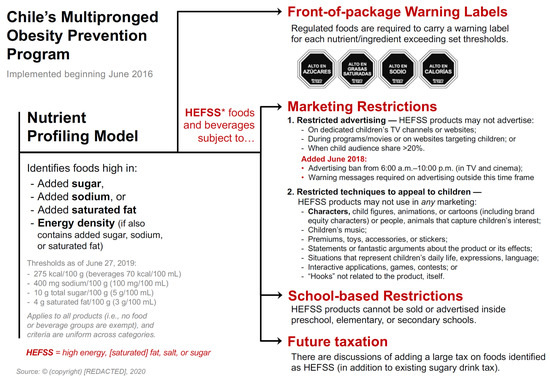
Article: Front-of-Pack Labeling in Chile: Effects on Employment, Real Wages, and Firms’ Profits after Three Years of Its Implementation

This study evaluates the impact of Chile’s innovative law on Food Labeling and Advertising, enacted in June 2016, on employment and real wages and profit margins for the food and beverage manufacturing sectors in the 2016–2019 period, using unique company-specific monthly data from Chile’s tax collection agency (measuring aggregate employment, real wages, average size of firms, and gross profit margins of the food and beverage manufacturing sector). Interrupted-time series analyses (ITSA) on administrative data from tax-paying firms was used and compared to synthetic control groups of sectors not affected by the regulations.

Check the full text of the documents (in English), click on the  Link

The Americas – Chile: Conadecus study detected non-compliance in the labeling of chocolate ice cream

The National Corporation of Consumers and Users (Conadecus in Spanish) conducted a study on chocolate ice cream in Chile and detected “non-conformities” with food labeling. A detailed observation revealed that there are 109 components in the product, mainly additives. Some examples are non-nutritive sweeteners, fat antioxidants, emulsifiers and flavor enhancers.