The Americas – Brazil: Ministry of Justice suspends Carrefour’s “Nutri Choise” application

The Ministry of Justice and Public Safety (MJSP in Portuguese) decided to suspend the tool “Nutri Choice”, of the application “My Carrefour”, of Carrefour Brazil (CRFB3) regarding the classification and labeling of food.

The “Nutri Escolha” (‘Nutri Choice’, in free translation) function, a solution that works through algorithms and presents the customer with alternatives divided by criteria such as price and nutritional value.

The company has five business days, from the notification, to comply with the determination. After the deadline, if the tool is not removed, a daily fine of R$ 80 thousand will be applied.

Carrefour cria solução digital para incentivar o consumidor a fazer escolhas mais saudáveis

The Americas – Brazil: ANVISA approves remote inspection of imported products

In addition to improving sanitary control and expediting inspections, the measure responds to the need to maintain social distance during the pandemic.

In practice, the measure will cover all imported goods and products subject to sanitary surveillance, being able to replace in-person inspection, at the discretion of the sanitary authority, in all types of imports. This means that consents will be carried out remotely by the Agency’s servers, but may also be carried out in person at stations installed at ports and airports, when necessary.

Guía rápida para SNCM | ANVISA | rfxcel

Article: A description of Chilean food and nutrition health policies

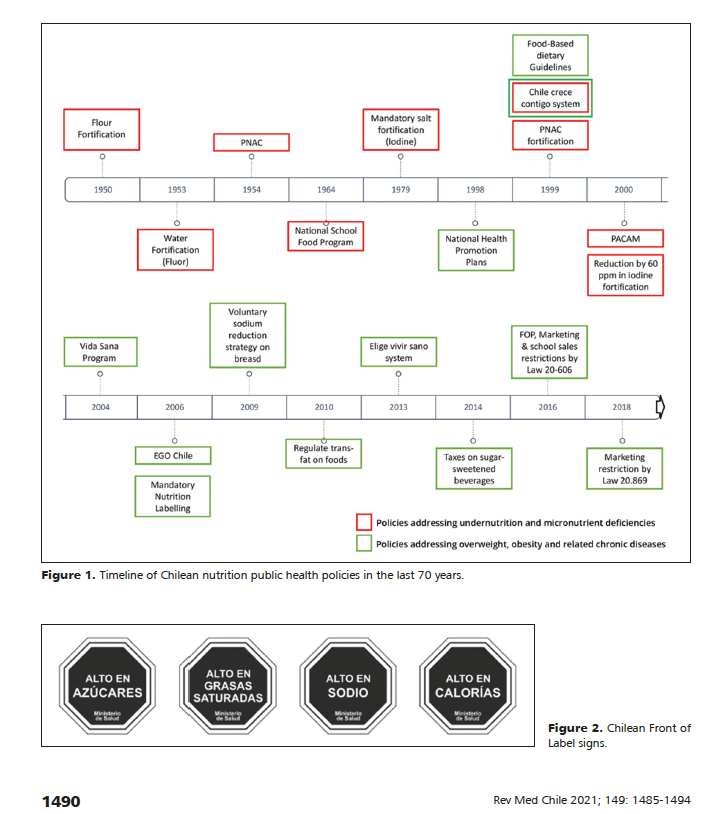
Chile has implemented numerous successful food and nutrition initiatives since the early 20th century, aiming to address malnutrition in all its forms. Aim: To summarize the major nutrition and food-related policies, strategies, and programs implemented in Chile, using the NOURISHING Framework. Chile has mandatory nutritional labeling that was updated to front-of-package warning labels about critical nutrients. In addition, the advertising of unhealthy foods and breast milk substitutes is restricted, among other food and nutrition policies. Nevertheless, strategies related to mass and social media communication campaigns, or periodic education and information interventions still need to be implemented.

For further information, you can access the original source, click on the Link

The NOURISHING framework in the Chilean context – L. Rodríguez-Osiac et al

Article: Scientific evidence and functional foods: health claims regulation in the European Union

This article proposes a characterization of the European regulatory process for health claims, as well as an analysis of the controversy surrounding the methodological and evidentiary requirements for scientific substantiation. The study of regulations and relevant scientific papers looks at three issues: the epistemic policies adopted by the European Food Safety Authority, their possible implications for different areas, and proposals for alternative strategies presented by critics’ approaches. The hierarchy of evidence and methodologies defined by the regulation establishes that proving causality on the basis of randomized controlled trials is crucial for the authorisation of a claim. However, this standard of proof might be not suitable for investigating the effects of ingredients in nutrition science, promoting research, development and innovation in the functional foods sector, or improving individual and public health. The article concludes that the European Food Safety Authority may need to reconsider the epistemic policies hitherto adopted, by means of reviewing the prioritisation of its regulatory objectives and analysing the consequences for each level of proof in all contexts.

Article: Investigation into nutrition and health claims of weight management products, specifically meal replacement for weight control bars, compliance with EU regulations and a survey of consumer understanding

The EU strictly regulates communication of nutrition and health claims (NHCs). Regulation (EC) No 1924/2006(1) provides the legal framework on NHCs. However, which NHCs can be used by manufacturers and what they mean to consumers can be a source of confusion. This study focuses on meal replacement for weight control bars (MRBs), ultimately a type of weight management product, sold as general food with on-package information such as NHCs. This study aims to investigate whether NHCs used by companies that sell meal replacements for weight control in the form of bars, e.g. cereal or paste bars (MRBs) sold to consumers in the UK comply with EU law. A further aim is to explore consumer understanding of the meaning of NHCs.