Packaging plays a key role in the food industry due to its various functions, in addition to contributing as a source of information to consumers. In order to promote the protection of the health of the population, RDC n° 429 was published in 2020, whose objective is to establish a new standard on nutritional labeling of foods to evolve, improve the clarity and readability of the nutritional information on food labels. foods. The main alteration of this legislation is the establishment of panels on the front label of packaged products, which are information symbols instituted to inform the consumer about the high content of nutrients (sugar, fat and sodium). In this context, the objective was to evaluate the progress of changes that must be carried out by the food industry in relation to the elaboration of new labels, following the new labeling legislation, as well as the impact of these changes.
labeling
Article/Brazil – Analysis of labeling of brands of whey protein powder supplements (WheyProtein) according to RDC N° 18, april 27, 2010
The industry of dietary supplements has increased in recent years, mainly add-ons to the base protein powder, are widely used by practitioners of bodybuilding, interested in the gain of muscle mass. In this way, to prevent the indiscriminate consumption of protein supplements by practitioners of physical activity, the present study aimed to evaluate the labels of whey protein ` whey protein sold in the shops of Fortaleza – CE, according to the standards RDC n° 18, 27 April 2010. This is a quantitative study, exploratory and descriptive, where there has been a review of different brands of protein supplements whey. The samples were selected according to the indication of protein supplements, being analyzed in accordance with availability of shops, the municipality of Fortaleza – CE. Were evaluated 20 brands, of these, only 80% were in compliance with the legislation, while 20% were in disagreement. With regard to the non- conformities highlighted the lack of information, ` The expressions: anabolic, muscle hypertrophy in 20% of the labels, and the description `Images, and or expressions regarding weight loss, muscle mass gain 10% were in disagreement. As the Addition of fibers 75 % were in disagreement with the legislation. With this, we highlight the need of continuous surveillance and effective of the labels of supplements for athletes and practitioners of physical activity, with a guarantee that consumers have access to trusted information about the product. It is concluded that a large part of the labels of protein supplements for athletes had some type of inadequacy in accordance with the proposed objective.
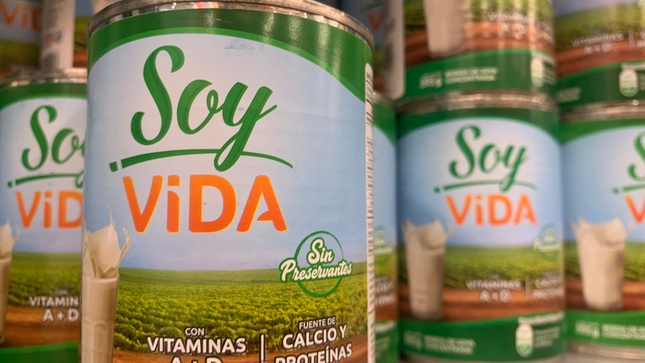
Peru – INDECOPI imposes fine on Gloria because the labeling of its product ‘Soy Vida’ would generate confusion
The company Gloria was fined in the first instance by the Consumer Protection Commission N°2 of Instituto Nacional de Defensa de la Competencia y de la Protección de la Propiedad Intelectual (INDECOPI in Spanish) for stating on the label of its product ‘Soy Vida’ of 150 gr and 400 gr the denomination ‘evaporated soy milk’ and on the 1L label ‘UHT soy milk’, misleading consumers, making them think that it was indeed evaporated milk although, due to its composition, this would not be true.
Chile – Proposed Amendment to the Food Sanitary Regulations on the provision of the symbols “HIGH IN” on the label
The Ministry of Health (MINSAL in Spanish) published a project on Modification of the Food Sanitary Regulation (RSA) DS.977/96, Article 120 bis, on the provision on the label of the symbols “ALTO EN”. This proposal has been prepared by MINSAL, with the objective of updating the graphic This proposal has been elaborated by MINSAL, with the objective of updating the graphic layout of the labeling of more than one “ALTO EN…”, established in article 120 bis of the Food Sanitary Regulation, in order to make better use of the
to make better use of the area of the main side of the food label and to facilitate the placement of the “ALTO EN…” symbols. facilitate the placement of the “HIGH IN” symbols on imported products.
Mexico – Supreme Court refuses to deny injunctions against labeling of products
This week, the Supreme Court of Justice of Mexico (SCJN) will resolve three appeals against the front labeling of industrialized foods. In all cases, the draft rulings order to ratify the constitutionality of this regulation, stating that the right to health of consumers is superior to the interests of the market.
The first of these amparos, filed by the company El corazón del fruto SA de CV, was scheduled to be voted on last year, but the judges of the second chamber decided to postpone it in order to resolve the three cases on the same issue simultaneously.
The other amparos were filed by Herdez SA de CV, and by Santa Clara Mercantil de Pachuca SA.
All the draft rulings coincide in denying the amparos requested, due to the fact that the purpose of the challenged NOM is legitimate: “to avoid the consumption, preferably in minors, of those products containing added caffeine (immediate purpose), since said alkaloid is the one used in carbonated beverages which, as well as other ultra-processed products, are associated with the development of non-communicable diseases, such as diabetes, one of the main causes of mortality in Mexico”, states Minister Alberto Pérez Dayán in one of the proposed rulings.

 infoAlimentario