The General Directorate of Environmental Health and Food Safety (DIGESA in Spanish) published a draft Technical Document establishing a classifier for the coding of industrially processed foods (Ministerial Resolution Nº 157-2022-MINSA), as well as for the designation of production lines, to be applied by natural or legal persons requesting registration in the Sanitary Registry of foods for human consumption, as well as for the official technical validation of the HACCP Plan or certification of the General Principles of Hygiene of the Codex Alimentarius.
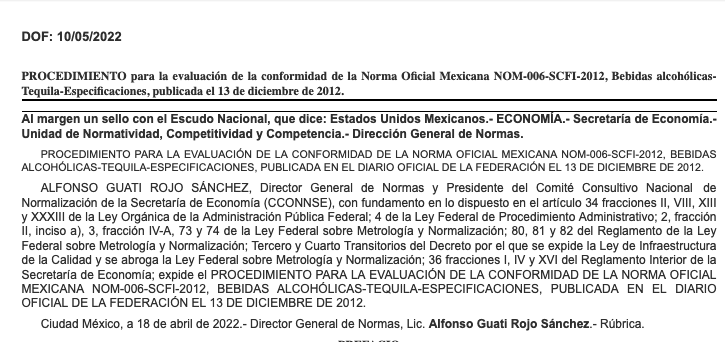
Mexico: Draft conformity assessment procedure for Mexican Official Standard NOM-006-SCFI-2012: Alcoholic beverages – Tequila – Specifications
The purpose of this Conformity Assessment Procedure (PEC in Spanish) is to establish the requirements to determine compliance with the Official Mexican Standard NOM-006-SCFI-2012, Alcoholic Beverages – Tequila – Specifications or the one that replaces it, and the conformity with the referenced Standards, by the parties bound by the Appellation of Origin “Tequila”.
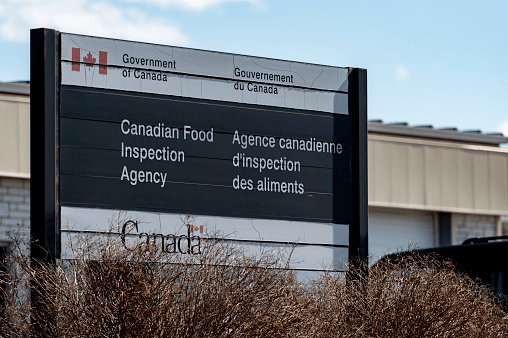
Canada: Consultation on the development of voluntary guidance for providing food information for foods sold to consumers through e-commerce
This consultation is open from May 9 to July 8, 2022
The sale of foods through e-commerce has increased over recent years and the information provided to consumers is inconsistent and sometimes inadequate to inform food purchases.
Health Canada and the Canadian Food Inspection Agency (CFIA) are seeking feedback on how to help make food information more consistently available and accessible to Canadians when shopping for food online.
Peru: Labeling standard for agricultural foodstuffs published
The Ministry of Agrarian Development and Irrigation (Midagri in Spanish) published Supreme Decree No. 006-2022-MIDAGRI that amends Article 27 of the Agri-Food Safety Regulation, which provides that primary agricultural foodstuffs must have more information through their labeling, documentation, technical data sheet or relevant information.
In the specific case of imported and domestic primary processed agricultural foods, the Spanish-language label shall contain the following information:
a. Name of the food.
b. Net content.
c. Country of origin or place of origin.
d. Name and address of the holder of the sanitary authorization.
e. Name and address of the importer, if applicable.
f. Sanitary Authorization of Primary Agricultural Food Processing Establishment.
g. Lot Identification.
h. Expiration Date or best before date.
i. Instructions for use and storage”.
USA: Dietary supplement ingredient advisory list
The U.S. Food and Drug Administration removed 5-alpha-hydroxy-laxogenin and octopamine from the Dietary Supplement Ingredient Advisory List because, based on available information, the ingredients fall into one of the three categories described:
- The ingredient appears to be excluded from use in a dietary supplement;
- The ingredient does not appear to be a dietary ingredient and does not appear to be either an approved food additive or generally recognized as safe for use; or
- The ingredient appears to be subject to the requirement for pre-market notification, but the requirement has not been satisfied.
Although this list reflects ingredients for which the FDA has made a preliminary assessment, it is not an exhaustive list of ingredients that may or may not be lawfully included in dietary supplements. Ingredients may be added to or removed from this list as the FDA continues its evaluation.

 infoAlimentario