For the purposes of this regulation, dairy compound is the dairy product or powdered compounded dairy product, obtained from milk or dairy derivatives or both, with or without the addition of non-dairy ingredients.
Public Consultation, for a period of 75 (seventy-five) days, counted from the date of publication of this Ordinance. Start: 25/04/2023 End: 09/07/2023.
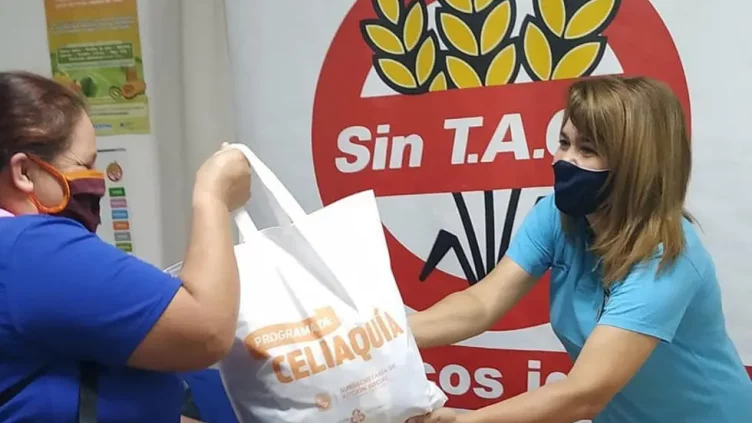
Decree 218/2023, published today in the Official Gazette, approved the regulation of the Celiac Disease Law No. 26,588, as amended by Law No. 27,196, which makes it mandatory to offer gluten-free menus in different institutions and establishments and expands the identification of medicines, depending on the content or absence of gluten.
The National Administration of Medicines, Food and Medical Technology (ANMAT in Spanish) expanded and updated the official list of gluten-free foods, which at the time of the enactment of Law 26,588 had only 1,400 products registered, and currently has more than 23,000 products.
A Guide of good manufacturing practices for Gluten-Free Food (GF) manufacturing establishments was prepared and published.
In addition to the aforementioned advances, and the fact that having more information on the disease has allowed many institutions and establishments to offer, on a voluntary basis, gluten-free menu options, the implementation of Law 26.588 (modified by Law 27.196) will allow turning this greater offer into a right for all celiac people.
The public consultation of the National Food Commission (CONAL in Spanish) for the project “Incorporation to the Argentine Food Code (CAA in Spanish) of the processes, technology and requirements of Family Farming” is in force.
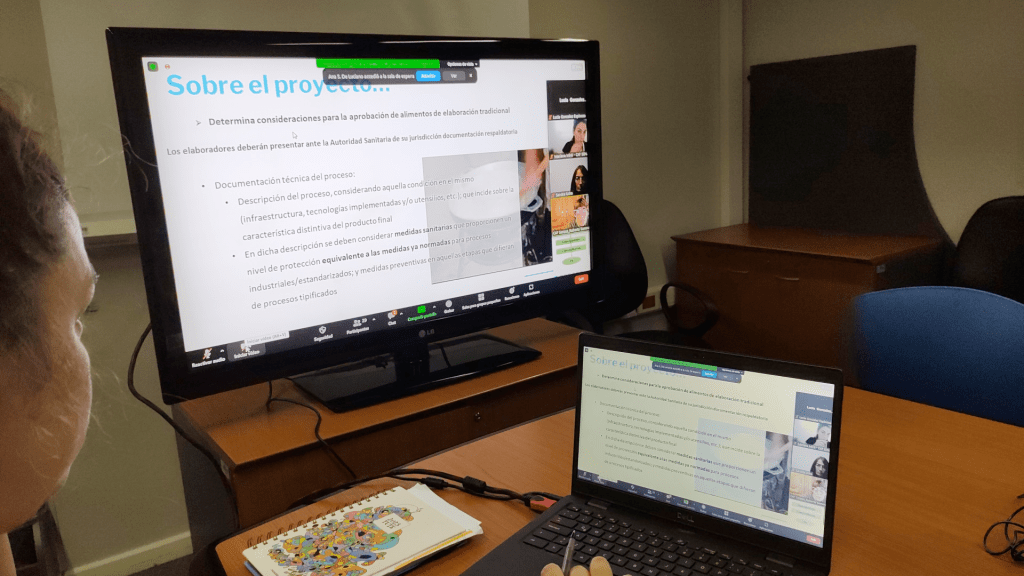
The proposal, agreed by the ad hoc Working Group of CONAL “Family Farming” in which the National Service of Agri-Food Health and Quality (SENASA in Spanish) participates, was presented at a meeting held today, intended as a preliminary instance to the next call to the Commission of Family Farming (SENAF in Spanish).
The coordinator of Family Agriculture of SENASA, Lucía González Espinoza, explained that “the draft regulation involves the inclusion of a new chapter in the Argentine Food Code called: Technologies, processes and foods of family agri-food production and traditional production, which defines and characterizes this type of food, determines considerations for its approval and establishes a framework for adapting the requirements of the Code, according to the production processes”.
Health Canada intends to amend the Food and Drug Regulations to restrict advertising to children of foods that contribute to excess intakes of sodium, sugars and saturated fat, as noted in our Forward Regulatory Plan. This is a part of our Healthy Eating Strategy and commitment to protecting children’s health.
Between 2016 and 2019, we consulted extensively on a policy proposal to restrict food advertising in different settings and media. We are now proposing a targeted approach to introducing restrictions, focusing on television and digital media first.
These restrictions aim to reduce children’s risk of developing overweight, obesity and diet-related chronic diseases, now and later in life. They support this objective by limiting children’s exposure to influential food advertising in media where children spend much of their time and are highly exposed to food advertising. Along with other Healthy Eating Strategy initiatives, this would support healthy food environments, which in turn contribute to healthy eating behaviours.
Health Canada is seeking your feedback on this policy update until June 12, 2023
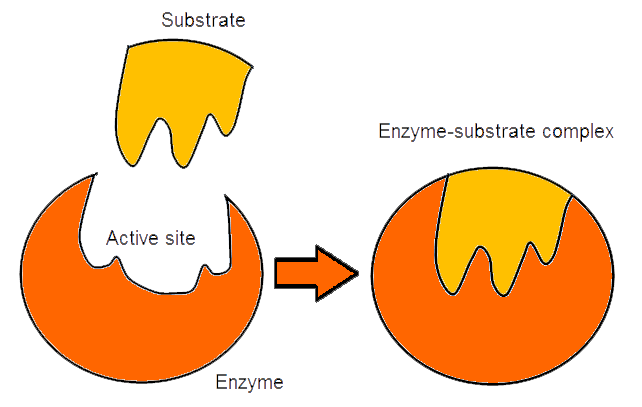
Health Canada’s Food Directorate completed a premarket safety assessment of a food additive submission seeking authorization for the use of alpha-amylase (α-amylase) from Bacillus subtilis AR-651 in bread, flour, whole wheat flour, and unstandardized bakery products. The requested maximum level of use for this food enzyme is Good Manufacturing Practice.
The results of the premarket assessment support the safety of α-amylase from B. subtilis AR-651 for its requested uses. Consequently, Health Canada has enabled the use of α-amylase from this source as described in the information document below by modifying the List of Permitted Food Enzymes, effective April 27, 2023.
The purpose of this information document is to publicly announce the Department’s decision in this regard and to provide the appropriate contact information for those wishing to submit an inquiry or new scientific information relevant to the safety of this food additive.

 infoAlimentario