The Ministry of Agriculture, Livestock and Food Supply publishes SDA Ordinance No. 706 on the Technical Regulations for the Identity and Quality of Ham.
The Americas
Regulatory news in the Americas
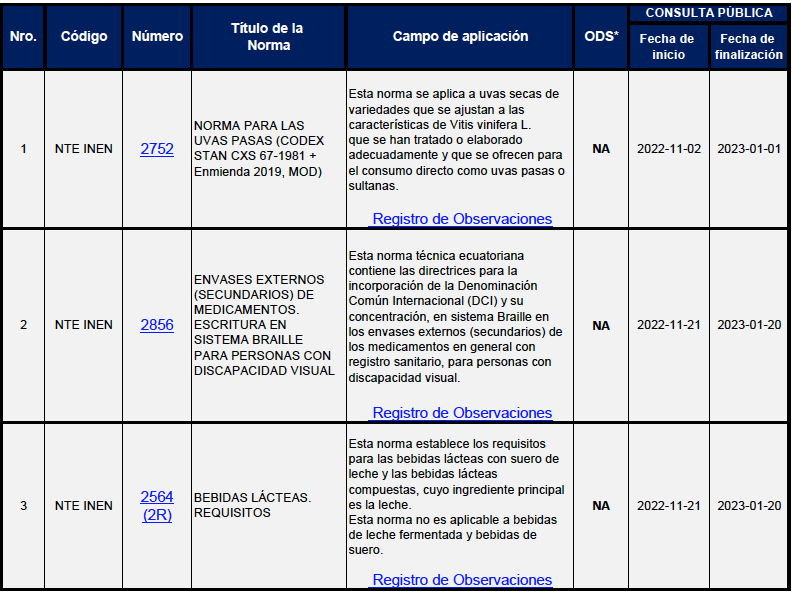
Ecuador – Technical standards on food in public consultation
Ecuadorian Standardization Service publishes 3 new technical standards for public consultation.
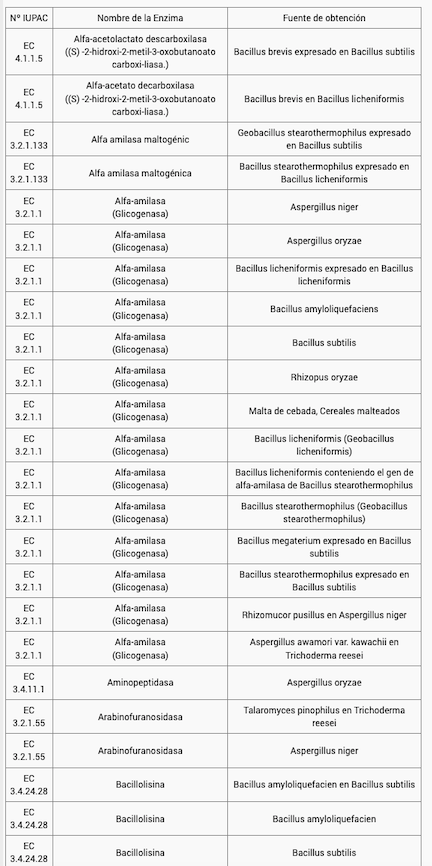
Argentina – Update to the list of enzymes authorized as technology adjuvants
By Joint Resolution 12/2022 (RESFC-2022-12-APN-SCS#MS) amends Article 1263 of the Argentine Food Code, which will be worded as follows: “Article 1263: The enzymes allowed as technology adjuvants for use in the food and beverage industry are those listed in the following table:
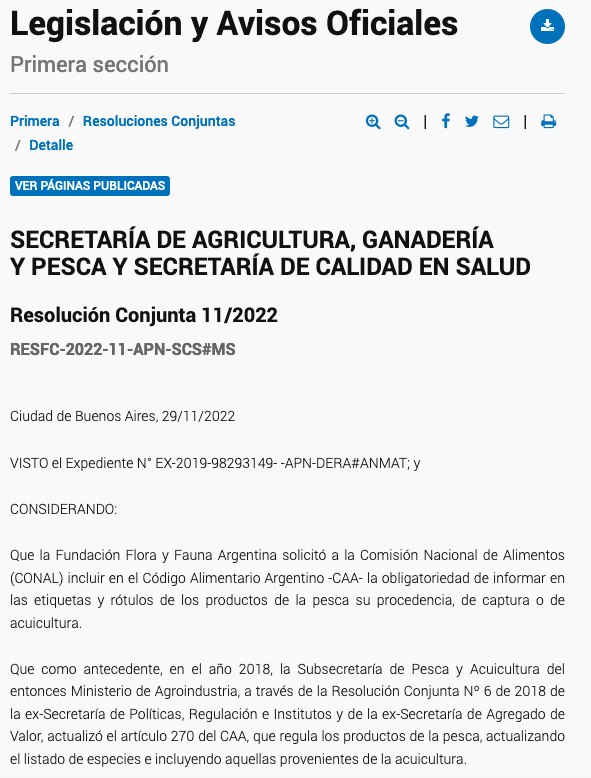
Argentina – Amendments to the Food Code on fishery and aquaculture products
According to Joint Resolution 11/2022 (RESFC-2022-11-APN-SCS#MS), Article 271 of the FAC shall be replaced and shall be worded as follows: “Article 271: Fishery and aquaculture products are understood as all those products coming from the capture and/or culture, of vertebrate and aquatic invertebrate animals, commonly designated with the name of fish (both bony and cartilaginous), shellfish (mollusks and crustaceans), amphibians and any other edible invertebrate animal, except aquatic mammals, and reptiles.
The labeling of packaged aquaculture products intended for the final consumer, whether preserved by refrigeration (chilling or freezing), smoking or salting, should state that the product is farmed.
Article – A policy study on front–of–pack nutrition labeling in the Americas: Emerging developments and outcomes
Poor nutrition is one of the leading causes of non-communicable diseases (NCDs), especially in the WHO Region of the Americas (AMRO). In response, international organisations recommend front-of-pack nutrition labelling (FOPNL) systems that present nutrition information clearly to help consumers make healthier choices. In AMRO, all 35 countries have discussed FOPNL, 30 countries have formally introduced FOPNL, eleven have adopted FOPNL, and seven countries (Argentina, Chile, Ecuador, Mexico, Peru, Uruguay and Venezuela) have implemented FOPNL. FOPNL has gradually spread and evolved to better protect health by increasingly adopting larger warning labels, contrasting background devices for better salience, using “excess” instead of “high in” to improve efficacy, and adopting the Pan American Health Organization’s (PAHO) Nutrient Profile Model to better define nutrient thresholds. Early evidence illustrates successful compliance, decreased purchases and product reformulation. Governments still discussing and waiting to implement FOPNL should follow these best practices to help reduce poor nutrition related NCDs.
 infoAlimentario