PAHO – Adoption of front-of-pack nutrition warnings can help decrease obesity, cardiovascular disease, type-2 diabetes and some cancers in the Americas

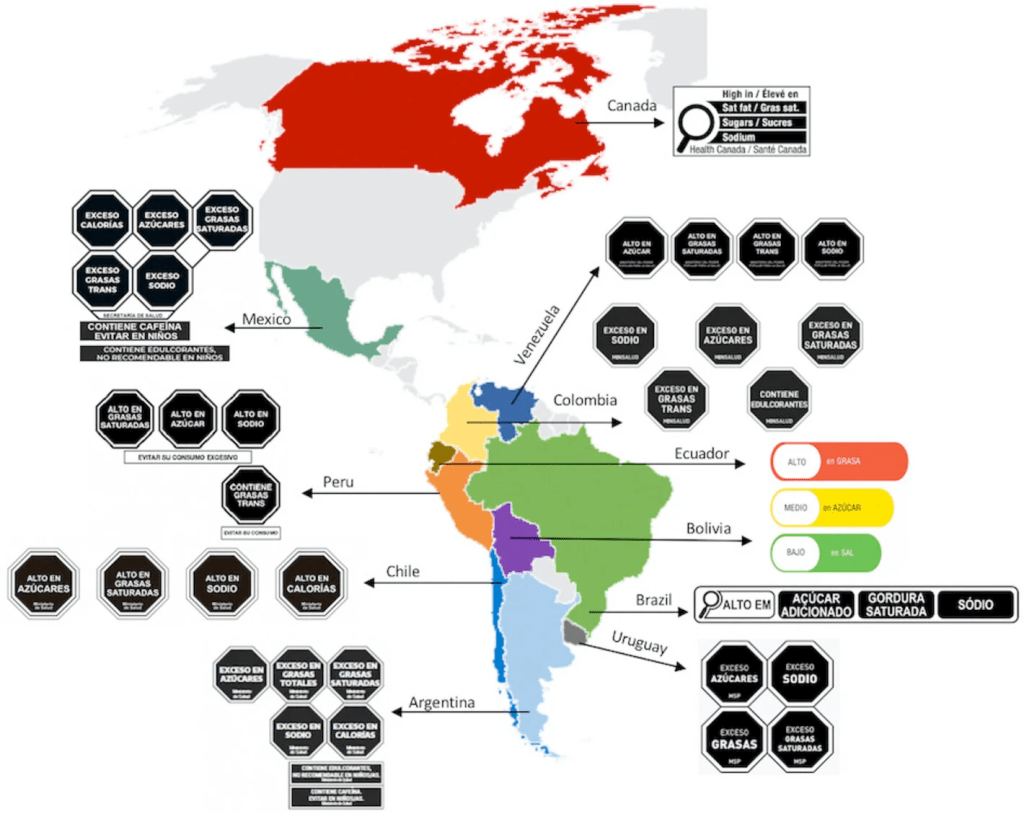
The adoption of best practice front-of-pack nutrition labeling in more countries of  Americas can help reduce poor-nutrition related non-communicable diseases (NCDs) such as cardiovascular disease, type-2 diabetes, high blood pressure and some cancers in the region, a recent study led by researchers at the University of Nevada, Reno and the Pan American Health Organization (PAHO) suggests.

The study, published today in the Lancet Regional Health Americas, examined the evolution of these policies within the PAHO/World Health Organization Region of the Americas (AMRO).

Improvements to front-of-pack nutrition labeling (FOPNL) included larger warning labels, contrasted background for better noticeability, use of “excess” instead of “high in” to improve understanding, and adoption of PAHO’s nutrient profile model to better define nutrient thresholds. FOPNL systems aim to aid a population’s understanding of nutritional content in a product, reduce consumption of ultra-processed and processed food products high in fats, sugars and/or salt, and ultimately help consumers make healthier choices.
Opinion – CARICOM’s front-of-package labelling conundrum

It has been four years since the Caribbean Community (CARICOM) began discussions on the adoption of a front-of-package labelling system to protect population health in the region. As a public- and global-health lawyer, I can confidently characterise this process as one that has only legitimised and prioritised the interests of private actors to the detriment of society.

For starters, the private sector has recently secured a privileged seat and further strengthened its power with the designation of the Caribbean Private Sector Organisation (CPSO) as an Associate Institution of CARICOM. This has, of course, facilitated corporate capture by giving them high-level policymaker access to lobby and delay the process of the adoption of a front-of-package nutrition labelling system. This additional avenue of participation, which is not available to other interested parties, such as regional civil society organisations, has fostered an unequal power imbalance that challenges the foundations of democracy and is at odds with public health policymaking best practices.

Peru – Guidelines approved for implementation of octagons in the labeling of processed foods

The National Institute of Quality (INACAL in Spanish), a body attached to the Ministry of Production, approved the Peruvian Guide “GP 110:2022. PACKAGED FOODS. Guide for the implementation of octagons in the labeling of processed foods”, which establishes the minimum requirements and characteristics that the labeling of all packaged food intended for human consumption must comply with.

“This guide provides guidance to suppliers of processed foods and non-alcoholic beverages for the standardization in the placement of advertising warnings (octagons) on the labels and advertising of their products, when these exceed the current technical parameters of sugar, sodium and saturated fat content, established in the Advertising Warnings Manual. In the case of trans fats, they are governed by the regulations stipulated by the competent authority,” said Clara Gálvez, executive president of INACAL.

Paraguay – Congressmen introduce changes to bill that establishes front food labeling

The legislative proposal, with half sanction of the Senate Chamber, “Which establishes the implementation of the front warning labeling according to its nutritional composition”, was approved with modifications during the ordinary session of the Chamber of Deputies.

The purpose of this law is to establish mandatory front warning labeling on processed and packaged food in the absence of the consumer and marketed in the national territory, according to the nutritional composition of energy (calories).

It also aims to protect the health and human rights of the population, providing visible, quick and easy to understand information for informed decision making.

Argentina – Future developments at the 147th Regular Meeting of the CONAL

The Secretary of Agriculture, Livestock and Fisheries of the Nation, Juan José Bahillo, participated today in the opening of the 147th Regular Meeting of the National Food Commission (CONAL in Spanish), which will meet for two consecutive days and which has on its agenda topics such as foods entering public consultation and progress with the vegan/vegetarian and organic and inorganic contaminants working groups and others.

During the meeting, the proposed framework for fortified, added and electrolyte beverages was analyzed; the reports of different working groups were presented, such as contaminants in edible algae, rice flour, sea salt and dry brewer’s bagasse; microbiological criteria for pollen, herbs for infusions and Helix snail eggs “snail caviar” were discussed; and the inclusion of the fungus Ganoderma Lucidum in the Argentine Food Code was discussed.