Mexico – NOM-051: These are the new provisions that will come into force on March 8

NOM-051 establishes the requirements for the advertising of food and non-alcoholic beverages in Mexico, with the objective of promoting healthy eating and preventing obesity and other diet-related diseases.

Last September, Mexico’s Ministry of Health published the decree reforming two regulations governing the front labeling and advertising of prepackaged food and non-alcoholic beverages.

The modification aims to:

– Harmonize the regulations with the new specifications of the front labeling system.

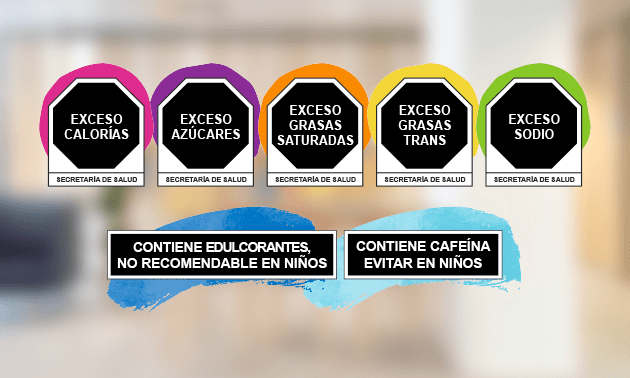
– Prohibit the use of characters, animations, cartoons, celebrities, athletes or mascots, interactive elements. Such as visual-spatial games or digital downloads in the advertising of prepackaged food and non-alcoholic beverages that exceed nutritional criteria and contain warning seals and/or precautionary statements.

Mexico – Further Restrictions on Food and Drink Labeling

On September 8, 2022, the Federal Executive ordered the publication of a Decree amending, adding, and revoking various provisions of the Sanitary Control of Products and Services Regulations, and the General Health Law Regulations in Advertising Matters and which entered into force on September 12 of the current year.

Among other changes, article 25 bis1 of the Regulations for Sanitary Control of Products and Services, establishes that the label of prepackaged food and non-alcoholic beverages that include one or more warning stamps of the front labeling system, must not contain children’s characters, animations, cartoons, celebrities, athletes or mascots, interactive elements, such as visual-spatial games or digital downloads, aimed at girls and/or boys that incite, promote or encourage their consumption, purchase or choice; nor make reference to external elements for the same purpose.

Chile – Definition of fat content in milk

The Ministry of Health (MINSAL in Spanish) published a draft amendment to Article 216 of the Food Sanitary Regulations on the definition of fat content in milk to harmonize it with Codex Alimentarius (Codex Stan 207 – 1999).

Chile – Proposed Amendment to the Food Sanitary Regulations on the provision of the symbols “HIGH IN” on the label

The Ministry of Health (MINSAL in Spanish) published a project on Modification of the Food Sanitary Regulation (RSA) DS.977/96, Article 120 bis, on the provision on the label of the symbols “ALTO EN”. This proposal has been prepared by MINSAL, with the objective of updating the graphic This proposal has been elaborated by MINSAL, with the objective of updating the graphic layout of the labeling of more than one “ALTO EN…”, established in article 120 bis of the Food Sanitary Regulation, in order to make better use of the
to make better use of the area of the main side of the food label and to facilitate the placement of the “ALTO EN…” symbols. facilitate the placement of the “HIGH IN” symbols on imported products.

Chile – Exempt Resolution 21/2023 – Establishes requirements for the internment of collagen, gelatin, hydrolyzed protein and cracklings hydrolyzed protein and greaves

General requirements for entry

a) The country of origin of the products is recognized by the World Organization for Animal Health (OMSA) as a country of negligible risk for Bovine Spongiform Encephalopathy (BSE) and maintains a surveillance program for the disease according to the recommendations of the OMSA Terrestrial Animal Health Code.

b) The raw material from which the products are derived originates from the country of manufacture or has been imported from countries recognized by OMSA as having a negligible risk for BSE and that maintain a surveillance program for the disease, or the treatments established in this resolution have been applied.

    c) The raw material that originates the products comes from animals that have been slaughtered in slaughterhouses authorized by the competent authority and inspected ante mortem and post mortem, and are considered fit for human consumption.