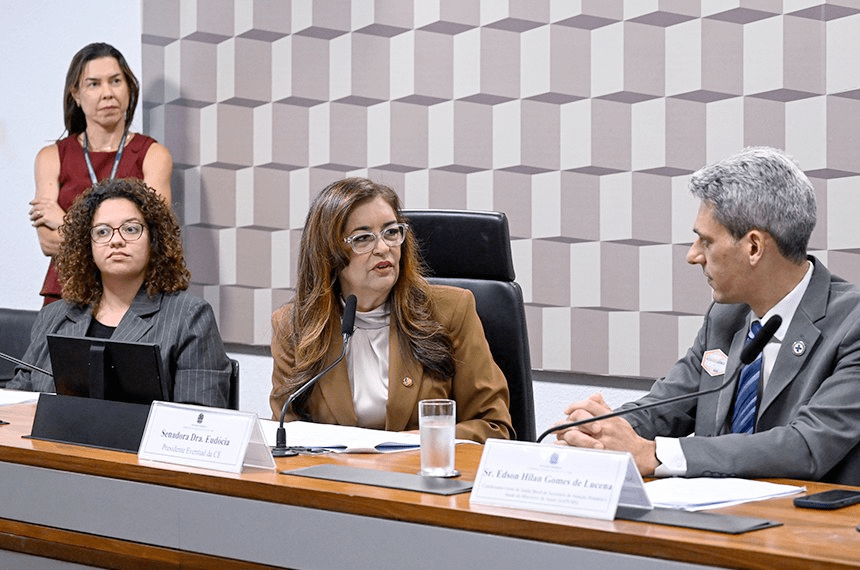
The hearing was convened by the Senate Committee on Education and Culture to discuss Bill 4,501/2020, which prohibits the sale of ultra-processed foods, fried foods, and products with hydrogenated fats in school cafeterias. The author of the bill is Senator Jaques Wagner (PT-BA).
The bill by Jaques Wagner stipulates that schools must offer at least three options of healthy snacks per day, prioritizing fresh and organic foods, fruits, vegetables, and regional products.
Bruna Pitasi Arguelhes, representative of the Ministry of Development and Social Assistance, Family, and Fight Against Hunger, advocated for the adoption of selective taxes on ultra-processed foods and the limitation of marketing actions related to these products.
In their assessment, the current regulations are weak and facilitate access for children and adolescents to ultra-processed foods, especially in the school environment.
Bruna is a technical analyst of social policies at the National Secretariat of Food and Nutritional Security of that ministry. According to the data she presents (see the slides), there are school cafeterias in more than 90% of private schools and in approximately 22% of public schools.
According to her, regulating the sale of food in schools could prevent more than 300,000 cases of obesity in ten years. The studies she cited indicate that where laws exist that restrict the sale of unhealthy foods in school cafeterias, adolescents are 11% less likely to develop obesity.
 infoAlimentario