Brazil – The state of Maranhão has enacted a law that prohibits ultra-processed foods in schools

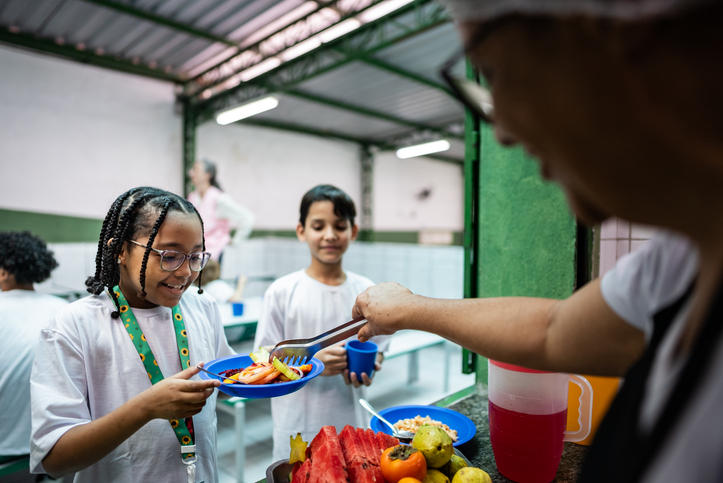
The Brazilian Institute for Consumer Protection (IDEC in Portuguese) celebrates the signing of the decree that regulates Law No. 11,196/2019 of the State of Maranhão, which establishes guidelines to promote healthy eating and restricts the sale and consumption of ultra-processed and sugary foods in the school environment. The Institute actively participated in the various stages of the drafting and regulation process of the law, technically contributing to its implementation over the past few years.

Since the second half of 2024, IDEC has been working jointly with the Interministerial Chamber of Food and Nutritional Security of Maranhão (Caisan-MA), with the support of the United Nations Children’s Fund (UNICEF), GEPPAAS, and the Ministry of Social Development (MDS in Portuguese), in technical discussions on the regulation of the law, including the mechanisms for implementation, monitoring, and sanctioning provided for in the decree.

Brazil – In a Senate debate, experts advocate for the regulation of ultra-processed foods

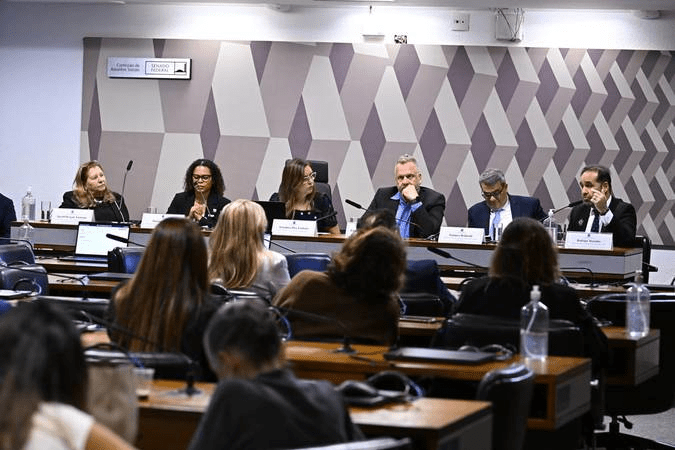
At a public hearing held this Tuesday (26) in the Social Affairs Commission (CAS in Portuguese), experts defended the regulation of ultra-processed foods, especially due to the health risks for young people. Industry representatives presented a divergent stance, arguing for a better definition of what is considered “ultra-processed.” According to them, the current description is broad and subjective, which would complicate potential legislation.

Brazil – Experts testify before the Senate Committee on the importance of imposing restrictions on ultra-processed foods in schools

The hearing was convened by the Senate Committee on Education and Culture to discuss Bill 4,501/2020, which prohibits the sale of ultra-processed foods, fried foods, and products with hydrogenated fats in school cafeterias. The author of the bill is Senator Jaques Wagner (PT-BA).

The bill by Jaques Wagner stipulates that schools must offer at least three options of healthy snacks per day, prioritizing fresh and organic foods, fruits, vegetables, and regional products.

Bruna Pitasi Arguelhes, representative of the Ministry of Development and Social Assistance, Family, and Fight Against Hunger, advocated for the adoption of selective taxes on ultra-processed foods and the limitation of marketing actions related to these products.

In their assessment, the current regulations are weak and facilitate access for children and adolescents to ultra-processed foods, especially in the school environment.

Bruna is a technical analyst of social policies at the National Secretariat of Food and Nutritional Security of that ministry. According to the data she presents (see the slides), there are school cafeterias in more than 90% of private schools and in approximately 22% of public schools.

According to her, regulating the sale of food in schools could prevent more than 300,000 cases of obesity in ten years. The studies she cited indicate that where laws exist that restrict the sale of unhealthy foods in school cafeterias, adolescents are 11% less likely to develop obesity.

Brazil – Bill introduced to make mandatory the inclusion of warnings on labels of ultra-processed foods

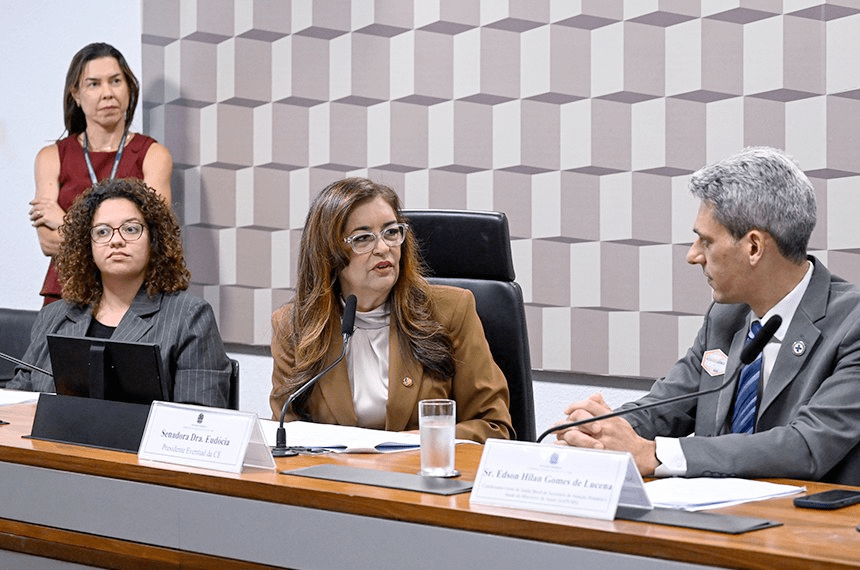
Senator Dr. Eudócia (PL/AL) presented a bill that seeks to make mandatory the inclusion of warnings on the labels of ultra-processed foods, alerting consumers about the high carcinogenic potential of these products. The proposal amends Decree-Law No. 986 of 1969, which establishes the basic standards for food, and introduces the requirement that packaging must clearly and visibly display the warning: “High carcinogenic potential”.

The measure seeks to guarantee the consumer’s right to information, as provided for in the Consumer Protection Code (CDC), and seeks to increase transparency about the health risks associated with excessive consumption of these products, especially among children and young people. National and international scientific studies cited in the justification of the bill point to a direct relationship between the consumption of ultra-processed foods and the increase in the incidence of various types of cancer, with special emphasis on early stage colorectal cancer, whose increase has been worrisome among those under 50 years of age.

Article – Communication and challenges of ngo in Brazil, Colombia,United States and Mexico: the case of misleading advertising in ultra-processed foods

This article analyzes the actions that the Non-Governmental Organization (NGO) that pro-tect Consumer Rights in Brazil, Colombia, the United States and Mexico perform against misleading advertising in ultra-processed foods. This type of food promotes unhealthy eat-ing habits for children; causes excess weight to be a determining risk factor for chronic noncommunicable diseases (NCDs); and affects the health and quality of life of the popu-lation. Ultraprocessed foods, are considered to be the main factor in the epidemic called globesity, which is why ngo that protect Consumer Rights have made efforts to counteract the misleading communication and advertising strategies followed by the ultraprocessed food industry. The methodology of the study is of qualitative nature through in-depth in-terviews with the directors of six ngo from the aforementioned countries. The study includes the main actions thatngocarry out to demonstrate, inform, persuade and exert pressure on the food processing industry underlining the importance of communication and education in the work of defending consumer rights and the need for incorporate digi-tal media in its activity of information, feedback, manifestation and linking of parents, aca-demic communities, public opinion, legislative groups, government authorities and society in general.