Brazil – Anvisa publishes reports on the results of the food sector in 2025

The National Health Surveillance Agency (ANVISA in Portuguese) published two reports on Monday, May 4, presenting the results of the food sector. The first document provides an overview of the main achievements in 2025, while the second presents a detailed assessment of the implementation of food-related topics in the Regulatory Agenda (RA) 2024-2025.

The Food Management Activity Report presents a summary of the main results achieved by the area in 2025, with special emphasis on risk and safety assessment processes, food and packaging regulation, the definition of regulatory standards, and actions related to customer service, transparency, and communication.

In the introduction of the document, the General Directorate of Food (GGALI in Portuguese) highlights the most relevant positive impacts of the work developed throughout the year, among which the following stand out:

The advances in the process of evaluating the safety and efficacy of substances and materials have resulted in a shorter average processing time for submitted applications.
Efforts to reorganize the regulatory process for food and packaging, including the structuring of electronic notification, while maintaining the average processing times for registration and post-registration applications; and
The overall results achieved in the implementation of the 2024-2025 Regulatory Agenda.

Argentina – Authorities expedite customs procedures and accept sworn statements as guaranties for imports and exports

With the aim of facilitating trade and customs control, in line with international practices, the National Government modified the regime of guaranties required for import and export operations.

Thru General Resolution 5842/2026, published today in the Official Gazette, the guaranty regime now includes the possibility of establishing, extending, substituting, or extinguishing guaranties directly from the customs system (SIM), assuming the commitment with a digital sworn statement, instead of more complex instruments, for certain imports and exports. The idea is to make the system simpler and more accessible without losing fiscal control.

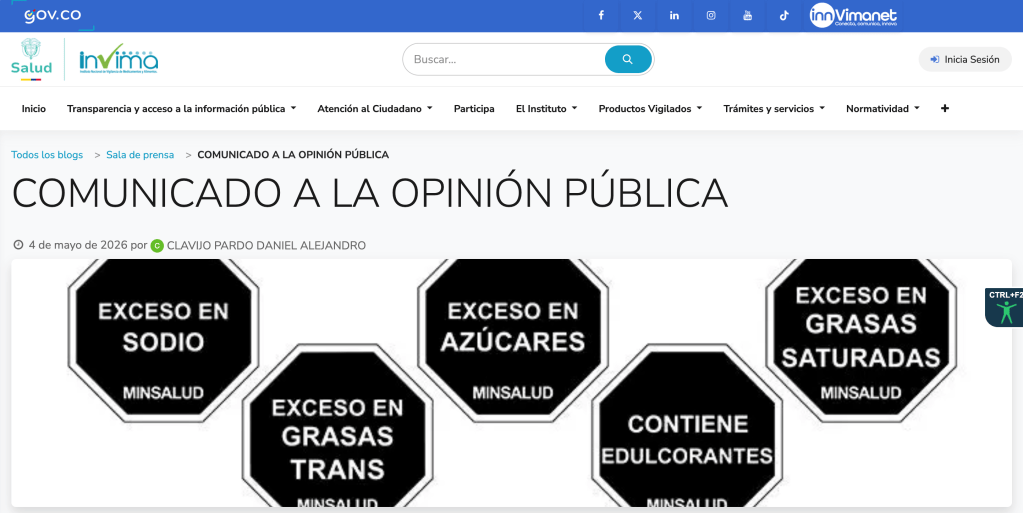
Colombia – Invima denies clashes with the Ministry of Health and supports new food labeling

The National Institute for Food and Drug Surveillance (INVIMA), in a statement, rejected versions recently spread in the media and social networks that, according to the entity, distort its role in protecting public health and suggest a supposed confrontation with the Ministry of Health and consumer organizations.

The entity assured that it is not true that it is questioning the process of evaluating alternatives for front warning labels on ultra-processed foods.

In the statement, the entity also highlighted that it works in coordination with health sector institutions and conducts a strict risk assessment, where the preventive criterion always prevails in order to protect public health.

INVIMA emphasized that it is carrying out coordinated work with the Ministry of Health and other institutions, based on a strict risk assessment where the preventive approach prevails. This task includes monitoring product labeling and advertising, considered key to ensuring that consumers receive truthful, clear, and safe information.

Peru – Ministry of Health promotes the creation of the National Agency for Environmental Health and Food Safety (ONSA) to strengthen public health

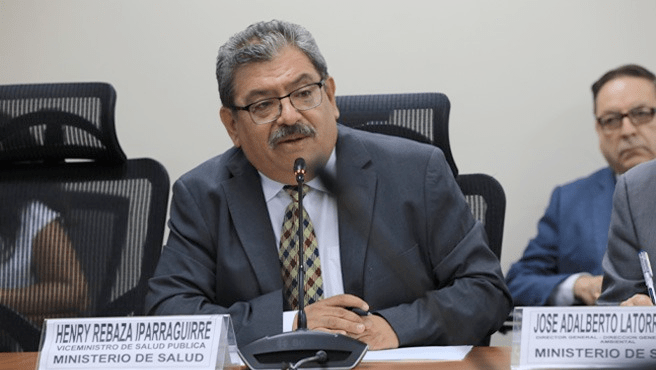
During the working group for the review of Bill No. 11279/2024-PE, organized by the Health and Population Commission of the Congress of the Republic, the Deputy Minister of Public Health, Henry Rebaza, highlighted that the country is facing a historic opportunity to strengthen public health from its foundation, thru a solid, modern, and decentralized health authority that guaranties risk control in water, air, soil, and food.

The Deputy Minister emphasized that the proposal to create the National Organization for Environmental Health and Food Safety (ONSA in Spanish) is the result of nearly two years of technical work and coordination with various sectors, with the aim of strengthening oversight and sanctions for a uniform and efficient management of public health.

Among the main benefits for the population are the reduction of foodborne diseases and their associated costs, the decrease in economic losses in production processes, greater efficiency in health surveillance and inspection processes, improvement in the competitiveness of the food industry, the protection of public health thru the control of environmental determinants, as well as the promotion of sustainable human development.

Peru – Ministry of Health warns that indiscriminate consumption of vitamins can be harmful to people’s health

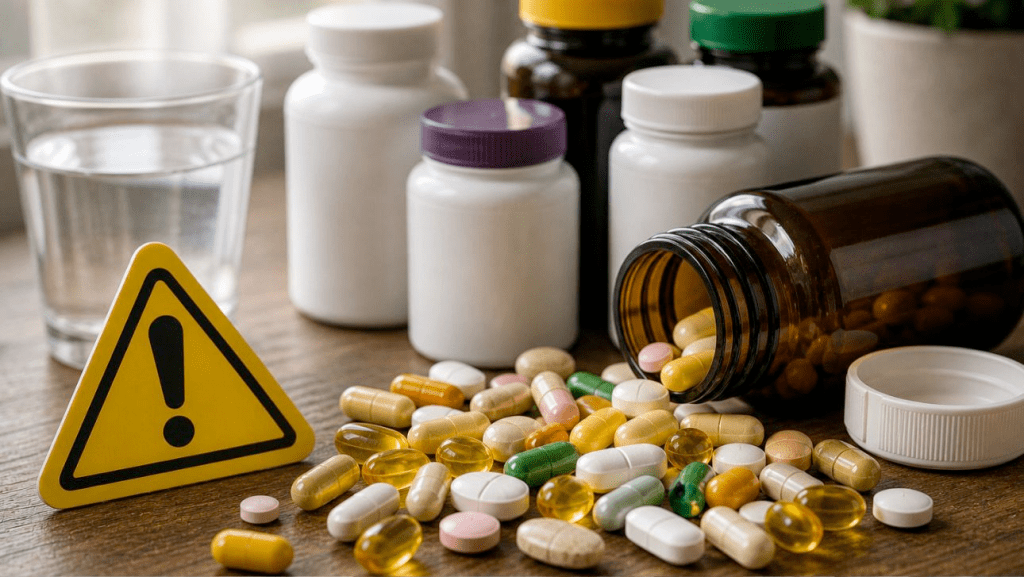
Excessive and unsupervised consumption of vitamin supplements can cause serious adverse health effects, which could worsen if combined with other medications without medical supervision, warned the Ministry of Health, thru the General Directorate of Medicines, Supplies, and Drugs (DIGEMID in Spanish).

Among these harmful effects can be overdoses, known as hypervitaminosis, whose consequences range from nausea, fatigue, and neurological disturbances to severe liver damage. This occurs due to the accumulation of vitamins in the body, especially the fat-soluble ones like A, D, E, and K.

These complications can be intensified by drug interactions, as vitamins have the potential to alter other treatments, either by nullifying their efficacy or increasing their toxicity.