Chile – SAG confirms indefinite validity of organic agreement that favors Chilean exports

The Agricultural and Livestock Service (SAG in Spanish), informs that, as part of the periodic monitoring of the Organic Products Equivalence Agreement between Chile and the European Union, this bloc confirmed the indefinite validity of the agreement, ensuring the continuity of recognition of the Chilean organic certification system.

The equivalence agreement, signed between Chile and the European Union in 2017, allows organic products certified in Chile to be recognized as equivalent in the European market, without the need for additional certifications. This means that a Chilean organic product can enter Europe as organic under the same conditions as a European product, facilitating trade and reducing costs for exporters. The categories of products included are as follows: fresh and processed vegetables including wine, seeds and propagation material, as well as honey.
El Salvador – Commission for Children and Social Integration proposes reforming the breastfeeding law to regulate health controls for breast milk substitutes

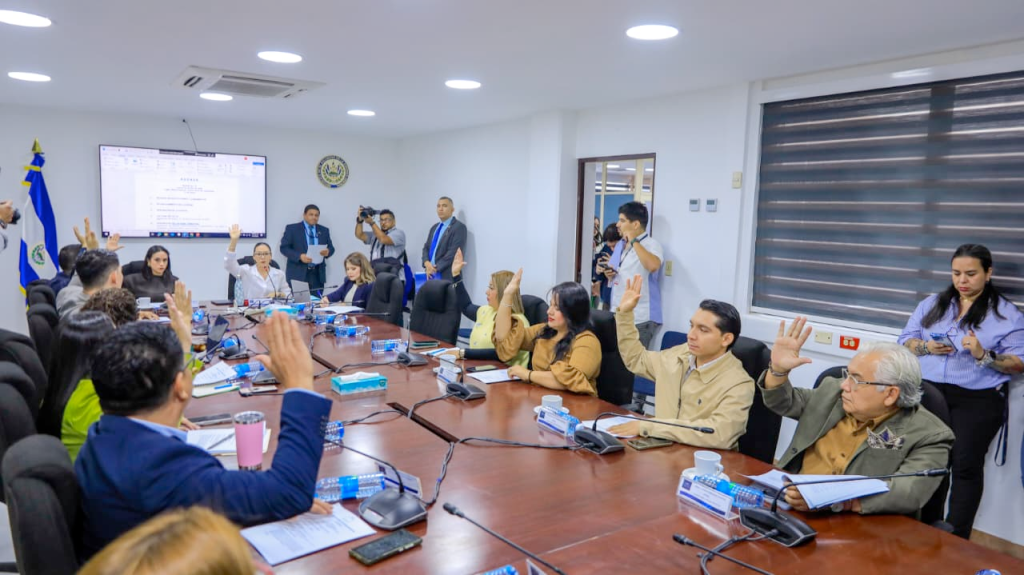
In order to protect the right to health and nutrition of children in their early years of life, the deputies of the Commission on Childhood and Social Integration issued a favorable opinion to make changes to the Law on Love Turned into Food for the Promotion, Protection, and Support of Breastfeeding.

The modifications to the legal framework —in effect since 2022— aim to define the products that replace breast milk (infant formula) and, at the same time, strengthen health controls, labeling, and the promotion of these.

Proposed changes

The regulations and prohibitions provided for in the law regarding breast milk substitutes must be applied to bottles, pacifiers, and teats.

One of the changes is to Article 8 of the law, where greater clarity and precision are established for some concepts related to breast milk substitutes, such as infant formulas, special formulas, growth and follow-up formulas, or other products of dairy or plant origin.

Also of foods and beverages (including water) aimed at children from zero to 36 months of age and even for older ages, if recommended.

After the definition of the substitute products contemplated by the law, the MINSAL has requested the proper sanitary registration of these.

Therefore, an amendment would be made to Article 6 for the authorization of labeling and the sanitary registration of breast milk substitutes, in accordance with the established standards.

Colombia – The Ministry of Health proposes modifying Resolution 810 and its front-of-package food labeling model

The Ministry of Health and Social Protection has published for public consultation a draft Resolution that repeals Resolution 810 of 2021, modified by Resolution 2492 of 2022, corrected by Resolution 254 of 2023, and establishes the technical regulation on the requirements for nutritional and front labeling that must be met by ultra-processed edible and drinkable products and packaged or packed foods for human consumption.
human consumption.

The main changes are:

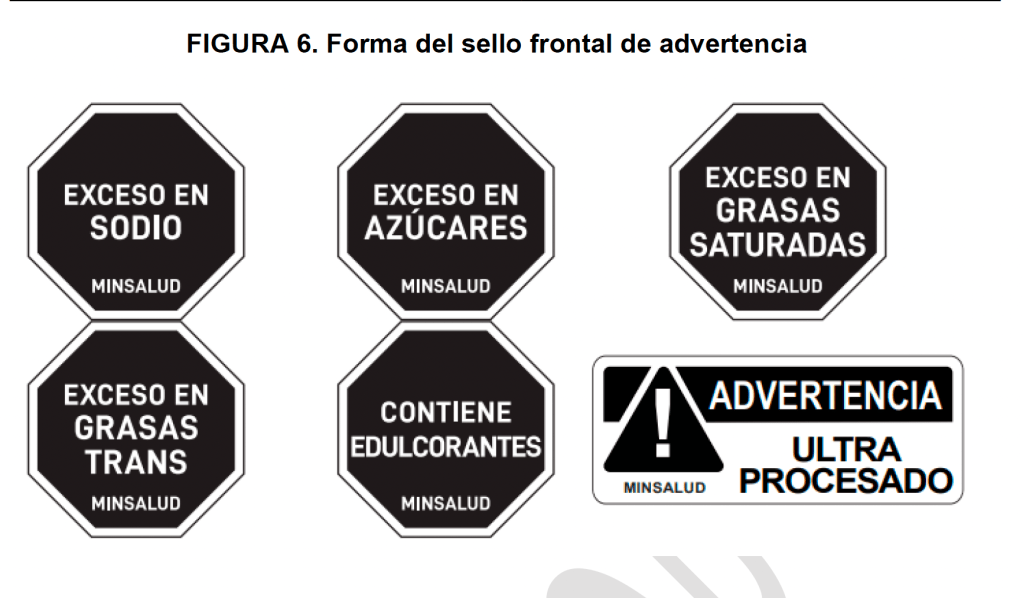
  • Incorporation of an “Ultraprocessed Warning” label, with a rectangular shape, exclamation triangle, and “MINSALUD” inscription, which would be added to the five existing black octagonal labels for excess sodium, sugars, saturated fats, trans fats, and the presence of sweeteners.
  • Creation of numbered micro-seals (from 1 to 6) for containers with areas smaller than 5 cm², where a single symbol would indicate the total number of seals that would apply to the product.
  • Incorporation of a voluntary positive label—a green round logo with the phrase “HEALTHY FOOD”—that could be used by unprocessed or minimally processed foods that meet specific criteria: that their first ingredient is not sodium, fats, or added sugars, and that they do not contain sweeteners in their formulation.

According to the draft Resolution, a product would be classified as ultra-processed if it contains at least one ultra-processed ingredient—such as high-fructose corn syrup, maltodextrin, hydrogenated oils, hydrolyzed proteins, or soy protein isolate—or at least one cosmetic additive, understood as any substance that alters the sweetness, flavor, color, texture, or density of the product.

Brazil – ANVISA updates requirements for dietary supplements containing turmeric

The National Health Surveillance Agency (ANVISA in Portuguese) has updated Normative Instruction IN 28/2018 to include new limits and detail the changes in the labeling of dietary supplements that contain turmeric (also known as açafrão) in their composition.

The update was motivated by the identification—within the context of post-marketing surveillance—of a potential risk of liver damage associated with the use of supplements and medications containing turmeric (Curcuma longa) or curcuminoids. In March, Anvisa issued a pharmacovigilance alert to warn users of these products about the associated risks.

The three main points of the regulatory update:

  • Mandatory inclusion of the following warning on supplement labels: “This product should not be consumed by pregnant women, breastfeeding women, children, people with liver or biliary diseases, or gastric ulcers.” People with illnesses or who are taking medications should consult their doctor.
  • The limits for curcumin consumption should be calculated by adding its three main components (total curcuminoids).
  • Inclusion of tetrahydrocurcuminoids in the list of permitted ingredients, with restrictions on mixing this new component with the natural extract of the plant in the same product to avoid overloading the body with this substance.

Argentina – New bill to create a National Regime for Food Allergies and Safe Environments

The Argentine national deputy Pablo Juliano has presented a bill in the Congress of the Republic to create a National Regime for Food Allergies and Safe Environments, an initiative that seeks to transform the way consumers access information about what they eat.

The proposal aims to strengthen food safety, especially for people with allergies, and would be articulated with the current Law on the Promotion of Healthy Eating, known as the front-labeling law. The project proposes a comprehensive approach that encompasses everything from labeling in supermarkets to practices in restaurants, schools, and food services.