Opinion/ Chile: Our Labeling Law Is a Model but We Need to Go Further

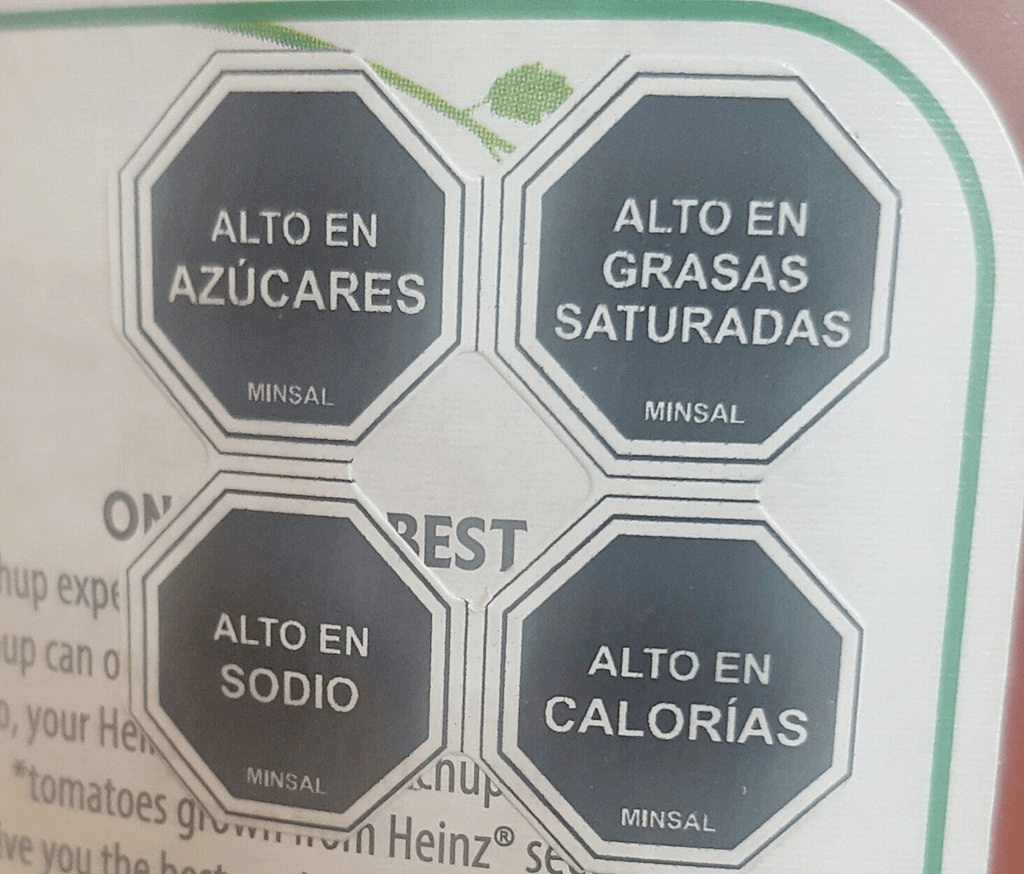
For Chile to advance towards better health and less obesity, more accountability is needed over the enforcement of existing rules. We also need to do more: establish a “green” card that would allow Chile’s vulnerable populations access to healthy food;  increase physical activity as a requirement in our schools; and raise taxes on harmful products that bear the warning labels.

The greatest pandemic humanity is facing isn’t Covid, it’s obesity. That condition kills around 41 million people annually – 112,000 people a day – through cancer, high blood pressure, diabetes, and dementia. Forty thousand of those cases are completely avoidable, since they involve young people. In contrast, Covid caused a total of 8 million deaths over a two-year period.  In addition, obesity causes years lost in terms of healthy lives, increases the need for hospital beds, and results in greater public health expenses.
Article – Industrially produced trans fat and saturated fat contentof food products in Jamaica

Objective. To estimate industrially produced trans and saturated fatty acid levels in foods within the Jamaican food system. Methods. A total of 308 commonly consumed foods were selected for analysis based on their potential to contain trans fatty acids. Samples were collected from supermarkets, convenience stores, and fast-food restaurants. Official methods of gas chromatography for the analysis of fats were used. The results were expressed as grams of fatty acid per 100 g of food sample and percentage of total fatty acids.

Results. Total fat was found to exceed United Kingdom National Health Service (NHS) limits in 27.3% (n = 84/308) of food samples. About one-third (33.8%; n = 104/308) of commonly consumed foods in Jamaica contained varying levels of industrially produced trans fatty acids, while 7.8% exceeded the Pan American Health Organization limit of 2% of total fat. Industrially produced trans fatty acids were found in food categories such as canned meats, baked goods, cooking oils, condiments, breakfast cereals, desserts, dairy, spreads, snacks, and confectionery. The subcategories coconut oils and burgers had the highest mean content. Canned food, infant food, and pasta categories had no trans fat present. Saturated fats were found in almost all foods. Importantly, 32.5% (n = 100/308) of the foods had saturated fat concentrations higher than the NHS limit of 5 g per 100 g of food. Most of the food items with high levels of industrially produced trans fatty acids also contained high levels of saturated fats.

Conclusions. Food products in Jamaica contain varying levels of fats that exceeded recommendations which support healthy consumption. Further exploration and reformulation efforts are needed to ensure that nutri- tional qualities are improved.

Argentina – Amendment to the Food Code on the manner of consumption of different species of edible mushrooms

By means of Joint Resolution 3/2023, Article 1249 bis will be incorporated to the Argentine Food Code, which will be worded as follows: “Article 1249 bis: The species described in Article 1249 shall be consumed according to the following: raw, cooked, cooked minimum 10 minutes, cooked and dried and cooked in vinegar or pickled.

Peru – Draft Bill to incorporate warning labeling for pregnant women

Congresswoman Nieves Limachi, from the parliamentary group Perú Democrático, presented Bill 4509/2022-CR that seeks to include a new octagon: “Not recommended for pregnant women” in the packages of products high in fats and sugars that are marketed in the country.

Bill 4509/2022-CR – AN ACT AMENDING LAW No. 30021, LAW FOR THE PROMOTION OF HEALTHY FOOD FOR CHILDREN AND ADOLESCENTS, AND INCORPORATING THE PHRASE “NOT RECOMMENDED FOR PREGNANT MOTHERS” IN THOSE PRODUCTS NOT SUITABLE FOR PREGNANT MOTHERS.

This bill seeks to modify three articles of Law 30021, Law for the Promotion of Healthy Eating for Children and Adolescents, in the manner in which advertisements of food and non-alcoholic beverages with trans fats and high content of sugar, sodium and saturated fats are issued. That is, according to the bill, these foods would not be suitable for pregnant women.

Panama – Public consultation: DGNTI Technical Regulation 14-2023 on chicken eggs for consumption

The Ministry of Commerce and Industries published the DGNTI Technical Regulation 14-2023 for public consultation. Food Technology. Technology. Poultry and eggs. Hen eggs for consumption.

The purpose of this Technical Regulation is to establish the quality, safety, packaging and labeling characteristics and specifications to be met by domestic or imported chicken eggs (Gallus domesticus) for human consumption, which are offered to the final consumer, the hotel and catering trade and industry in the country at the time of sale. offered to the final consumer, catering and industry in the country at the time of sale, regardless of their method of production.