Argentina – Establish advertising provisions for food and beverages with octagonal warning labels

By means of Provision 6924/2022 the National Administration of Medicines, Food and Medical Technology (ANMAT in Spanish), approved the specific rules to be complied with by all advertising, promotion and/or sponsorship of packaged food and alcoholic beverages containing at least one (1) warning seal (including in these the precautionary legends on sweeteners and/or caffeine) disseminated in traditional and digital media.

Annex 1

It is forbidden to advertise, promote and/or sponsor food and beverage It is forbidden to advertise, promote and/or sponsor packaged food and beverages aimed especially at children and adolescents. Advertising, promotion and/or sponsorship aimed at children and adolescents shall be considered to be adolescents when in the communication there are elements that are of interest and appeal to them. of interest and attraction for children and adolescents.

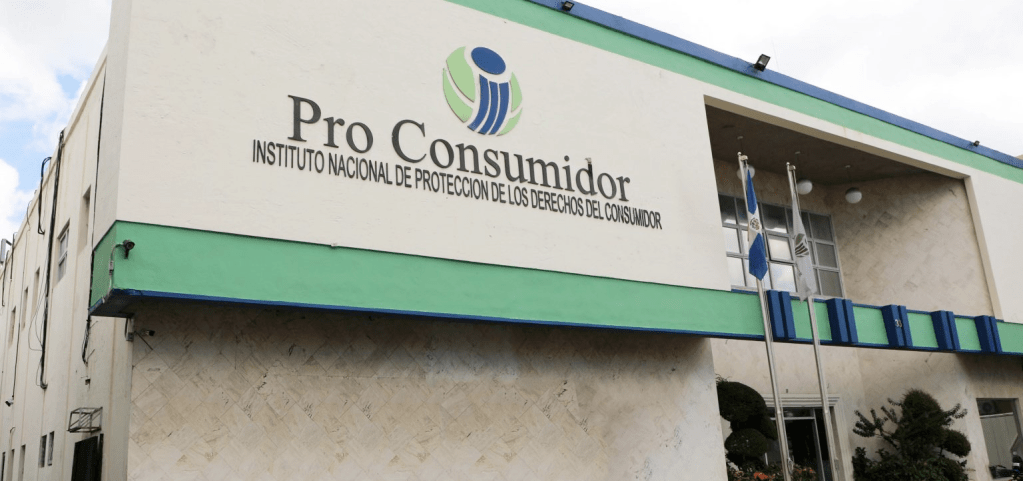
Dominican Republic – Resolution issued gives deadline to industrialists, traders and importers to comply with food labeling standards

The National Institute for the Protection of Consumer Rights (Pro Consumidor) issued Resolution 1579-2022 which sets a term of 120 calendar days for industrialists, traders and importers to comply with the labeling regulations in the Dominican Republic.
This was informed by the executive director of Pro Consumidor, Dr. Eddy Alcántara, following the issuance of the resolution, on which he explained that the same establishes that “any individual or legal entity that commercializes, imports, produces or has ordered the partial or total production to a third party of a previously packaged food must comply with the requirements of the product labels as established by NORDOM 53”.

Article – CARICOM’S efforts to tackle unhealthy diets: A cautionary tale for Latin America

The Caribbean Community (CARICOM) is currently burdened with high rates of non-communicable diseases (NCDs). Unhealthy diets are a major factor driving the region’s increased NCD rates. Since the 1990s, trade agreements have facilitated an influx of ultra-processed foods and sugary beverages into the region. These unhealthy commodities contain excess critical nutrients, which are closely linked to the top three NCDs risk factors in the Americas––high blood pressure, high blood sugar, and obesity. Mandating front-of-package warning labels (FOPWL) as part of a suite of public health interventions is a scientifically proven, human-rights compliant response to promoting healthier diets. FOPWL allows consumers to correctly, and quickly, identify pre-packaged food items that contain excess critical nutrients. Recognizing this, the CARICOM Regional Organization for Standards and Quality (CROSQ) revised its regional standards on the labeling of prepackaged foods to include FOPWL. However, the regional food and beverage industry worked assiduously to undermine CROSQ’s normative effort. In its quest, the industry exploited regional integration mechanisms, co-opted human rights and decolonization narratives to decenter public health and to seize autonomy over the FOPWL process. This paper analyses these strategies to serve as a cautionary tale for Latin America.

Brazil – Artificial sweeteners: regulation in Brazil, technological implications in food production and health

Sweeteners provide a sweet taste to foods and are used to replace sucrose and reduce caloric value. Acesulfame potassium, aspartame, sodium cyclamate, saccharin, sucralose and neotame are the artificial sweeteners regulated in Brazil by the Brazilian Health Regulatory Agency (ANVISA). The consumption of these additives has become controversial due to recent scientific evidence questioning their safety and outcomes regarding weight loss, dysbiosis of the intestinal microbiota, insulin resistance, diabetes and cancer. Even today, little is known about the long-term consequences of their consumption. Therefore, this study aimed to carry out a review of artificial sweeteners regulated in Brazil, contextualizing their regulatory framework, the technological implications regarding their use and the effects on health. Considering the now controversial outcomes regarding the consumption of many artificial sweeteners,and the longperiod in which levels of acceptable daily intakehave been in place, it is suggested their consumption shouldnownot be encouraged, being restricted to population groups that have a risk-based physiological or metabolic need to replace sucrose. Also, for these cases, it would be importanttodifferentiatebetween foods containing different sweeteners (or tabletop sweeteners), to alleviate possible chronic health effects. New studies with more robust and consistent methodologies are required to support the safety assessment reviews of each artificial sweetener.

Brazil – ANVISA publishes updated guide to questions and answers on dietary supplements

The eighth edition of the Dietary Supplement Q&A document has 178 questions and answers with updated guidance on the regulatory framework for dietary supplements. In this edition, the following topics have been added or updated from the last edition:

a) introduction and other answers throughout the document with the exclusion of individual hyperlinks redirecting to the texts of the standards and the inclusion of the hyperlink to Food Topics Library;
b) Questions 5 and 6, which clarify the regulatory framework for food supplements and its updates;
c) Question No. 14, which informs on the second version of the Guide for the Instruction of the Procedure for the Request for Evaluation of Probiotics for Use in Foods;
d) Question No. 23, which clarifies the food supplements indicated for sublingual administration.
e) Question No. 37, with new wording on food supplements intended for children;
f) Question No. 40, updating the list of substances considered as doping substances by the World Anti-Doping Agency;
g) Question No. 41, with update of DRC No. 632/2022, which deals with trans fats in food; h) Question No. 41, with update of DRC No. 632/2022, which deals with trans fats in food;
h) Question No. 42, updating the rule on the admissibility of foreign pharmaceutical codes;
i) Question No. 45, on the documentation to be submitted for approval of bidding documents by Anvisa;
j) Question No. 49, on the nutritional value and compliance with the maximum limits of food supplements;
k) Question No. 51, with information on compliance with the deadline for the submission of contributions to Guide No. 16/2018, which deals with the determination of expiration dates of foodstuffs;
l) Question No. 55, on the main changes in the lists of constituents, limits of use, declarations and supplementary labeling of food supplements made by IN No. 102/2021;