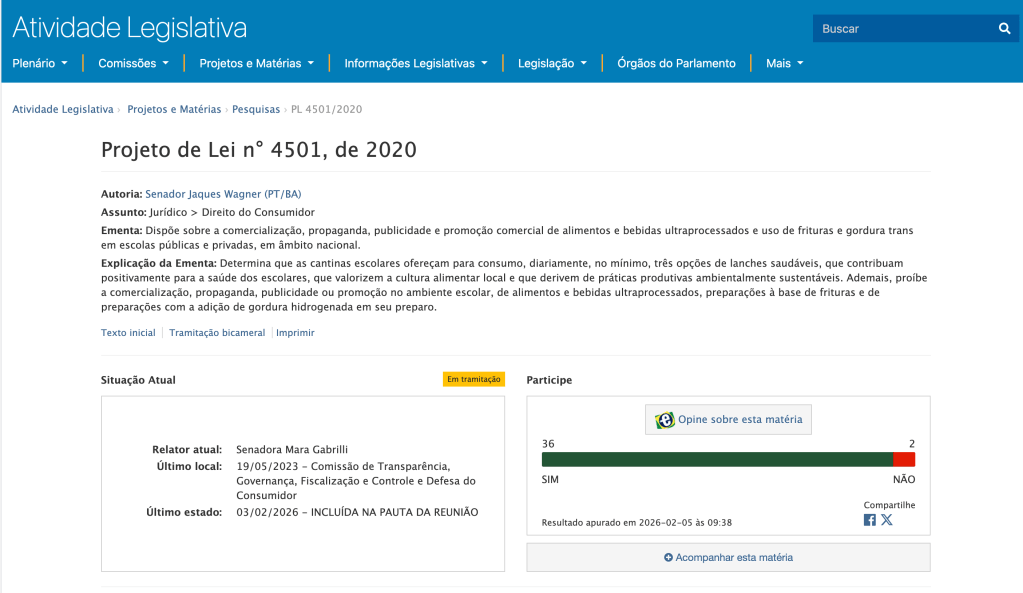
Brazil – Senate is reviewing a bill concerning the labeling of ultra-processed foods

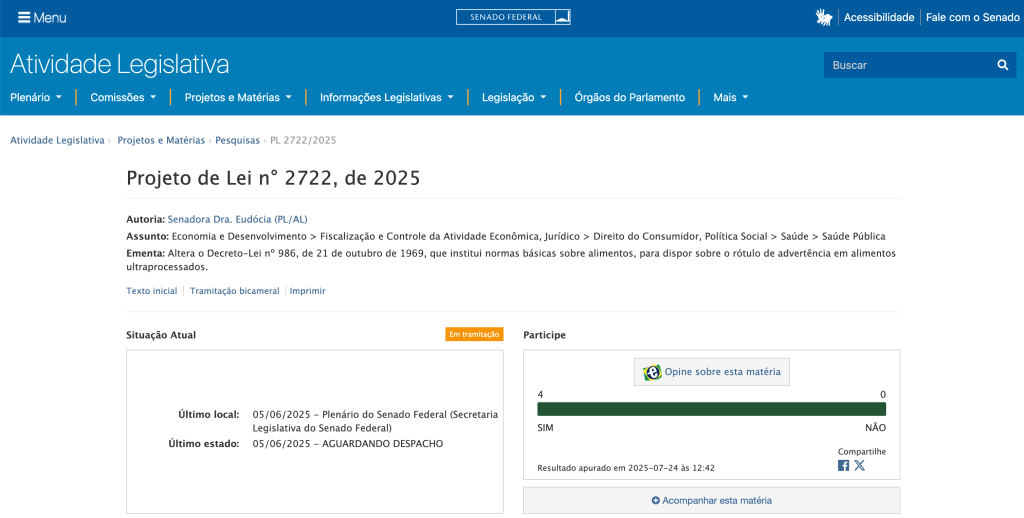
The Federal Senate is expected to consider Bill 2.722/2025, which proposes mandatory warnings regarding the potential carcinogenic nature of ultra-processed foods on product labels. This initiative, introduced by Senator Dr. Eudócia (PL-AL), is awaiting referral to the thematic committees of the Chamber. The bill aims to amend Decree-Law No. 986 of 1969, which regulates basic food standards.

If approved, the bill requires that ultra-processed products clearly and visibly display the phrase “high carcinogenic potential” on the front of the packaging. The proposal also stipulates that the competent authorities will be responsible for monitoring and ensuring compliance with this measure, imposing penalties on violators in accordance with the Consumer Protection Code, as well as other administrative sanctions.

Dr. Eudócia justifies the proposal as a means to enhance transparency and ensure that consumers have access to information regarding the risks associated with the consumption of highly processed products. The senator emphasizes that ultra-processed foods often contain ingredients that are rarely used in home cooking and additives that may hinder consumers and health professionals from identifying these products

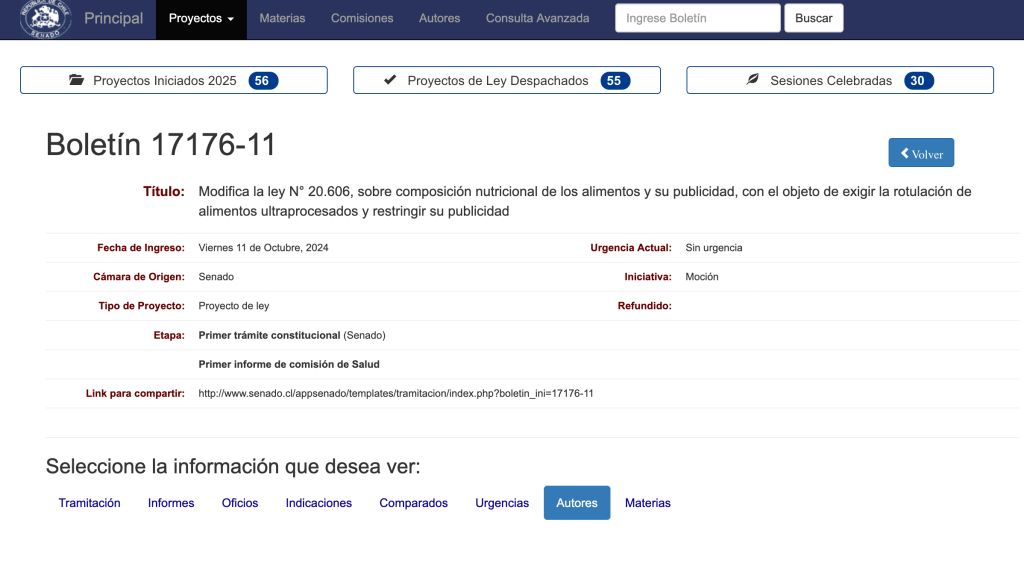
Chile – Senators propose a bill to amend Law No. 20,606 to incorporate the category “ultra-processed” in the stamp system

Senator María José Gatica presented the details of the bill that modifies Law N° 20.606 on the nutritional composition of food and its advertising, with the aim of requiring the labeling of ultra-processed food, restricting its advertising and contributing in this way to reduce diseases associated with overweight and obesity.

The National Renewal (RN) legislator explained that the proposal, supported by parliamentarians from different parties, seeks to incorporate the category of “ultra-processed” in the mandatory labeling of food. These products, linked to diseases such as obesity, hypertension and type 2 diabetes, would be identified with a specific seal on their label to provide clear and accessible information to consumers.

Together with Senator Juan Luis Castro, they agreed that “the current labeling system has been a world model, but it is necessary to move forward to include this type of food, which is directly related to the increase of chronic diseases in our society”.