PAHO congratulates Colombia for approving regulations that will promote the elimination of industrially produced trans fats in foods

The Pan American Health Organization (PAHO/WHO) congratulates Colombia for the approval of resolution 2066 of October 23, 2024, which establishes “the technical regulation that defines the uses and maximum contents of industrial trans fats and partially hydrogenated oils and dictates other provisions.”

This measure will promote the elimination of industrially produced trans fats in food, helping to protect the cardiovascular health of the population. Excessive consumption of trans fats is associated with an increased risk of developing and dying from coronary heart disease.

The regulation, after going through a transparent process of public consultation and regulatory impact analysis, was approved by the executive branch. In this regulatory instrument, the Ministry of Health and Social Protection adopts the best practices of PAHO/WHO for the elimination of industrially produced trans fats from food in Colombia. The first is the prohibition of the use of partially hydrogenated oils in food. The second is the establishment of a 2% limit for other industrially produced trans fatty acids within the total fats.

Colombia: PAHO congratulates the Ministry of Health for its efforts in food labeling

The Pan American Health Organization (PAHO) congratulated the Ministry of Health and Social Protection (MinSalud) for advancing the process of labeling processed foods.
Through its Twitter account, the PAHO delegation in Colombia assured that this modification is an advance in public health in the country.

“PAHO congratulates the authorities for the publication of the new front labeling resolution that modifies Resolution 810. It is a great advance in the prevention of obesity in Colombia,” said the agency.

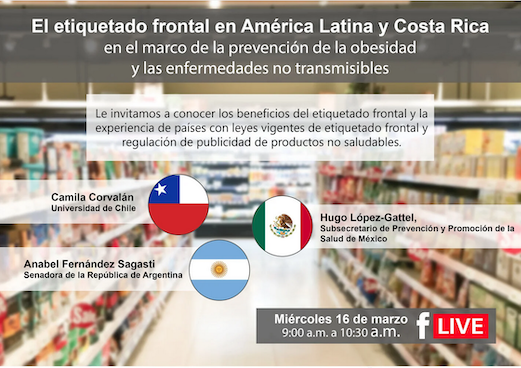
The Americas / PAHO – Webinar: Front-end labeling in Latin America and Costa Rica in the framework of obesity and noncommunicable disease prevention

Objective: To contribute to the discussion on the aspects concerning front labeling regulations of food products and non-alcoholic beverages, presenting the international experience generated in the countries of the region, sharing lessons learned and new evidence obtained. We seek to sensitize national stakeholders from all sectors on the public health impact of measures such as front-of-pack nutrition labeling to improve nutrition and contribute to stop the increase of overweight and obesity and non-communicable diseases in the population.