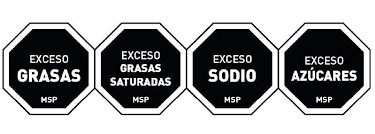
The Healthy Eating Movement (MAS in Spanish), in collaboration with civil society organizations united in the Alliance Panama for Health, formally presented to deputies, authorities, and organizations the document certifying the collection of over 15,000 signatures supporting the front warning nutritional labeling in Panama, a bill currently under consideration in the National Assembly.
In this context, Dr. Reina Roa, National Director of Public Health at the Ministry of Health (Minsa in Spain), reaffirmed the government’s commitment to promoting policies that safeguard the health of the population, emphasizing that front warning labeling is a crucial tool in this regard.
Nutritional warnings have gained popularity, particularly in the region of the Americas, to facilitate the identification of products with excessive content of nutrients associated with non-communicable diseases and encourage healthier food choices. Although warnings have been shown to be effective, an in-depth understanding of the reasons why some consumers do not use them is still lacking. The aim of the present work was to explore self-reported use of nutritional warnings and to identify the reasons for not considering nutritional warnings for making food purchase decisions after policy implementation in Uruguay. A non-probabilistic sample of 858 Uruguayan participants was recruited using an advertisement on Facebook and Instagram. Through an online survey, self-reported use of nutritional warnings was asked using a closed-open ended questions. Participants who reported not considering warnings to make their purchase decisions were asked to explain the reasons why using an open-ended question. Responses were analysed using deductive coding, based on the Behavioural Drivers Model. Thirty seven percent of the participants stated that the warnings had not influenced their purchase decisions. Motives for not being influenced by the warnings were related to lack of interest, attitudes, lack of perceived self-efficacy, cognitive biases and limited rationality when making purchase decisions. In addition, structural barriers, such as availability, cost and trust in the food industry also emerged from participants’ responses. Strategies to encourage the use of warnings should include communication campaigns and policies to address structural barriers related to the perceived availability and affordability of healthy foods.
The present work aimed to assess Uruguayan consumers support of the inclusion of nutritional warnings on four types of retail food establishments and to obtain consumer insights on how the warnings could be implemented in such establishments. For this purpose, an online survey was conducted with a non-probabilistic sample of 547 participants recruited via an advertisement on social media. Participants were requested to indicate their degree of agreement with the implementation of nutritional warnings in bakeries, delicatessens, fast-food restaurants and while ordering food online, and to provide ideas on how to include this information for each establishment. Results suggested that the inclusion of nutritional warnings in retail food establishments was positively perceived by participants. Participants highlighted that warnings should be highly visible to customers while making purchase decisions, so they become a relevant cue for making food choices. In particular, the retail display case and menu boards were identified as key locations for warnings in bakeries, delicatessen, and fast food restaurants, respectively. These results contribute valuable insights on how to implement the extension of nutritional warnings to unpackaged foods or foods made and packaged at the point of purchase.


 infoAlimentario