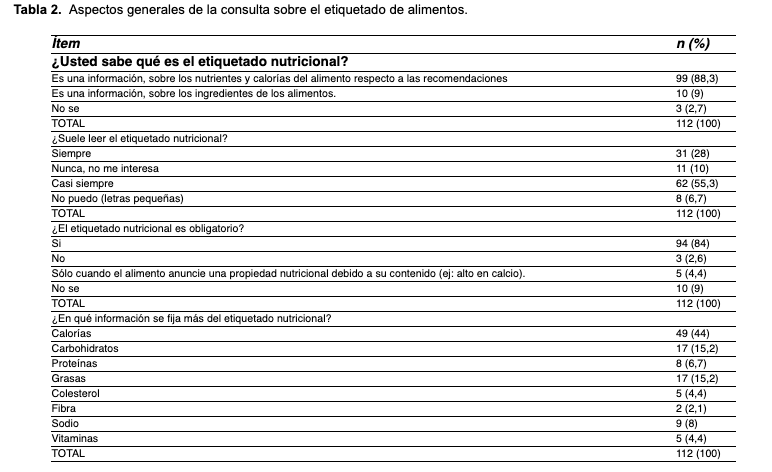
Consumers often report difficulties in interpreting the quantitative information contained in the nutritional labels of foods. The objective was to study the main knowledge about food labeling that the adult population of Paraguay has incorporated in the period of August 2021. This is a cross-sectional descriptive observational study in which male and female adults between 18 and 60 years old consumers of foods with nutrition labelling were evaluated. Sociodemographic data and knowledge about nutritional labeling of food was collected through an online survey with the Google forms tool. Seventy three percent was female, the average age was 36.9 years, 57.1% lived in Greater Asunción, 49.1% had a university education level, and 37.5% were health professionals. The general aspects about nutritional labeling revealed that 88.3% knew the concept, 55.3% said that they read it almost always, 84% knew that it was mandatory and 44% paid more attention to calories. When evaluating general knowledge, 91% knew the difference between expiration and preferential consumption, 71.4% knew the concept of indicative quantities, 62.5% knew which are the less healthy fats, and 71.4% correctly answered the concept of light food. The survey respondents had an adequate general knowledge about nutrition labeling, however, there was a considerable percentage of individuals who did not know the basic concepts, for which consumer-focused nutrition education interventions should be carried out.


 infoAlimentario