Panama – Industry representatives request greater clarity in the labeling of substitute products

Amid the growing debate regarding the use and commercialization of products in Panama, the Panamanian Industrial Union (SIP in Spanish) has called for the strengthening of regulations and transparency in food labeling, aiming to safeguard the consumer’s right to be accurately informed.

The issue, which gained prominence recently due to the conflict between milk producers and processing plants, has highlighted the necessity to clearly differentiate between original products and substitutes, which imitate or replace others without being identical in composition.

Lorena Henríquez, a representative of the SIP, explained that the discussion extends beyond the dairy sector. “This is a timely issue that erupted due to milk, but it is applicable to other sectors. Consumers often do not understand what a substitute or imitation is. Greater clarity in regulations and labeling is needed,” she stated.

Source of information: En Segundos

Colombia – INVIMA introduces new guidelines for the depletion of food and beverage labels

The National Institute for Food and Drug Surveillance (INVIMA in Spanish) informs all stakeholders that guidelines have been established for the process of depleting labels and using adhesives on food and beverages, in accordance with Resolution 5109 of 2005 and 810 of 2021.

The requirements were set forth in resolution 2025013945. This administrative act introduces significant changes compared to the previous procedure, aiming to enhance clarity, efficiency, and proportionality in the regulation for users of the health system:

  • Depletion without prior authorization: For the first time, it is permitted that, in specific cases where there is no health risk or error in the product’s nature, labels can be depleted without the need for prior authorization from Invima. This measure aims to reduce unnecessary administrative burdens on the entity, facilitating the legal marketing of products with minor labeling errors.
  • Authorizations with a defined timeframe: In instances where prior authorization is required, it will be granted for a single period of 18 months through a duly justified administrative act.
  • Individual analysis for unaddressed cases: Situations not explicitly covered by the new resolution will be evaluated on a case-by-case basis to ensure a technical, consistent, and fair application of the regulation.

It is important to note that there will be no changes to the cost of the process or the time taken to review applications. This ensures that regulatory adjustments do not impose additional burdens on industry stakeholders. Through this resolution, Invima reaffirms its commitment to advancing a technical, proportional health regulation that serves public health and development.

Chile – Proposal for a new graphic standard for food labeling in Chile

Article published in the book Propuestas para Chile 2024. The research was developed within the framework of the UC 2024 Public Policy Competition. Despite existing regulations, in Chile there are still deficiencies in the legibility and comprehension of labeling, exposing the population, especially those with dietary restrictions, to health risks. This report proposes a new graphic standard for labeling, based on a study of 300 products and a usability test that revealed legibility problems in aspects such as the size and contrast of the typography, the format of the allergen declaration and the difficulty to identify the ingredients section.

Panama – Healthy Eating Movement asks deputies to approve the bill on nutritional labelling

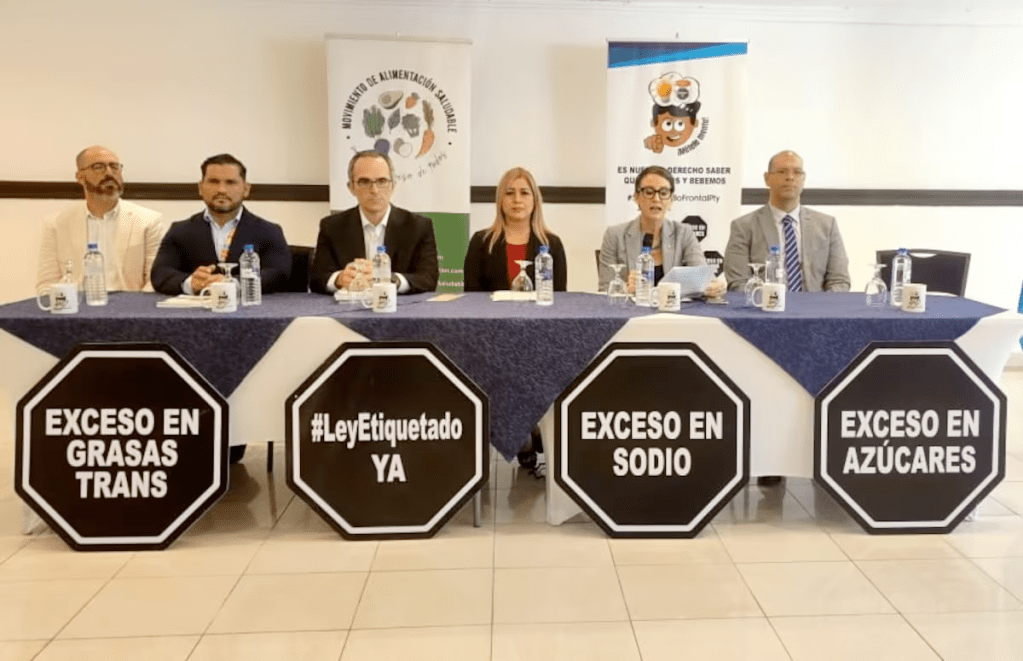
The Healthy Eating Movement requested this Thursday, October 17, the National Assembly to approve Bill 57, which proposes the implementation of a nutritional warning front labeling on various products.

In a press conference, members of the group explained that the measure seeks to reduce the incidence of chronic non-communicable diseases such as diabetes, renal and cardiovascular diseases and cancer, all related to the excessive consumption of processed products high in salt, sugar and fats.

They even indicate that this is shown by statistics. The 2019 Health Census revealed that 13% of children under 5 years of age and 37% of school-age children and adolescents in Panama are overweight.

Haiti – The Ministry of Commerce strengthens its actions for consumer protection

As part of its commitment to ensure optimal consumer protection, the Ministry of Commerce and Industry (MCI) is stepping up its market control efforts through an extensive inspection operation to be carried out starting in October. 9 to 12, 2024. This initiative affects supermarkets, warehouses in the capital and surrounding communities, where rigorous controls will be carried out on a wide range of products.

Under the direction of Minister James Monazard, more than a dozen newly sworn-in inspectors will carry out inspections to verify several essential aspects: the price of staple products; the quality and condition of the products offered for sale; the storage and conservation conditions of food products, particularly refrigerated and frozen; the labeling and presentation of products in accordance with the standards in force; the proper functioning of sales facilities, including gas stations, to ensure the accuracy of pumps.