Costa Rica – Congress expands breastfeeding rights with the approval of Bill No. 24481

The Legislative Assembly approved an expansion of breastfeeding rights, which will allow the extension of leave every three months, for the entire period that the baby is breastfed, and include periods for milk extraction during the workday.

The project 24481 “Law to protect, promote, and support breastfeeding,” driven by Deputy Antonio Ortega from the Broad Front (FA), was unanimously approved in its second debate in the third full-power committee on Wednesday, March 18.

The bill states that only 27% of babies in Costa Rica are breastfed until six months, highlighting the need to update the legislation to improve this situation.
Extended breastfeeding has nutritional and emotional benefits that promote children’s health. In this sense, babies who are breastfed for a longer period get sick less often and recover more quickly from illnesses. Therefore, this bill establishes that the work leave (one month before birth and three months after) can be extended every three months for as long as the baby is breastfed, thru medical certification.

At the workplace, the breastfeeding mother will have one hour to breastfeed the child, for which she can choose to arrive one hour later or leave one hour earlier than the usual schedule, or use half-hour intervals twice a day, or 15-minute intervals every two hours during regular workdays or 15-minute intervals every three hours during overtime.


Chile – Senate Debate on Labeling and Advertising of Ultra-Processed Foods

The Senate Health Commission is currently engaged in discussions regarding a proposed law that mandates the labeling of ultra-processed foods and restricts their advertising. There is ongoing debate about the definition of ultra-processed foods and their impact on overweight and obesity rates. Over four sessions, lawmakers have heard from nutrition experts and industry representatives, including organizations like FAO and various academic and consumer associations, to gather technical insights before voting on proposed amendments.

The initiative, led by Senator María José Gatica and supported by other legislators, defines ultra-processed foods as those containing more than five ingredients derived from industrial processes. It also stipulates that advertising for these products cannot target individuals under the age of fourteen, covering all forms of promotion in both traditional and digital media.

Proponents of the bill argue that it is essential to improve public nutrition in light of high obesity rates. They highlight that products with numerous ingredients often contain high levels of saturated fats and calories, adversely affecting cardiovascular health. A diet focused on non-industrial foods is suggested to help prevent diseases such as hypertension, diabetes, and certain cancers. The NOVA classification system, developed by the University of São Paulo, has been referenced in the debate, categorizing foods based on their level of processing.

However, industry representatives have raised concerns about the NOVA classification, noting that it has not been officially recognized by international bodies like the WHO and FAO, and that the number of ingredients does not necessarily reflect a product’s nutritional quality. They also argue that some ultra-processed foods play important roles in public nutrition programs for vulnerable populations, such as infants, pregnant women, and the elderly.

Reference image

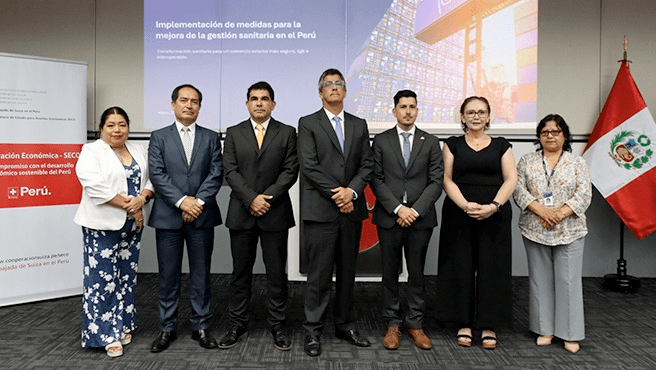
Peru – Ministry of Health trains Digesa technical team in new digital tools for food control

The Ministry of Health (Minsa in Spanish), thru the General Directorate of Environmental Health and Food Safety (Digesa), participated in the presentation of the Health Risk Management System (SGR) for sanitary control procedures of food and the Food Safety Notification and Alert Management System.

During the day, the progress of the initiative “Implementation of Measures for the Improvement of Health Management in Peru” was presented, which includes the development of the Health Risk Management System, the execution of joint inspections between competent authorities, and the launch of the food safety notification and alert system.

These instruments will allow for prioritizing health interventions, improving inter-institutional coordination, and acting promptly in the face of potential risks, aligning with international standards and contributing to the facilitation of foreign trade.

Likewise, it was highlighted that the Health Risk Management System incorporates evaluation matrices and harmonized technical criteria, while the alert system will facilitate the early identification of hazards that may affect food safety.

Argentina – Ministry of Economy updated the regulations for evaluating organisms obtained thru New Genetic Improvement Techniques

The Secretariat of Agriculture, Livestock, and Fisheries of the Ministry of Economy of the Nation, thru Resolution No. 24/2026, approves a new regulation that governs activities related to GMOs for agricultural, food, and agro-industrial use.

In this sense, the regulation updates and optimizes the Prior Consultation Instance (PCI), already provided for in the current regime, with the aim of organizing procedures and clarifying definitions, required information, response times, and evaluation criteria, in order to provide greater predictability to developers, researchers, and companies. In this way, a key tool is strengthened to determine, in advance, whether an organism is subject to the regulations applicable to GMOs.

The new resolution replaces the previous regime and simplifies the processes, incorporating more precise technical criteria, reducing evaluation times, costs, and eliminating unnecessary administrative burdens. In particular, it improves the procedures for small and medium developers, promoting a more equitable and competitive environment.

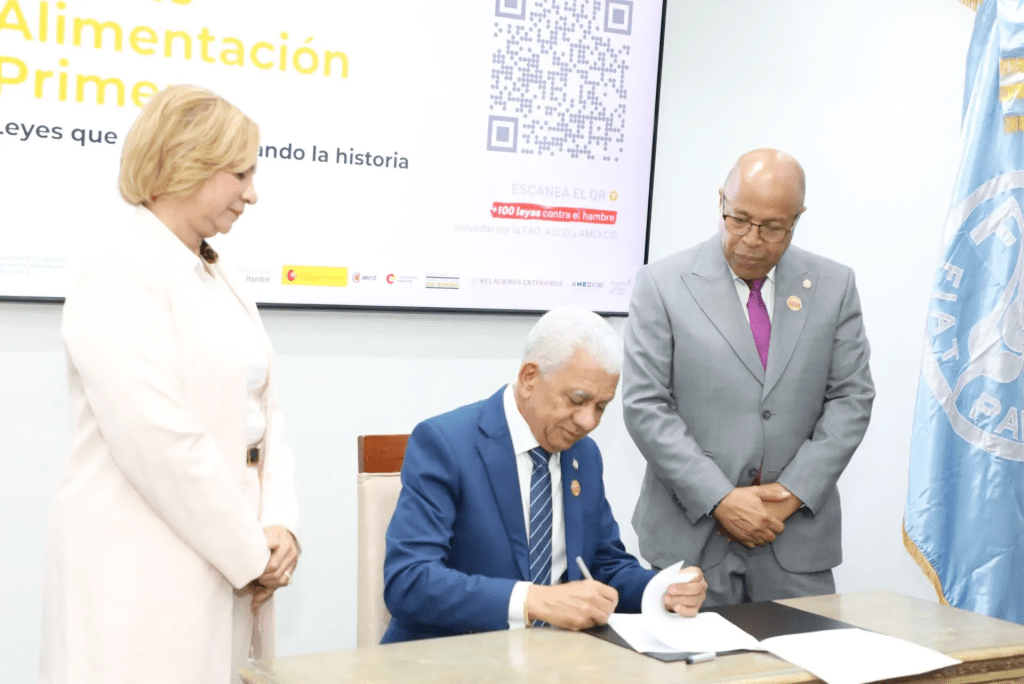
Dominican Republic – In the National Congress, the “Food First” Pact was signed

The National Congress of the Dominican Republic was the venue this Tuesday for the signing of the Parliamentary Pact “Food First,” an initiative that reaffirms the country’s commitment to strengthening food security and achieving more efficient, inclusive, resilient, and sustainable agri-food systems.

The signing of the pact was led by the presidents of the Senate and the Chamber of Deputies, Ricardo de los Santos and Alfredo Pacheco, respectively, along with the General Coordinator of the Parliamentary Front Against Hunger in Latin America and the Caribbean, Deputy Soraya Suárez.

During the event, Suárez, in her capacity as Regional Coordinator for Latin America and the Caribbean-FPCH FAO, highlighted that she will continue to promote initiatives to achieve “zero hunger” in the Dominican Republic.