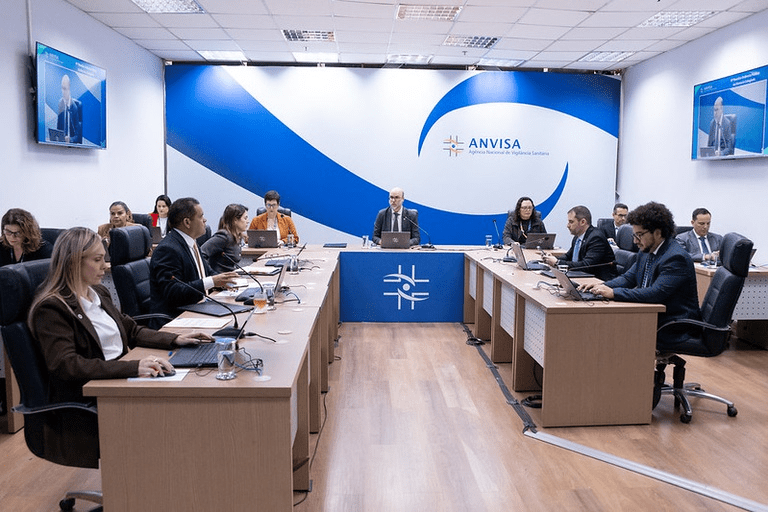
The National Health Surveillance Agency (ANVISA in Portuguese) approved four Collegiate Board Resolutions (RCC) related to the Brazilian Pharmacopeia (FB). The regulations were reviewed at the 8th Public Meeting of the Collegiate Board in 2026.

The National Health Surveillance Agency (ANVISA in Portuguese) approved four Collegiate Board Resolutions (RCC) related to the Brazilian Pharmacopeia (FB). The regulations were reviewed at the 8th Public Meeting of the Collegiate Board in 2026.

The Ministry of Social Development, Assistance, Family, and Fight Against Hunger (MDS in Portuguese) held a workshop on Thursday, June 7, on the development of the Integrated Action Protocol of the National Food and Nutritional Security System (Sisan) in situations of disaster, emergency, and public calamity. The objective is to gather contributions, based on various experiences, for the development of a national protocol that guides the actions of the federative entities in the prevention and response to extreme climate events in the field of food and nutritional security.

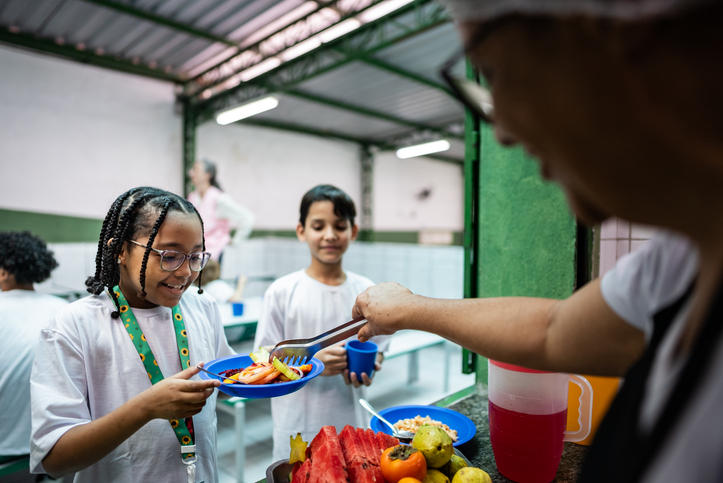
The Chamber of Deputies approved this Wednesday, in its first discussion, the school food and nutrition bill, authored by Soraya Suárez, which includes training for teachers, technicians, local authorities, suppliers, and other actors involved in the management of food intended for consumption in educational institutions.
The orientations will be conducted by the National Institute of Student Welfare (INABIE) and will address the importance, benefits, and other aspects related to school nutrition, with the purpose of promoting lifelong education and achieving the established objectives.
The project aims to regulate the school meals of children and adolescents attending both public and private educational centers, as well as to promote the formation of healthy eating habits thru food and nutritional education actions and the intake of foods appropriate to nutritional requirements that ensure well-being and health, with the purpose of enabling them to make the most of their teaching-learning process.

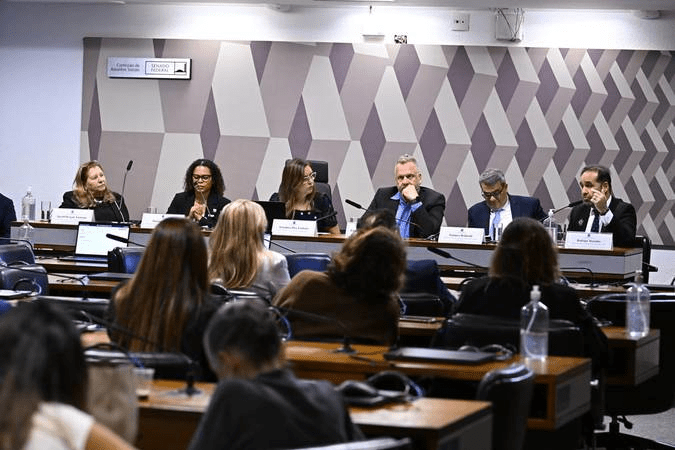
The Social Affairs Committee approved a bill that facilitates food donations by businesses, such as supermarkets and restaurants. The measure covers food that would otherwise be discarded but is still safe to eat. The author of the proposal, which amends the National Policy to Combat Food Loss and Waste, is Senator Giordano (Podemos-SP). He states that his goal is to encourage donations and reduce food waste. The text stipulates that each donation must be formalized through a contract (or collaboration agreement) between the donor and the intermediary. The bill will proceed directly to the Chamber of Deputies for review, unless an appeal is filed.

The National Administration of Medicines, Food and Medical Technology and the Ministry of Agriculture, Livestock, and Fisheries, thru Joint Resolution 2/2026, incorporate Basic Methacrylate Copolymer (INS 1205) and Anionic Methacrylate Copolymer (INS 1207) into the Argentine Food Code (CAA), with the aim of being used as coating agents in solid dietary supplements.
These compounds have a positive scientific opinion from the European Food Safety Authority (EFSA) for the proposed uses as food additives. Their function is to act as a coating film or glazing agent in solid dietary supplements (tablets, capsules, or pills).
Main Benefits:
The regulation sets a maximum limit and restricts its use in supplements intended for the pediatric population (infants and young children).