Articles – Brazil: Changes brought about by the new nutrition labeling of packaged foods: a review

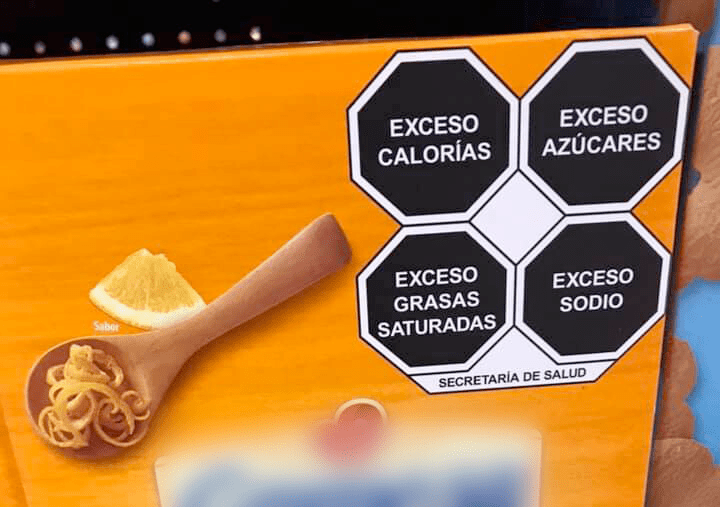
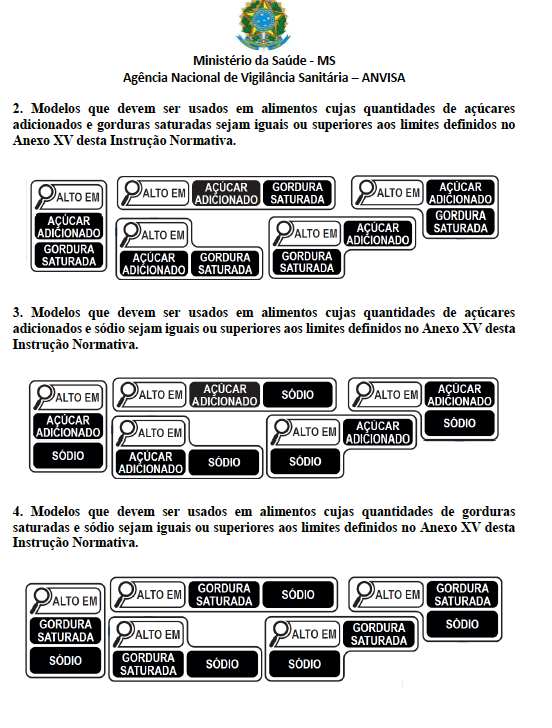
Nutrition labeling of packaged foods is essential to promote public health, proper and healthy eating, and to combat obesity and chronic non-communicable diseases. Despite this, the information used on food labels can be difficult for consumers to understand, raising doubts about their healthfulness. In this context, it is necessary to use information that is easy to understand for laymen, such as front-of-package nutrition labeling, used in more than 40 countries and approved in Brazil through Resolution RDC No. 429/2020 (nutrition labeling of packaged foods) and Normative Instruction No. 75/2020 (technical requirements for the declaration of nutrition labeling of packaged foods). In view of the above, the objective of the present review was to compare the new legislation for nutrition labeling of packaged foods and the repealed resolutions, focusing on changes in the table of nutrition information, nutrition claims and the introduction of front nutrition labeling on food labels.
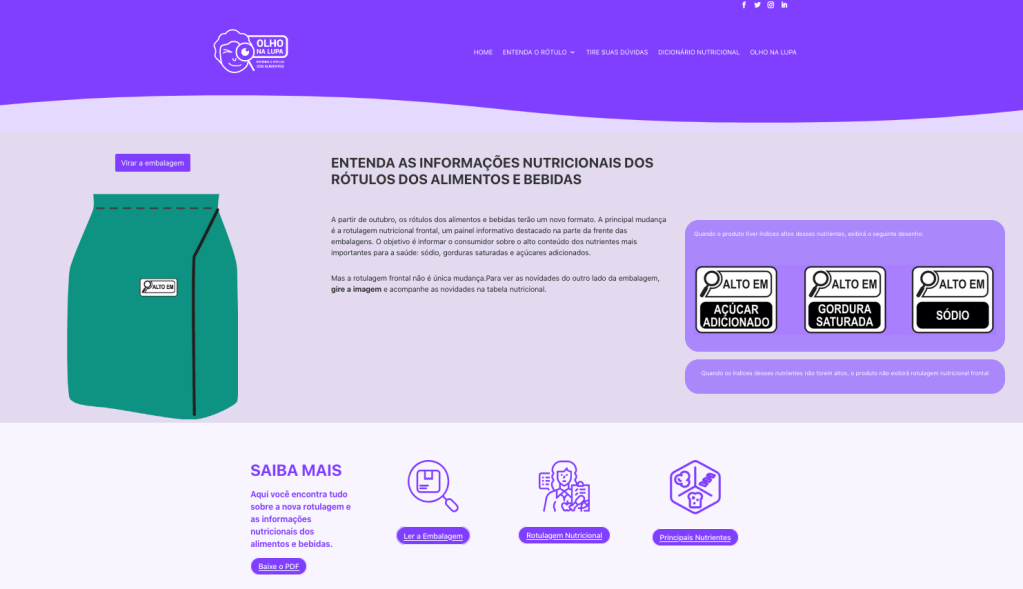
The Americas – Brazil: Companies launch new platform to inform about food labeling

Since April, Brazilian consumers will have access to a digital educational platform dedicated to explaining how to read and understand the information on food labels. Olho na Lupa, composed of the website http://www.olhonalupa.com.br and profiles on social networks, is an initiative of 11 associations representing the food and beverage and retail industry.

Articles – Mexico: Weight stigma in Mexico and front-of-package labeling. A systemic review

Front-of-package food labeling is a public health strategy implemented to reduce the consumption of processed food to decrease the incidence of obesity in Mexico. Although there is an increasing focus among public health officials on implementing policies designed to address obesity, much less attention has been paid to how these policies could impact those with disordered eating, despite the fact that millions suffer from such illnesses. Objective. The aim of this article is to present scientific literature related to front-of-package labeling and its impact on obesity and eating disorders. Method. Papers related to nutrition labels and obesity and eating disorders were reviewed. Results. The papers reviewed found no significant improvement regarding the consumption of processed food. Other measurements, including nutritional education, availability, physical education, and body-image acceptance, have a better impact on nutritional health. Discussion and conclusion. Front-of-package labeling is regarded as an important measure in the attempt to reduce obesity levels. However, there is insufficient scientific evidence to suggest that this type of labeling reduces the consumption of processed foods in patients with obesity.

The Americas – USA: Proposed Scientific Questions to Inform the Development of the Dietary Guidelines for Americans, 2025-2030

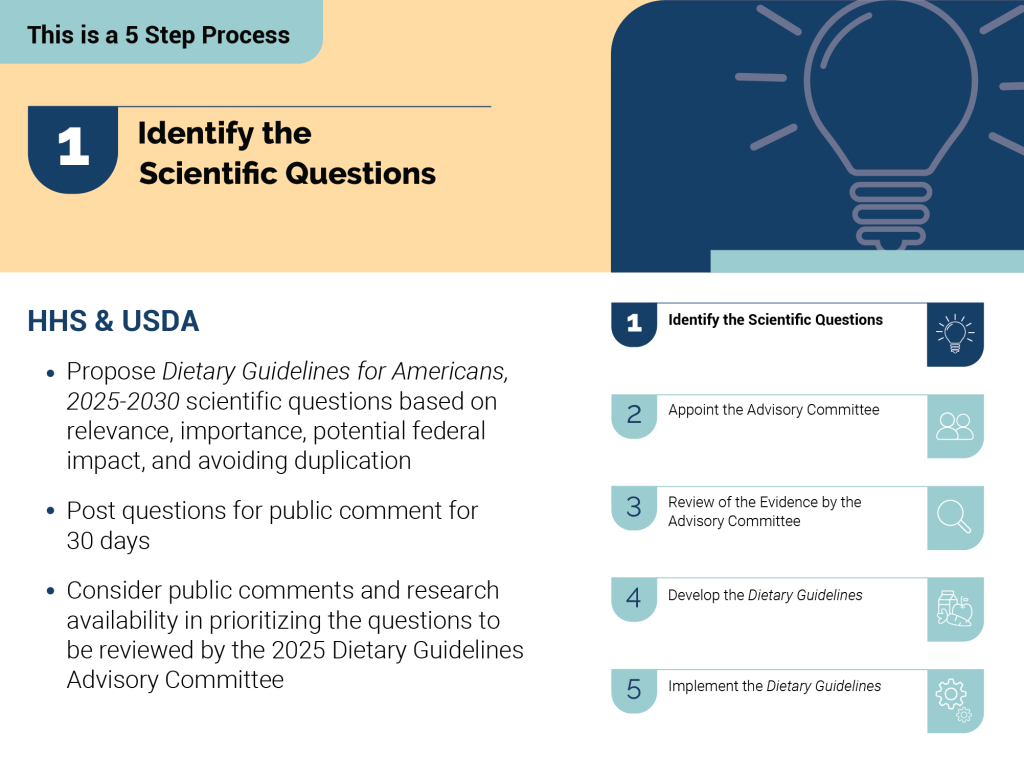
As the first step in the development process of the Dietary Guidelines for Americans, 2025-2030 (Dietary Guidelines), the U.S. Departments of Health and Human Services (HHS) and Agriculture (USDA) are releasing proposed scientific questions for public comment. The public comment period will be open for 30 days starting April 15, 2022, through May 16, 2022 at 11:59 PM ET. HHS and USDA are committed to transparency and providing opportunities for public participation during this five-step process leading up to the release of the Dietary Guidelines in 2025.

The Americas – Mexico: COFEPRIS detains more than 10.000 domestic and imported products for non-compliance with NOM-051 standard

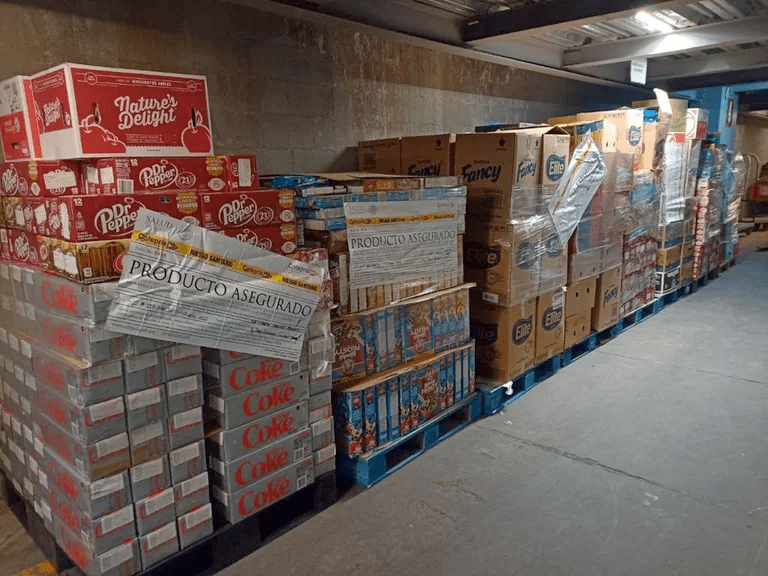
In a new joint operation, the Federal Commission for the Protection against Health Risks (COFEPRIS in Spanish) and the Federal Consumer Protection Agency (PROFECO in Spanish) conducted verification visits to supermarkets in Mexico City, where 10,075 domestic and imported products were immobilized as a precautionary measure for non-compliance with NOM-051 and its modification for prepackaged food and non-alcoholic beverages.