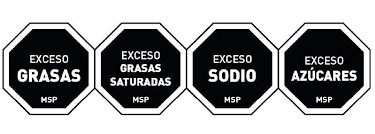
In Mexico, the inclusion of a front-of-pack label in the Official Mexican Standard 051 (NOM-051 for its Spanish acronym) has been widely discussed for years by different stakeholder groups. In 2019, the NOM-051 modification project was proposed, which included front-of-pack warning labels. To be modified, it underwent a public consultation period where stakeholders sent their comments to be reviewed and considered. The purpose of this study was to analyse the stakeholders’ perspectives during the public consultation of the NOM-051 modification project.
Article – Is nutrition labeling associated with decreased obesity? A quantitative approach to nutritional health policy in Ecuador
Few studies assess consumer response to nutrition labeling, especially in less-developed countries. We analyzed the link between nutrition labeling and obesity in Ecuador using a representative cross-sectional sample of 29,770 individuals from the National Health and Nutrition Survey (ENSANUT) in 2018. Nutrition labeling reduced the probability of obesity in adolescent (12–18 years old) and adult (18–59 years old) people by 4% (CI: − 5.7, − 2.2) and 8.4% (CI: − 12.7, − 4.0), respectively. The magnitude of average treatment effect of using nutrition label on obesity ranged from 0.90 (CI: − 1.299, − 0.500) to 1 (CI: − 1.355, − 0.645) BMI points for adolescent, and from 1.16 (CI: − 1.554, − 0.766) to 1.80 (CI: − 2.791, − 0.811) BMI points for adult. The effect of nutrition labeling is greater among the less obese. We recommend that health policy makers and clinicians continue to promote nutrition labeling especially where obesity is not chronic, where nutrition labeling is most successful.

El Salvador – Draft RTS 67.06.02:22 Foods for special diets, nutritional supplements and probiotics. Classification, characteristics, sanitary registration and labeling requirements
The Salvadoran Technical Regulatory Agency (OSARTEC in Spanish) publishes the project RTS 67.06.02:22 Foods for special diets, nutritional supplements and probiotics. Classification, characteristics, sanitary registration requirements and labeling.
This RTS establishes the technical specifications, sanitary registration
This RTS establishes the technical specifications, sanitary registration requirements and labeling of foods for special diets, nutritional supplements and probiotics, according to their respective classification.
It applies to the classification, sanitary registration and labeling of foods for special diets, nutritional supplements and probiotics, manufactured in the country or imported, which are marketed nationally.
Probiotics are excluded with the exception of products combined with nutritional supplements or probiotics.
Article – Efficacy of different front-of-package labeling systems in changing purchase intention and product healthfulness perception for food products in Argentina
Objectives. To identify the front-of-package scheme—Multiple Traffic Light (MTL), Nutri-Score (NS), and black octagon Warning System (WS)—most effective in reducing purchase intention and perceived product health- fulness of drinking yogurts, cookies and cheese spreads, and to assess the joint influence of nutrient claims on the effects. Methods. Randomized-controlled experiment. A within-subjects factorial design was used to evaluate the influence of three independent factors on perceived product healthfulness and purchase intention. A total of 704 adults in Argentina were shown three mock-up products and asked to indicate which product they would buy choosing between pairs of products from different categories and to rate product healthfulness on a 7-point Likert scale. Results. The WS was the most effective in reducing purchase intention in drinking yogurts (OR:0.16, 95%CI: 0.09;0.28), cookies (OR:0.10, 95%CI: 0.05;0.18) and cheese spreads (OR:0.10, 95%CI: 0.05;0.18), and the perception of healthfulness (WS Mean score 3,63 vs No label 4,24, p<0.001), regardless of the participants’ gender, age, and level of education. NS was inefficacious in reducing product healthfulness perception, while MTL had significantly increased how healthful the product was perceived (p<0.001). Nutrient claims increased purchase intention and perception of healthfulness, thus reducing the effectiveness of front-of-package labels (p<0.001). Conclusions. In line with growing evidence, our findings support that WS perform better than NS and MTL in reducing purchase intention and healthfulness perception of products with excessive amounts of critical nutrients associated with the greatest burden of diseases. Front-of-package WS are expected to facilitate the population in Argentina to make healthier decisions.
Brazil – New food labeling requirements go into effect in 5 days
There are only 5 days left for the new food labeling rules to come into force. Food companies should take into account the adequacy schedule.
Established by Resolution of the Collegiate Council of Administration – DRC No. 429 and Normative Instruction No. 75, published in October 2020, the new labeling aims to improve the clarity and legibility of food labels and, thus, help the consumer to make more conscious food choices. .
As of October 9, 2022, products to be launched on the market will already have to have labels appropriate to the new rules. For products already on the market, there are different adaptation deadlines (see timeline below). Among the main changes is the adoption of front-of-line nutrition labeling, as well as changes in the table of nutrition information and claims.
Adequacy period
October 9, 2022
New products entering the market after 10/09/22
October 9, 2023
General foods already on the market
October 9, 2024
Food produced by a family farmer or rural family entrepreneur, solidarity economic enterprise, individual micro-entrepreneur, small agro-industry, artisanal agro-industry and food produced in an artisanal manner.
October 9, 2025
Non-alcoholic beverages in returnable containers, observing the gradual process of label replacement.