The Ecuadorian Standardization Services (INEN in Spanish) published the draft standard NTE INEN 3209 Standard for honey (CODEX STAN 12-1981, MOD). This standard applies to all honeys produced by Apis mellifera bees and regulates all types of honey presentations processed and ultimately intended for direct consumption. Part 2 applies to honey for industrial uses or honey used as an ingredient in other foodstuffs.
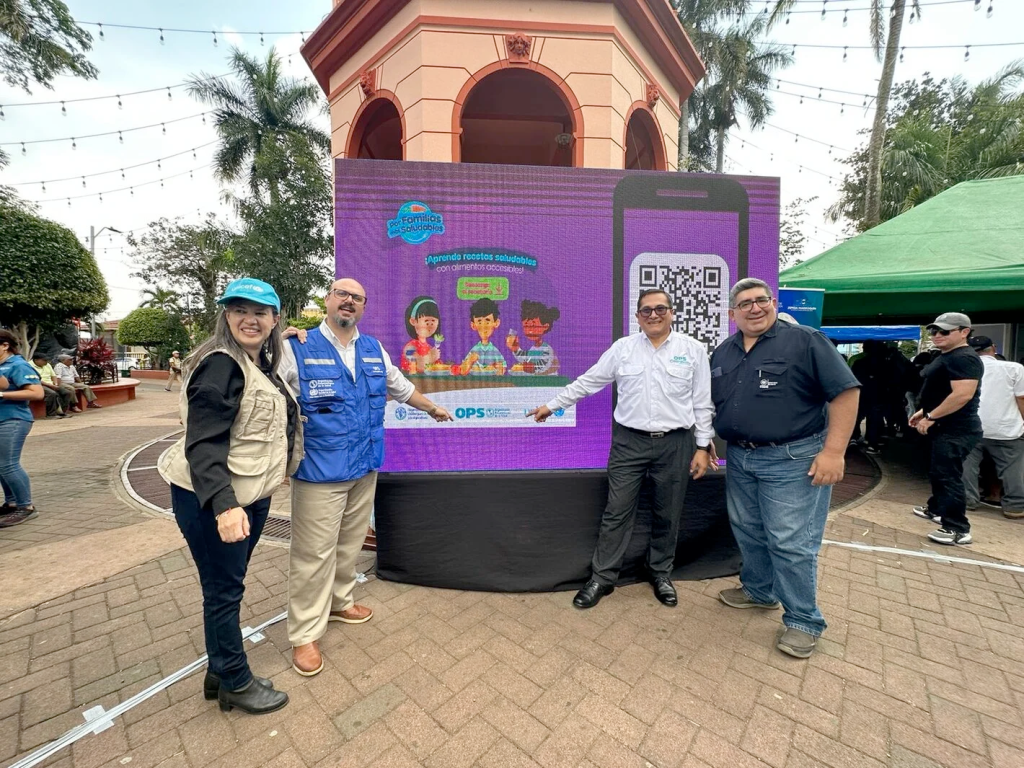
El Salvador – FAO, PAHO and UNICEF present initiative to promote healthy eating
The Food and Agriculture Organization of the United Nations (FAO), the Pan American Health Organization/World Health Organization (PAHO/WHO) and the United Nations Children’s Fund (UNICEF) presented today the community initiative “For Healthier Families”, which contains a series of evidence-based recommendations to promote food practices that contribute to the health, nutrition and well-being of families.
Peru – INDECOPI rules that the ban on the use of stickers to display warning octagons on imported products is a non-tariff trade barrier
The Specialized Chamber for the Defense of Competition of the National Institute for the Defense of Competition and Protection of Intellectual Property (INDECOPI in Spanish) ruled that the prohibition of the use of adhesives for advertising warnings to be placed on imported food and non-alcoholic beverages is a non-tariff trade barrier lacking reasonableness. With this, it confirmed the decision of the first administrative instance on the mentioned prohibition, imposed by the Ministry of Health.
In Resolutions N°0034-2023/SDC-INDECOPI and N°0035-2023/SDC-INDECOPI of April 4, 2023, issued in two proceedings for the elimination of non-tariff trade barriers, the court stated that, although the prohibition is not illegal, the Ministry of Health should have supported its reasonableness; however, such entity did not prove to have identified, before establishing the prohibition, the existence of a problem that the measure was intended to solve, nor its suitability.

USA – FDA Requests Information on Food Labeling in Grocery E-Commerce
The Food and Drug Administration (FDA) is requesting information to help empower consumers with accurate, informative, and accessible food labeling. The purpose of this request is to obtain current information on the content, format, and accuracy of food label information that is presented to consumers through online grocery shopping platforms.
USA – FDA Releases New “Feed Your Mind” Education Materials on GMOs for Consumers
he U.S. Food and Drug Administration (FDA) released new “Feed Your Mind” educational materials to provide science-based information on genetically modified organisms (GMOs). “Feed Your Mind” is an education initiative launched in 2020 to help increase consumer understanding of GMOs and was developed in partnership with the U.S. Department of Agriculture and the U.S. Environmental Protection Agency.
 infoAlimentario