The Brazilian National Health Surveillance Agency (ANVISA) has published Regulatory Instruction IN No 336, which modifies Normative Instruction No. 28, dated July 26, 2018, which establishes the lists of constituents, limits of use, declarations and complementary labeling of dietary supplements.
The Americas
Regulatory news in the Americas
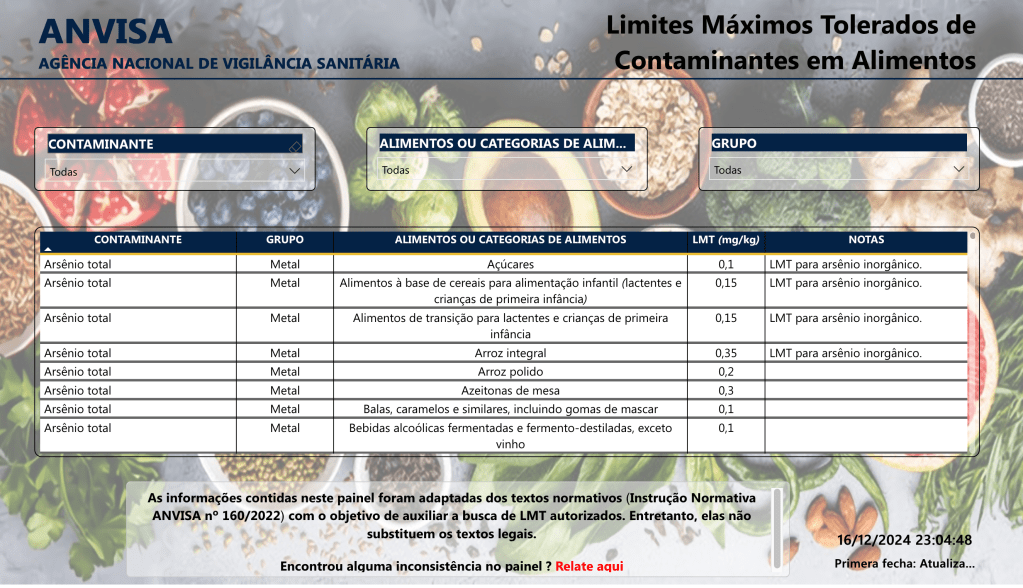
Brazil – ANVISA develops a new consultation panel on maximum tolerated limits of contaminants in food
The National Health Surveillance Agency (ANVISA in Portuguese) announced the new consultation panel on maximum tolerated limits of contaminants in food. The Panel contains information adapted from the text of ANVISA’s Normative Instruction (IN) 160/2022, with the aim of assisting companies and food professionals in the consultation of the maximum tolerated limits of contaminants in food and thus comply with the standards set by the Agency.
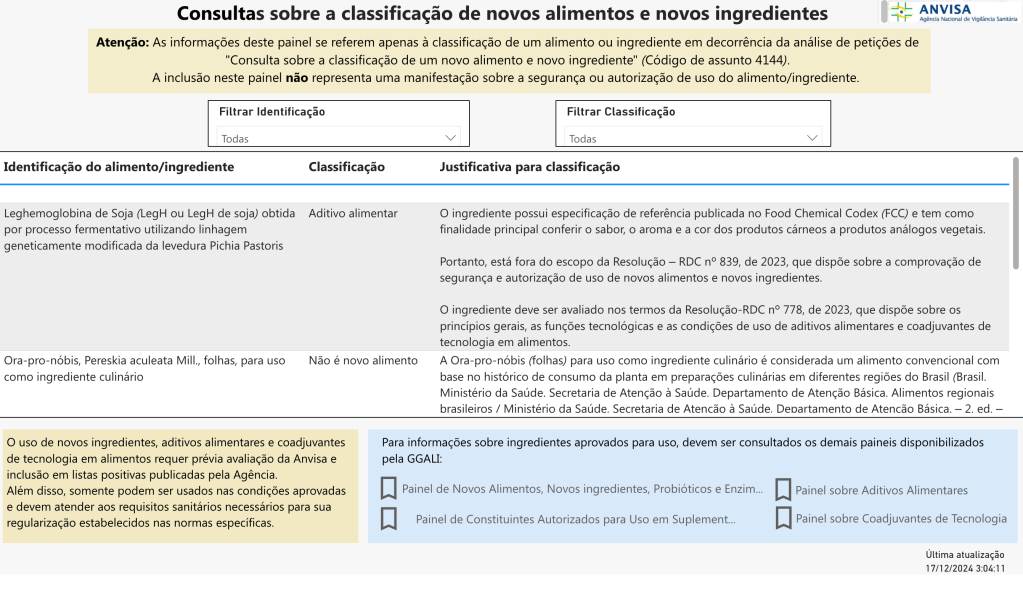
Brazil – ANVISA announced the creation of the new panel on the classification of novel foods and novel ingredients
The National Health Surveillance Agency (ANVISA in Portuguese) announced the new panel on the classification of novel foods and novel ingredients. The Panel is the result of the implementation of regulatory modernization measures provided for in the Resolution of Collegiate Councils (RDC) No 839/2023, which provides for safety testing and authorization for the use of novel foods and novel ingredients. The results of consultations on the classification of a food or ingredient filed under the terms of RDC 839/2023 can be consulted in the tool. This is an optional procedure, available to provide more clarity on the classification of foods and ingredients. Interested companies can make this consultation through the Solicita System, using the request subject code 4144. Based on the information submitted, ANVISA’s technical team applies the regulatory definition of novel foods and novel ingredients to specific cases. However, inclusion in the panel does not mean a safety assessment or authorization to use these products.
Dominican Republic – New Front-of-Pack Nutritional Warning Labeling
The Ministry of Public Health announced the publication for public consultation of the draft Resolution that establishes the implementation of the Front End Nutrition Warning Labeling (EFAN in Spanish). This Resolution aims to establish the placement of the Front End Nutrition Warning Labeling (EFAN), where the content of energy, sodium, sugars, total fat, saturated fat, trans fat and sweeteners must be declared in the nutrition labeling of prepackaged foods for human consumption.
This regulation will allow citizens to exercise their right to know the components of the food they consume, identify which are convenient for their health and make informed decisions. This right is also contemplated in the Constitution of the Republic.
Panama – Ministry of Health presents strategies for reducing obesity
The Ministry of Health (MINSA) has launched the “Acceleration Plan to Stop Obesity in Panama”, with the aim of reducing the prevalence of this disease in the country by 2030. The proposal was presented during a meeting with MINSA directors and advisors, and had the collaboration of the Pan American Health Organization.
Outstanding strategies include:
- Early feeding environment: Increase the prevalence of exclusive breastfeeding by 30% by 2030.
- Population education and awareness: Promote healthy eating habits through food guides, with a focus on food systems in 50% of the institutions that are part of the intersectoral commission.
- Contracting of public food services: Implement technical guidelines to offer healthy food in canteens of early childhood care centers.
- Food labeling: Promote front nutritional warning labeling in 50% of key actors by 2030.
- Physical activity: Develop a national plan to promote physical activity, recreation and sport in the population.
- Primary health care: Implement a guideline to promote physical activity through primary health care by 2026.
- Food marketing: Achieve that at least 15% of educational centers implement regulations on food advertising and promotion.

 infoAlimentario