Brazil – ANVISA modifies regulations governing food and packaging under the jurisdiction of the National Health Surveillance System (SNVS)

The National Health Surveillance Agency (ANVISA in Portuguese) has issued Resolution No. 983/2025, which amends Resolution RDC No 843 , dated February 22, 2024. This regulation pertains to food and packaging that fall under the jurisdiction of the National Health Surveillance System (SNVS in Portuguese) intended for sale within the national territory.

Art. 31. ………………………………………………………………………..

§ 1. The products referred to in the heading of this article, manufactured up to the date of publication of the final decision regarding the registration application, may be marketed until their expiration dates.

§ 2. The labels of the products mentioned in the heading of this article may be used for up to 180 (one hundred eighty) days from the date of publication of the favorable decision on the registration application, solely for the utilization of previously produced packaging materials.

§ 3. Products manufactured with the labels referred to in § 2 of this article must not undergo any changes in their composition or labeling. The only exception allowed is the omission of the statement: “Food registered with ANVISA,” followed by the complete registration number (NR).
Peru – INACAL has published a series of standards related to quinoa and sacha inchi

Through Directoral Resolution N.° 000016-2025-INACAL/DN, the National Institute of Quality (INACAL) has published a series of standards related to quinoa and sacha inchi (Inca peanut or mountain peanut).

  • NTP 011.462:2025 – White quinoa grain (raw material). Requirements. This standard establishes the physical, sensory, safety, and labeling parameters that quinoa grains intended for industrial processing must meet.

  • NTP 205.061:2025 – Quinoa flakes. Requirements. This standard defines the requirements for raw quinoa flakes intended for human consumption.

Both standards promote the quality of quinoa as a raw material and of a quinoa-derived product such as flakes, aligning with the guidelines of the Codex Alimentarius, thereby enhancing traceability and building greater trust among global consumers.

  • NTP 151.401:2025 – Sacha inchi oil. Good manufacturing practices. 2nd Edition. This standard replaces NTP 151.401:2012 (revised in 2018).

  • NTP 151.404:2025 – Sacha inchi and its derivatives. Traceability. 2nd Edition. This standard replaces NTP 151.404:2013 (revised in 2018).

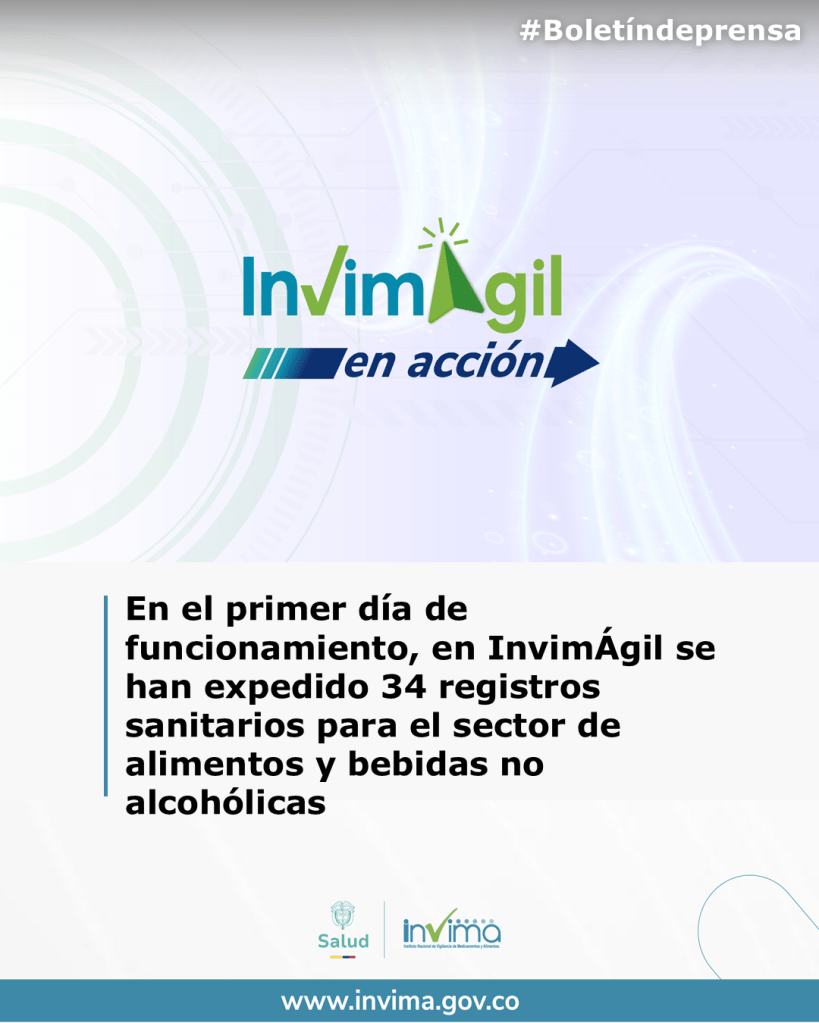
Colombia – InvimÁgil streamlines health registrations for the food and non-alcoholic beverage sector

On the first day of activating the module for new product registrations, 34 users managed their registrations, notifications, and health permits for the non-alcoholic food and beverage sector through InvimÁgil, the web platform provided by the National Institute for Food and Drug Surveillance (INVIMA), designed to facilitate and expedite the authorization processes for commercialization.

Within the first 24 hours of operation, 1 entrepreneur and 33 micro-entrepreneurs obtained their health registrations to market products such as: ice creams, desserts, arepas, sweet bakery products, cheeses, puff pastries, cassava-based products, bitter table chocolate, vegetable oil, flavored beverages, panela, coffee, among others.

INVIMA reminds all users that to proceed with the product registration module, it is essential to have completed the InvimÁgil registration pathway, which involves creating a user account, registering the company, and enrolling in the activities.

For now, through InvimÁgil, only new requests for the non-alcoholic food and beverage sector can be self-managed. Gradually, modules for other sectors under INVIMA’s jurisdiction will be incorporated.

Argentina – The Argentine Food Code includes requirements for dry apple pomace

Through Joint Resolution 39/2025, the Secretariat of Health Management and the Secretariat of Agriculture, Livestock, and Fisheries amend the Argentine Food Code to include Article 912 bis regarding Dry Apple Pomace.

ARTICLE 1°. – Article 912 bis of the Argentine Food Code (CAA in Spanish) is hereby incorporated, which will be worded as follows: “Article 912 bis: The term Dry Apple Pomace refers to the solid product resulting from the pressing process to obtain juice, whether or not followed by a subsequent process that ensures a greater recovery of the initial product of interest, with subsequent drying in the same facility where it is produced to guarantee its proper preservation, and the following conditions must be met:

– Its composition will depend on the varieties of apples used in the juice production.

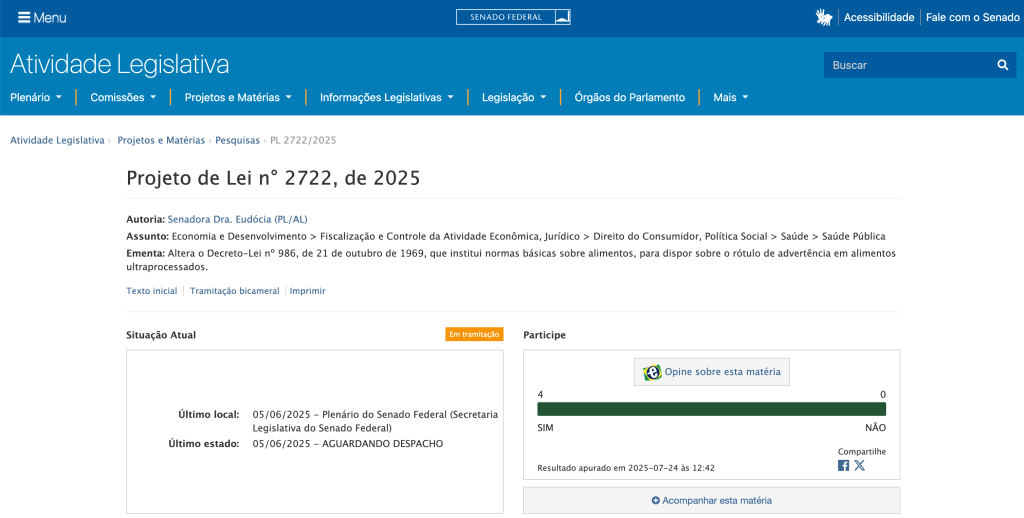
Brazil – Senate is reviewing a bill concerning the labeling of ultra-processed foods

The Federal Senate is expected to consider Bill 2.722/2025, which proposes mandatory warnings regarding the potential carcinogenic nature of ultra-processed foods on product labels. This initiative, introduced by Senator Dr. Eudócia (PL-AL), is awaiting referral to the thematic committees of the Chamber. The bill aims to amend Decree-Law No. 986 of 1969, which regulates basic food standards.

If approved, the bill requires that ultra-processed products clearly and visibly display the phrase “high carcinogenic potential” on the front of the packaging. The proposal also stipulates that the competent authorities will be responsible for monitoring and ensuring compliance with this measure, imposing penalties on violators in accordance with the Consumer Protection Code, as well as other administrative sanctions.

Dr. Eudócia justifies the proposal as a means to enhance transparency and ensure that consumers have access to information regarding the risks associated with the consumption of highly processed products. The senator emphasizes that ultra-processed foods often contain ingredients that are rarely used in home cooking and additives that may hinder consumers and health professionals from identifying these products