Chile – Ministry of Health modifies milk labeling requirements in the Food Sanitary Regulations

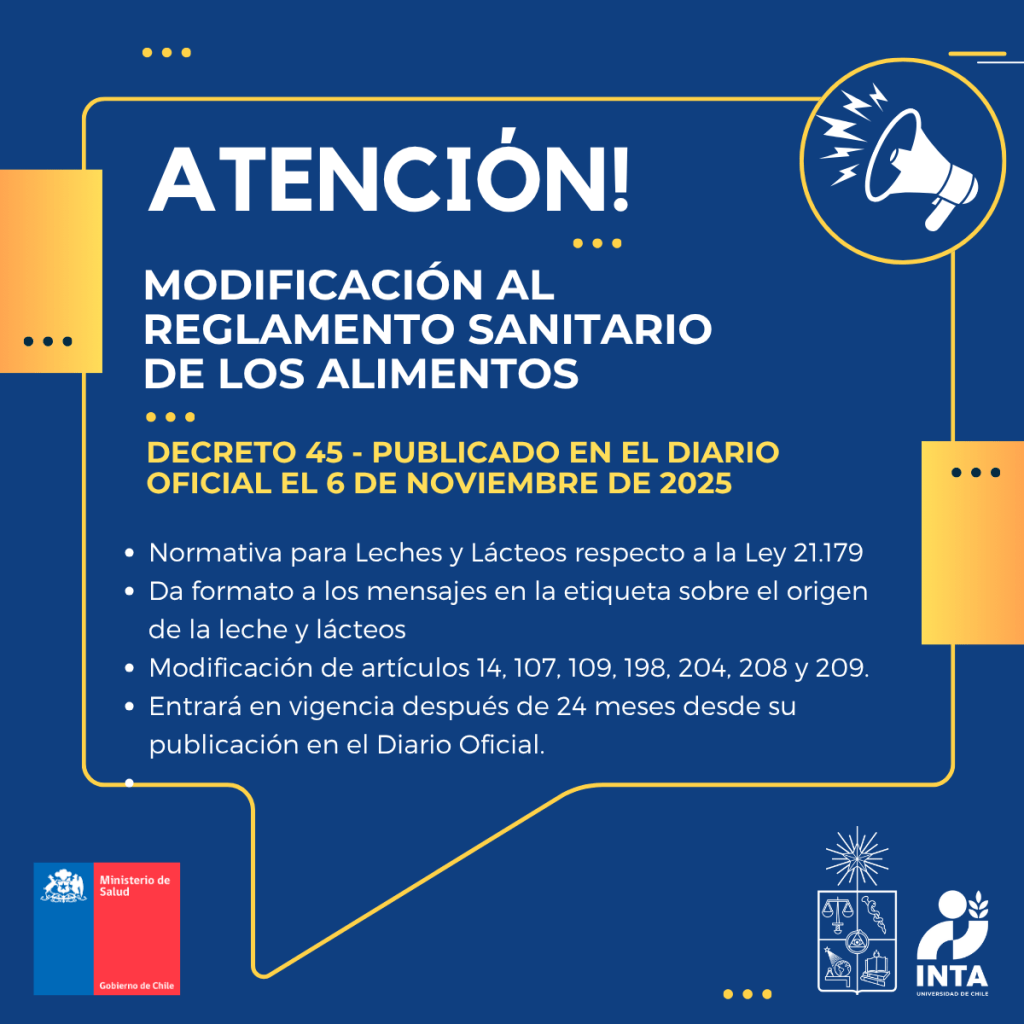
The Ministry of Health, by Decree 45/2025, has amended Articles 14, 107, 109, 198, 204, 208, and 209 of the Food Sanitary Regulations (RSA).

  1. The labeling of the country of milking alongside its respective image is regulated for the following products:
    flag, on the following products:

Milks, liquid milk, powdered milk, milks with…, flavored milk, dulce de leche, condensed milks, dulce de leche, yogurt, cream, butter, and cheeses

  1. The font size of the message and the size of the flags to be printed on the sign are defined.
  2. On bottles or containers of liquid and powdered milk, the primary thermal treatment or technology used to eliminate pathogens must be clearly indicated.
    The primary thermal treatment or technology used to eliminate pathogens must be indicated clearly, expressly, and legibly.
    pathogens in milk, such as pasteurization, ultrahigh temperature (UHT) treatment, or
    Sterilization.
Colombia – 5,114 sanitary authorizations for the food and non-alcoholic beverage sector have been issued thru InvimÁgil

InvimÁgil has marked an important milestone in streamlining procedures for food and non-alcoholic beverages. During its implementation, more than 5,114 health documents have been issued: 2,474 registrations, 1,999 notifications, and 641 health permits. This platform demonstrates its effectiveness in the efficient and transparent management of marketing authorizations for the sector.

What once took eight months can now be done in just one day, representing a historic shift in the care and service provided to the country’s entrepreneurs and business owners.

A wide variety of food products have been registered on the platform, such as:

  • Dairy products such as fresh cheese, double-cream cheese, yogurt, condensed milk, and others.
  • Bakery products such as bread, cakes, cookies, croissants, among others.
  • Beverages such as coffee, tea, juices, energy drinks, water, and others.
  • Snacks such as dried fruits, chocolates, candies, and cookies.
  • Meat products such as chorizo, blood sausage, ham, bacon, and others.
  • Products with special features such as vitamin- and mineral-fortified products, sugar-free products, and products with natural and organic ingredients
  • Among others

Upcoming releases:

In order to continue improving its platform, the National Institute for Drug and Food Surveillance (Invima in Spanish) will soon launch new modules to facilitate the experience of entrepreneurs and micro-entrepreneurs on InvimÁgil. These are:

  • Online certificate module
  • Modifications and new records module
  • Transition period module
  • Renewals module.

Brazil – Anvisa will promote sectoral dialog on periodic updates to spice regulations

On November 27, from 9:30 a.m. to 12:00 p.m., the National Health Surveillance Agency (ANVISA in Spanish) will hold a virtual sectoral dialog on the fourth periodic update of Normative Instruction (IN) 159/2022, which establishes the lists of plant species parts authorized for the preparation of teas and for use as spices.

The purpose of this meeting is to present and discuss the proposal for periodic updates to IN 159/2022, which concerns peppers of the genus Capsicum.

The initiative seeks to promote transparency and dialog with the regulated sector and other stakeholders, enabling the exchange of technical information and the clarification of doubts about the proposed changes.

Brazil – The chamber has approved a project aimed at combating food loss and waste

The Chamber of Deputies has approved Bill (PL) 2874/19, which establishes the National Policy for Combating Food Loss and Waste (PNCPDA in Portuguese).

Among other points, the bill outlines programs and partnerships between the Federal Government and other federal entities, public and private institutions, civil society organizations, and religious entities to reduce food loss and waste. The bill is currently awaiting the signature of President Luiz Inácio Lula da Silva.

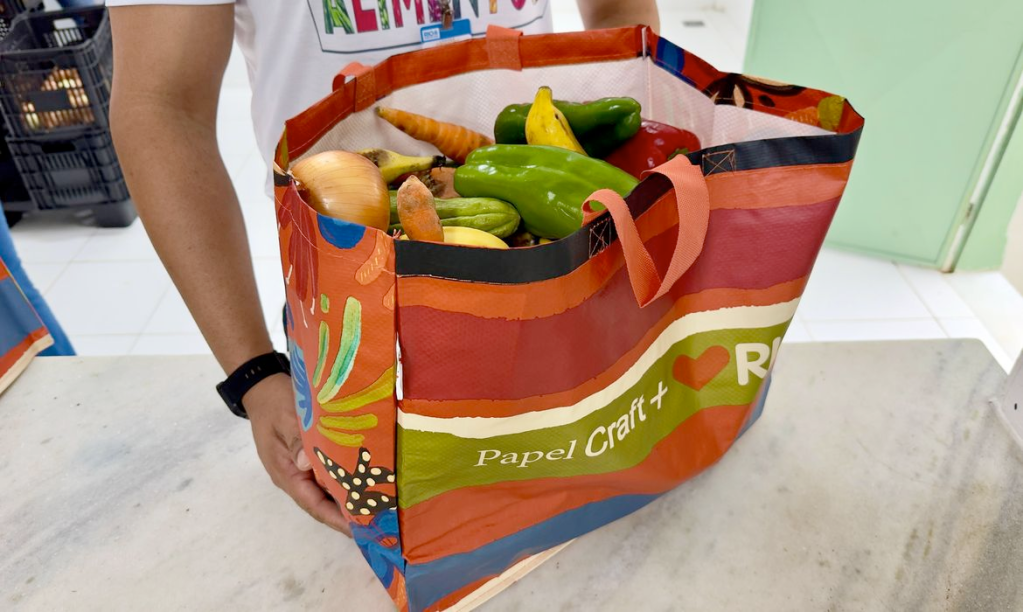
The approved proposal stipulates that packaged, perishable, and non-perishable foods, within their expiration dates, as well as fresh or prepared foods, may be donated to food banks, receiving institutions, and directly to beneficiaries, provided that their nutritional properties and safety for human consumption are maintained, in accordance with current health regulations.

The text establishes the requirement that food banks and institutions have a legally qualified professional who certifies the nutritional and sanitary quality of the delivered foods.

Brazil – Chamber of Deputies of Brazil is analyzing the risks, benefits, and regulation of dietary supplements

The Chamber of Deputies’ working group on the marketing of dietary supplements will hold a public hearing this Wednesday (3) to discuss the risks and benefits of using these products and the regulation of the sector.

The meeting will be held at 2:30 PM in a plenary room to be determined.

Please consult the list of participants.

The debate is in response to a request from Representative Ana Pimentel (PT-MG). According to her, the objective is to promote a technical dialog on the growth of the dietary supplement market in the country, analyzing the impacts of unsupervised consumption and the benefits observed in uses supervised by healthcare professionals.

The parliamentarian points out that a study by the Brazilian Society of Endocrinology and Metabolism (SBEM) reveals that more than half of Brazilian households consume some type of supplement, often without adequate medical or nutritional supervision.