Chile – Health Commission approves bill to label ultra-processed foods and restrict their advertising to minors under 14 years of age

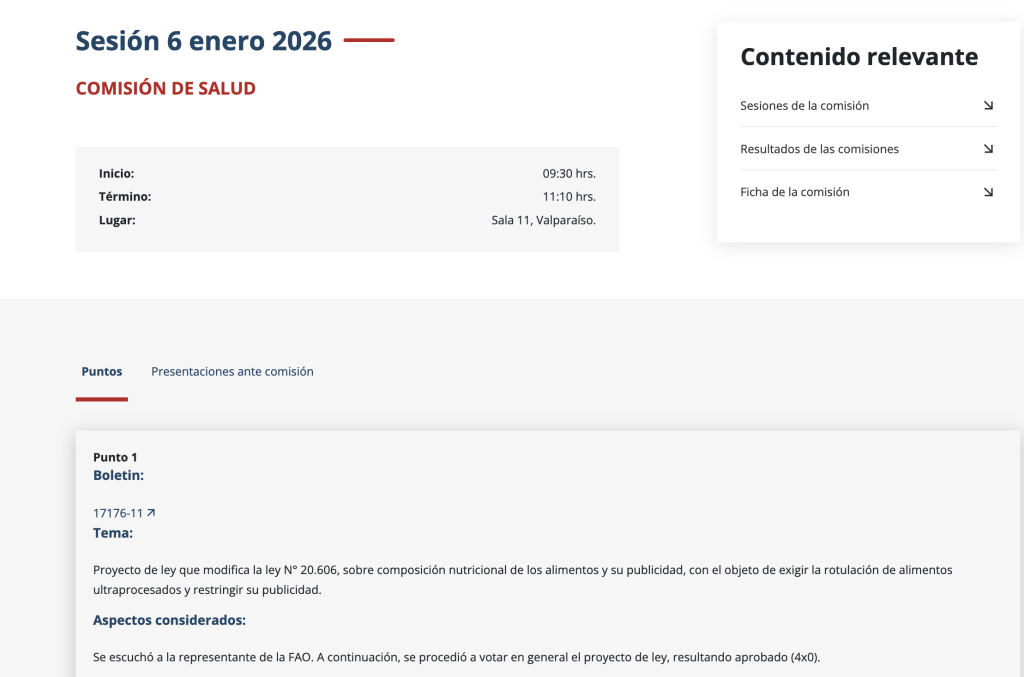
The Chilean Senate Health Committee has approved a bill aimed at regulating the labeling and advertising of ultra-processed foods, in an effort to combat obesity and malnutrition in the country.

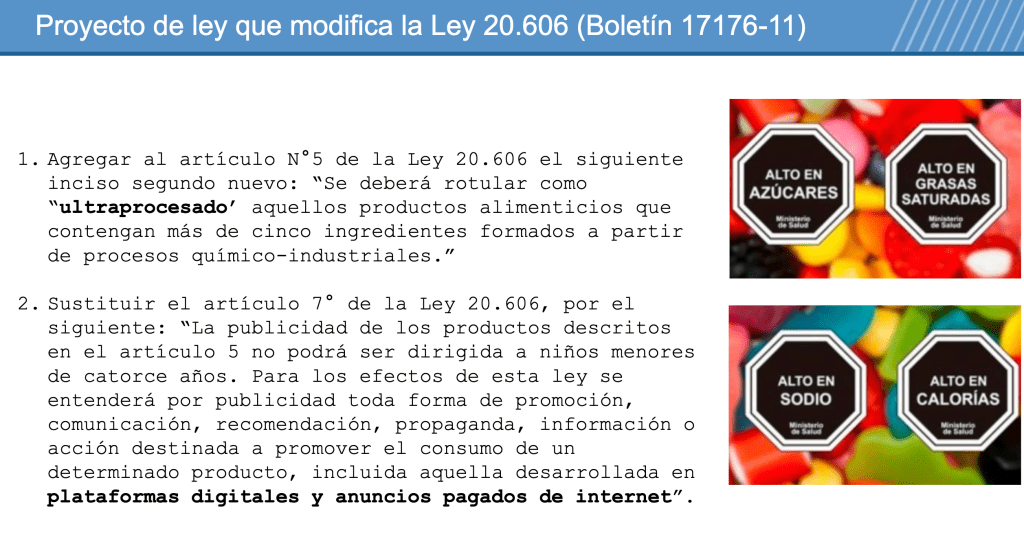
The bill, which amends the existing law on the nutritional composition of foods, stipulates that products containing more than five ingredients derived from industrial chemical processes will be considered ultra-processed. This initiative complements the legislation in place since 2016, which already regulates foods high in fat, salt, sugar, and calories.

During the session, Senators Ximena Ordenes, Iván Flores, Francisco Chahuán, and Juan Luis Castro expressed their support for the proposal, recognizing that the consumption of ultra-processed foods is a key factor in the rise of obesity and overweight among the population. Senator Ordenes highlighted that “the consumption of these products is one of the most important determinants of overnutrition.”

Godoy stated that “this bill complements the existing law, which has succeeded in reducing the per capita intake of products high in salt, sugar, and fats by 23%.” The new regulations also prohibit advertising of these products aimed at children under 14, covering all forms of promotion, including digital platforms.
Mexico – Profeco publishes a quality study on yogurt brands

The Federal Consumer Protection Agency (PROFECO in Spanish) has published in the first edition of the 2026 Consumer Magazine a study evaluating the most consumed dairy products in Mexico: yogurt.

Products analyzed:

-2 natural yogurts

-2 strawberry-flavored yogurts

-4 sweetened natural yogurts

-7 strawberry yogurts

-1 lactose-free sweetened natural yogurt

-1 lactose-free strawberry yogurt

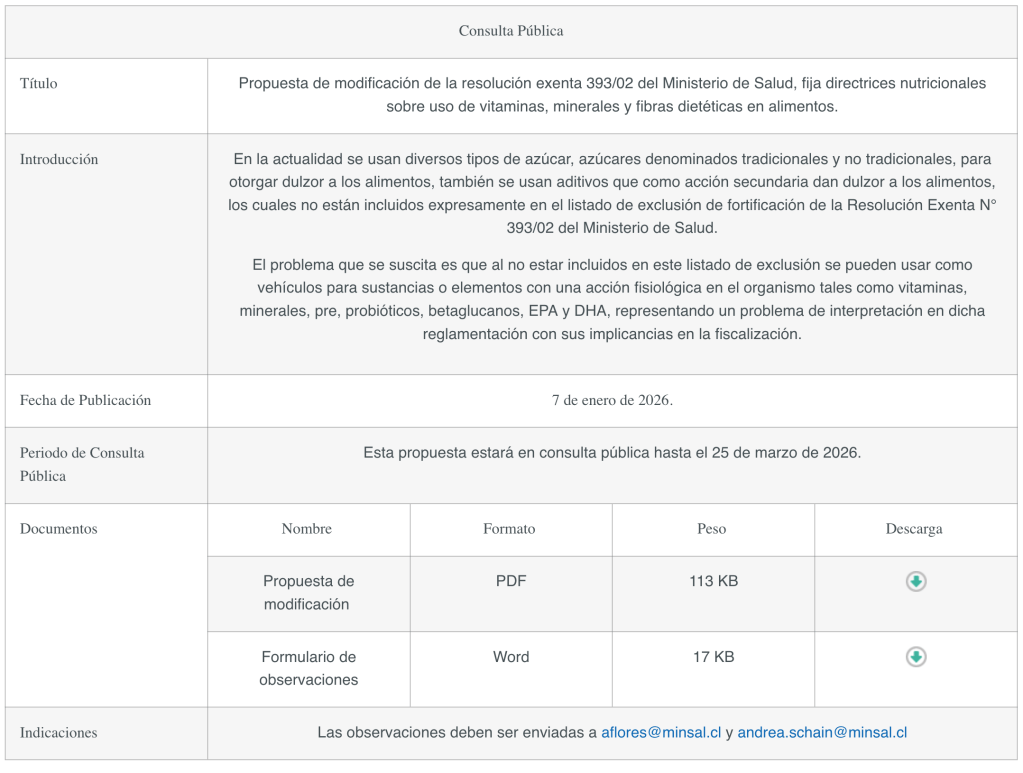
Chile – Proposal to amend Exempt Resolution 393/02 of the Ministry of Health, establishing nutritional guidelines on the use of vitamins, minerals, and dietary fiber in foods

The Ministry of Health has published a proposed amendment to Exempt Resolution 393/02 of the Ministry of Health, which establishes nutritional guidelines on the use of vitamins, minerals, and dietary fiber in foods.

Currently, various types of sugar—both traditional and non-traditional—are used to sweeten foods, as are additives that, as a secondary effect, impart sweetness, none of which are expressly included in the fortification exclusion list of Exempt Resolution No. 393/02 issued by the Ministry of Health.

The problem that arises is that, since they are not included in this exclusion list, they can be used as vehicles for substances or elements with a physiological effect on the body, such as vitamins, minerals, pre- and probiotics, beta-glucans, EPA, and DHA, posing an interpretive challenge under the regulations and affecting enforcement.

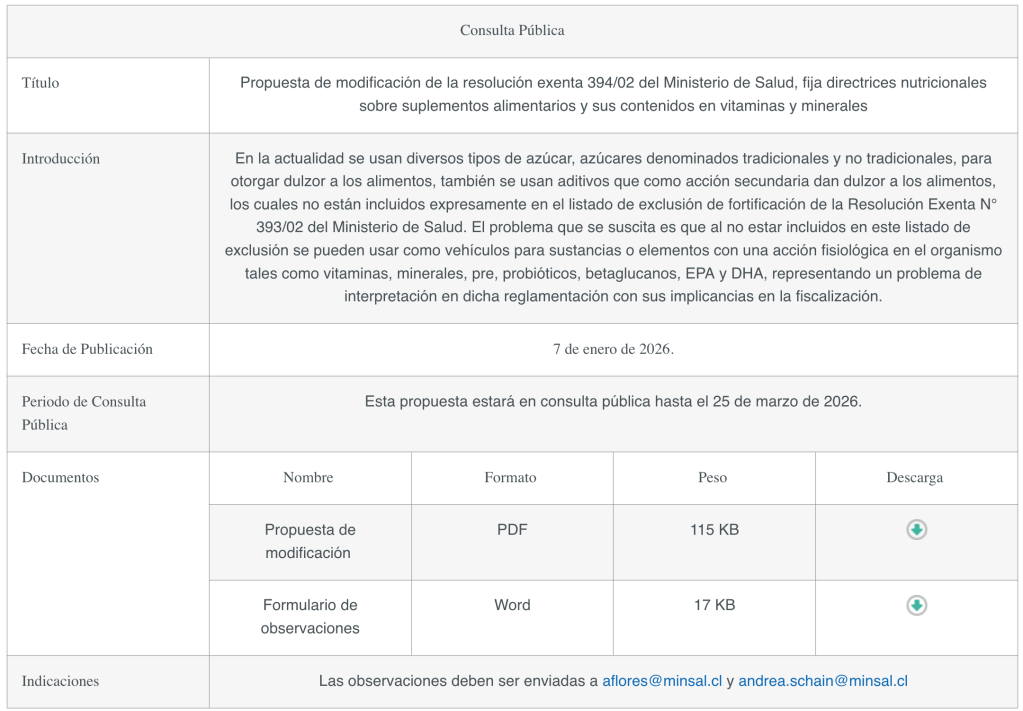
Chile – Proposal to amend Exempt Resolution 394/02 of the Ministry of Health, establishing nutritional guidelines on food supplements and their vitamin and mineral content

The Ministry of Health has published a proposed amendment to Exempt Resolution 394/02 of the Ministry of Health, which establishes nutritional guidelines for dietary supplements and their vitamin and mineral content.

Currently, various types of sugar—both traditional and non-traditional—are used to sweeten foods, as are additives that, as a secondary effect, impart sweetness, none of which are expressly included in the fortification exclusion list of Exempt Resolution No. 393/02 issued by the Ministry of Health. The problem that arises is that, since they are not included in this exclusion list, they can be used as vehicles for substances or elements with a physiological effect on the body, such as vitamins, minerals, prebiotics, probiotics, beta-glucans, EPA, and DHA, posing an interpretive challenge to the regulation and its enforcement.

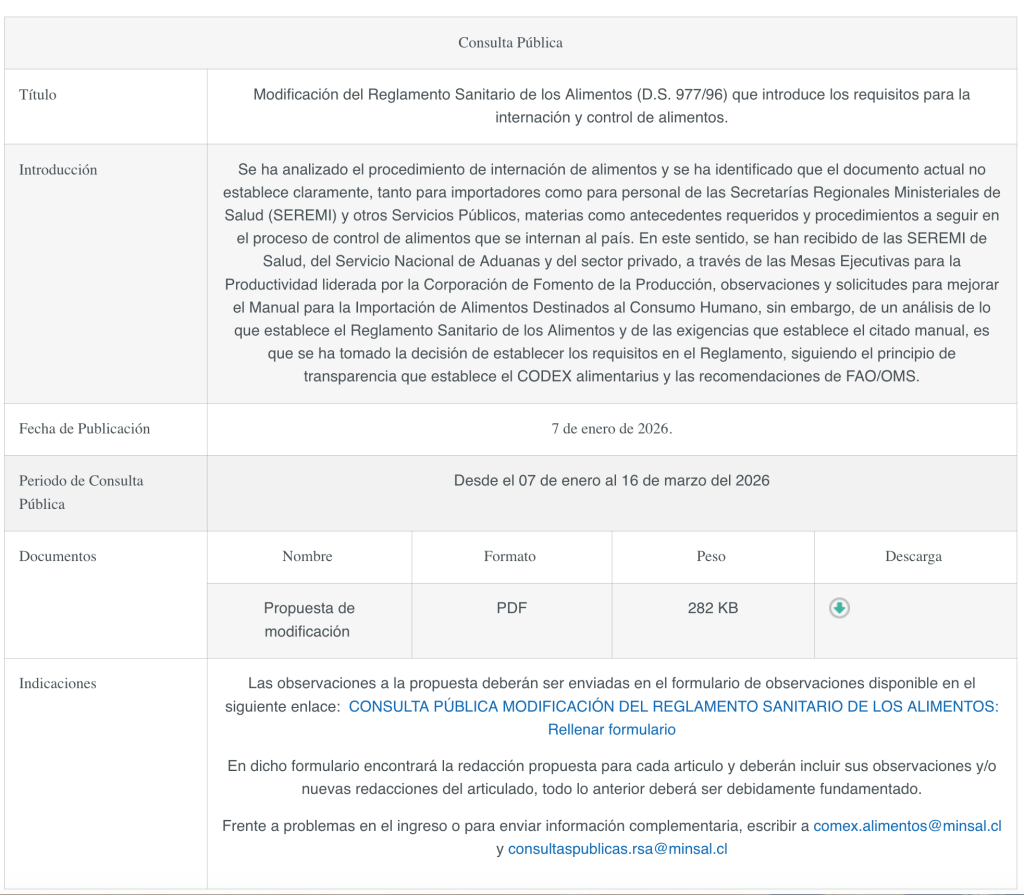
Chile – Proposal to amend the Food Sanitary Regulations (Decree No. 977/96) introducing requirements for the entry and control of foods

The Ministry of Health has published a proposed amendment to the Food Sanitary Regulations (D.S. 977/96) that introduces requirements for the entry and control of food.

The food import procedure has been analyzed, and it has been identified that the current document does not clearly set out, for both importers and staff of the Regional Ministerial Health Secretariats (SEREMI in Spanish) and other public services, matters such as the required documentation and the procedures to be followed in the food control process for products entering the country. In this regard, the Regional Ministerial Health Secretariats (SEREMIs), the National Customs Service, and the private sector, thru the Executive Productivity Roundtables led by the Production Development Corporation, have submitted observations and requests to improve the Manual for the Import of Foods Intended for Human Consumption. However, after analyzing the provisions of the Food Sanitary Regulations and the requirements set forth in the manual, the decision has been made to incorporate the requirements into the Regulations, in accordance with the principle of transparency established by the Codex Alimentarius and the recommendations of FAO/WHO.