The Americas – Colombia: Social organizations request the Ministry of Health to implement Law 2021 on healthy eating

With almost 10,000 signatures collected, the Sweet Poison campaign presented a petition to the Ministry of Health requesting the acceleration of the implementation of Law 2120.
The 2021 Law aims to provide adequate information (Article 5) to consumers on products high in sugar, sodium, calories, fat and other components of ultra-processed foods so that they can make an informed decision.
This information must be presented in black octagonal seals on the front of the product with a specific space, as approved in the law. The Ministry of Health must issue the corresponding resolution for the production companies to design the new packages of this type of food.
However, before the law was approved, the Ministry of Health issued Resolution 810 of 2021, which established a regulation on the seals (Article 32), different from the one approved in the law, which at the time was denounced by the promoters of front labeling as a trap to the norm. Now, the portfolio would pretend to enforce that resolution, instead of the law.

Resolution 810

The Americas – Argentina: Risks and opportunities of front labeling

The Argentine Government passed Law 27.642 on the Promotion of Healthy Eating, better known as the Front Labeling Law, and the 90 days from its enactment on November 12 are already running for its regulation by the Executive Power.
The implementation of the Law implies changes in all food producing companies, what remains to be seen is who will be able to strategically capitalize on this opportunity to promote changes and improvements in current systems in order to optimize internal processes.

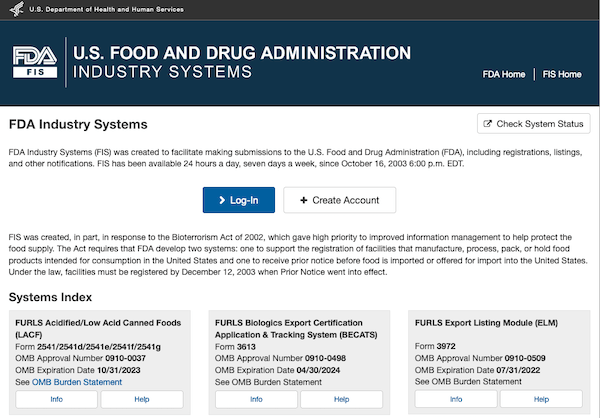
The Americas – USA: FDA opened the application portal to participate in the Food Analysis Laboratory Accreditation program – LAAF

The U.S. Food and Drug Administration (FDA) opened the application portal for accreditation bodies interested in participating in the Laboratory Accreditation for Analyses of Foods (LAAF) program.   

Under the LAAF program, the FDA will recognize accreditation bodies that will accredit food testing laboratories to standards established in the final rule on Laboratory Accreditation for Analyses of Foods (referred to as LAAF-accredited laboratories). 

The final rule, issued by the FDA on December 3, 2021, established the LAAF program and outlined eligibility requirements that accreditation bodies and laboratories wishing to participate in the program will need to satisfy. The final rule also describes the procedures for how the FDA will manage and oversee the program. The FDA will maintain an online public registry of recognized accredited bodies and LAAF-accredited laboratories.  

The Americas – Brazil: ANVISA updates the Regulatory Agenda for the year 2022 including those related to food

Anvisa’s Collegiate Council has just approved the annual update of the 2021-2023 Regulatory Agenda, originally published in May 2021. As foreseen in the Guiding Document of the Regulatory Agenda – IA 2021-2023, the set of regulatory projects of the Agenda may be reviewed annually, with the possibility of alterations, exclusions and inclusions of projects. The purpose of the annual update is to keep the document aligned with the regulatory priorities of the period, to ensure the predictability and timeliness of the Agency’s regulatory planning.

In Food:

  • Foods for Infants, Toddlers, Teats, Pacifiers and Bottles.
  • Functional and Health Claims on Foods
  • Labeling of packaged foods
  • Food contact materials.
  • Food identity and quality standards.
  • Flows and procedures for authorizing the use of food additives and processing aids.
  • Flows and procedures for new ingredients
  • Food irradiation

The Americas – Colombia: Ministry of Health continues to evaluate which model of warning stamps will be implemented

The Vice-Minister of Health, Germán Escobar, argued that the government is based on international experiences such as Israel when implementing the circular seals. However, a research process with independent peers will just begin to determine the best measure in Colombia.

While the government continues to evaluate how to implement Law 2120 passed in Congress, there is an insistent call from civil society to implement an adequate model of seals of approval. The Vice Minister of Health pointed out that this type of information must be consulted with international bodies such as the World Trade Organization. This process could take at least two years.

For further information, you can access the original source (in Spanish), click on the Link