The Ministry of Health presented the update of the Dietary Guidelines for Chile, whose last version was in 2013, and which now delivers 10 new dietary guidance messages for the Chilean population with the aim of achieving wellbeing in people’s health. The instrument also promotes territorial identity, the gender perspective and the economic and environmental sustainability of food policy.
The Americas
Regulatory news in the Americas
Paraguay – Technical regulations on authorization and registration requirements for foods of plant origin
Decree 753 of the National Plant and Seed Quality and Health Service (SENAVE) of Paraguay established technical regulations on the authorization and registration requirements for foods and by-products of plant origin, effective as of 31 March 2023. The main contents include:
(1) This technical regulation is intended to guarantee the quality and safety of warehouse enterprises used to store food and by-products of plant origin by authorizing and registering them, and applies to domestically produced and imported products
El Salvador – RTS 67.07.01:22 Mixture of cream with edible vegetable oil or fat. Specifications
The Salvadoran Technical Regulatory Agency (OSARTEC in Spanish), has published in national newspapers, social networks and website, the notice of national public consultation regarding the RTS 67.07.01:22 CREAM MIXED WITH OIL OR EDIBLE VEGETABLE VEGETABLE FAT. SPECIFICATIONS, in compliance with the process of elaboration of technical regulations and with the purpose that all interested persons know the draft of the mentioned RTS and send their comments or observations to this Agency.
The purpose of this important instrument is to establish the requirements for safety, quality and specifications to be met by the mixture of cream with edible vegetable oil or fat; this RTS applies to any natural or legal person established in the national territory, which is engaged in the production, marketing and importation of cream mixture with edible vegetable oil or fat. It is important to mention that milk cream substitutes in powder form are excluded from the scope of application.
Mexico – Companies consider filing complaint with OAS over food labeling regulation
In January 2023, the Supreme Court of Justice of the Nation must resolve the constitutionality of the new food and beverage labeling standard; however, companies are already planning to file a complaint before the Inter-American Commission on Human Rights, a body that is part of the Organization of American States (OEA in Spanish), if the outcome is not positive for them.

Colombia – Amendment to the Resolution on front-of-food labeling: Use of octagons for excess critical nutrients
The Ministry of Health published Resolution No 2492 regulating the provisions of (Law No 2120 – Measures to promote healthy food environments and prevent non-communicable diseases) in a definitive way the front labeling for packaged food for human consumption and processed and ultra-processed food products marketed in the country.
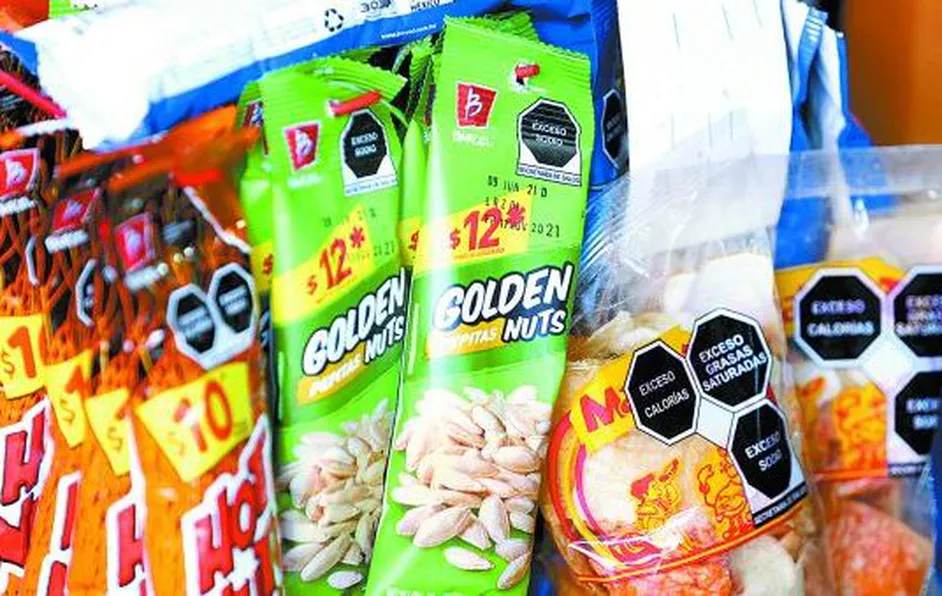
The resolution confirms that the front labeling, upon recommendation of the University of Antioquia, will be octagonal in shape, black in color, with a white border and located in the upper third of the main display panel with the word ‘Excess’.
The provisions established in the Resolution apply to all foods for human consumption, national and imported that are marketed in the national territory, except for some foods with nutritional labeling, such as infant formulas for children between 0 and 12 months, foods for special medical purposes (APMES); herbal and fruit infusions, decaffeinated and instant tea, among other foods.
As of June 16, 2023, the front warning seal must be placed on the lid for returnable containers that cannot be labeled on the front face, or with an adhesive or on the secondary packaging,” states the resolution.