Canada – Summary of Health Canada’s safety assessment of L-alpha-glycerylphosphorylcholine for use as a supplemental ingredient

Health Canada’s Food Directorate assessed L-alpha-glycerylphosphorylcholine (AGPC) for safety as a supplemental ingredient in foods, based on publicly available information. The Food Directorate concluded that AGPC can be considered a source of supplemental choline and will thus be subject to the conditions of use for choline set out in the List of Permitted Supplemental Ingredients. Consequently, Health Canada plans to allow the use of AGPC as a supplemental ingredient in foods under certain conditions. The conditions are outlined in the Notice of Proposal.

Chile – Congress approves debate on draft regulation on the use of the term “meat”

Congressmen approved in general -and without debate- the bill that regulates the categorization of the concept of “meat”. The initiative sought to prohibit cataloging under such denomination an edible product that is not of animal origin.

The original motion was promoted by deputies Harry Jürgensen (IND), Miguel Mellado (RN) and Gastón Von Mühlenbrock (UDI). It was also signed by former deputies Iván Flores, Fernando Meza and Mario Venegas.

The regulation establishes that the term “meat” means the edible part of the muscles of food animals such as cattle, sheep, pigs, horses, goats, camelids and other species fit for human consumption.

Argentina / Opinion – Clarifications and weaknesses of the front-end labeling law

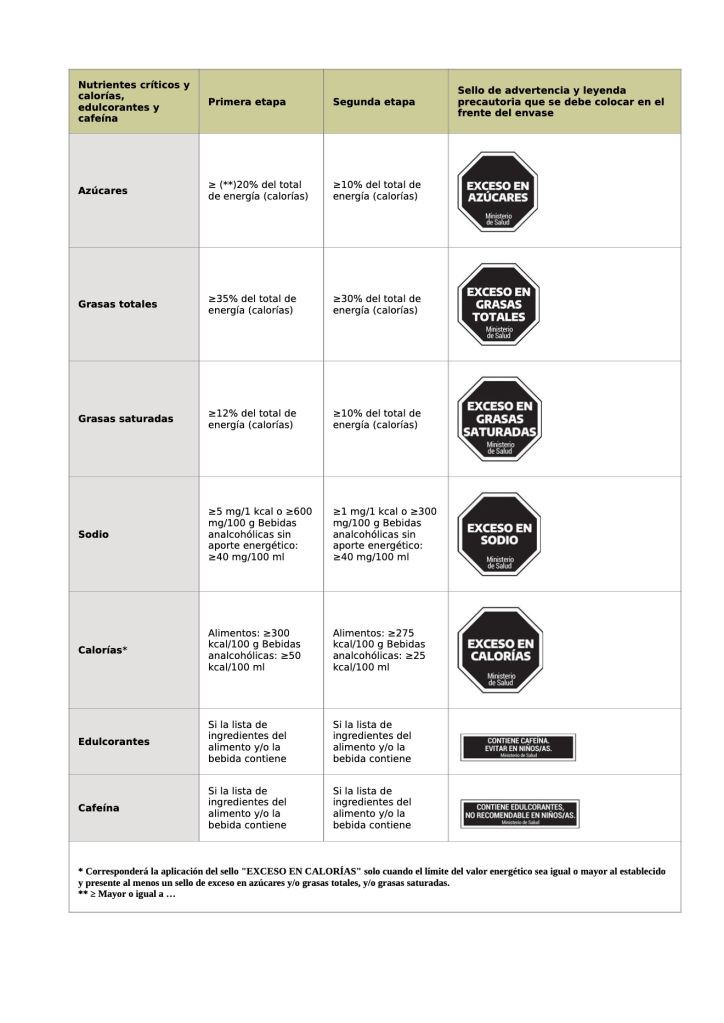
The gradual appearance of products with front labeling in supermarkets and grocery stores reignited the discussion on the real usefulness of the measure and the possible impact on people’s healthy eating. Many people expressed their criticism of the measure since its debate, arguing that the criteria used to label the products are too rigorous and complicated, which leads to incomprehensible labeling situations. In addition, there is a total absence of other information, which makes it difficult for consumers to discern between one product and another.

Throughout this report we will seek to shed light on the regulations, providing additional information to what exists on the products and pointing out the contradictions and problems of such extreme impositions as the one adopted by the Argentine ruling class in this particular case.

Mexico – The regulation of nootropics in Mexico: Analysis from the perspective of the food and beverage industry

In Mexico, nootropics are not specifically regulated, which means that there is no list of substances that are permitted or prohibited.

However, the Comisión Federal para la Protección contra Riesgos Sanitarios (COFEPRIS) has established general regulations for foods and food supplements, which include nootropics.

According to these regulations, any substance added to a food or food supplement must be authorized and have a safe dosage, in addition, manufacturers must clearly label ingredients and product dosages, and must comply with Good Manufacturing Practices.

This means that food and beverage manufacturers wishing to add nootropics to their products must ensure that they comply with these regulations to avoid sanctions by COFEPRIS.

Article – Food fraud: Past, present and future

Food adulteration and food fraud is as old as food production and processing however, it is increasingly prevalent today. With globalization and increasingly complex food production and distribution systems, adulteration can occur at different points in the food chain and may have far-reaching impacts and even adverse consequences for human health. The international community’s regulatory approaches to confronting and resolving food fraud are scattered and in constant adjustment. A collective and coordinated approach is needed to identify all stakeholders in the food supply chain, certify and qualify them, exclude those who do not meet applicable standards, and trace food in real time. This update provides definitions and background on key concepts associated with food integrity, episodes of food fraud in Chile and the world, main foods vulnerable to food fraud, common fraud practices and analytical techniques, regulations and new actions in Chile and the world to face food safety and the risk of food fraud.