Article: Misleading Labeling and Product Quality

Author: Frances Xu Lee, 2022.

Using a positive term in labeling a product may mislead buyers into expecting the product to have a higher quality than the true quality. However, given the limitation that the labeling language has to be simple, completely eliminating inflation of the buyers’ beliefs by a positive term will also eliminate information transmission of the product quality. Information transmission is needed to motivate the seller to invest in the quality in the first place. A “reasonable consumer” standard that holds any labeling that has misled a reasonable consumer liable results in too little use of the positive term and too little effort in providing the quality valuable to the buyers.

Article – Ecuador: Public Policies, Traffic Light Signpost Labeling, and Their Implications: The Case of Ecuador

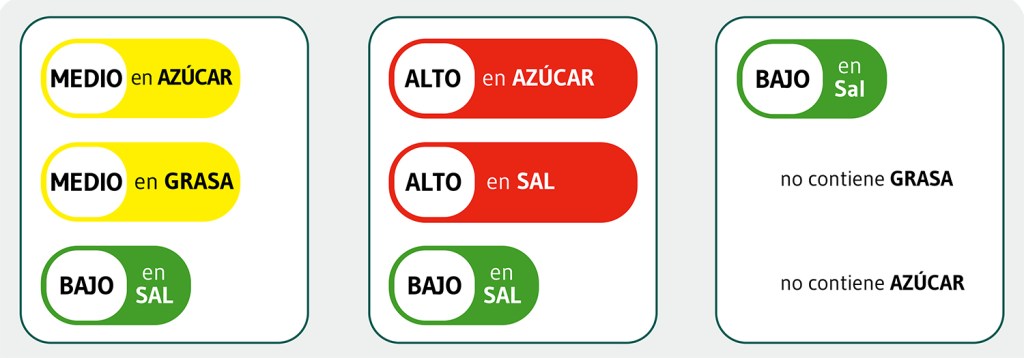
This study analyzes the traffic light signpost labeling that is included in processed foods, through which consumers are informed about added fat, sugar, and salt levels. At the same time, the awareness and use that the public make of this labeling, introduced by the Ecuadorian government as part of their Good Living health program, was also studied. A questionnaire was given to some 419 students from Ambato, Ecuador of both genders and from different economic circumstances. Subsequently, a descriptive analysis of the collected data was carried out, and through inferential statistics, relationships were established between the responses to the questionnaire and the factors identified. The results showed that most people are aware of traffic light signpost labeling at the time of purchase, although some consumers tend to mistakenly associate the indicators (green, yellow, red) with the food-hazard levels of the products. The opinions surveyed demonstrated a vague meaning and usefulness associated with the traffic light system.

Article: The impact of front-of-the-packaging nutrition labelling warnings on consumer habits: a scoping review exploring the case of the Chilean Food Law

Purpose – The purpose of this scoping review was to summarise the general results of the Chilean Food Law implementation to help to understand how this policy has changed consumer’s behaviour.

Design/methodology/approach – Preferred Reporting Items for Systematic Reviews and Meta-Analyses (PRISMA) extension for scoping reviews (PRISMA-ScR) guidelines were followed. Five databases were searched for studies published from January 2015 to February 2020 evaluating the Chilean population’s perception, behaviour and purchasing habits of processed foods.

Findings – The results showed that consumers support the implementation of a front-of-package warning label (FOPWL) and thought it a good strategy to help make healthier food choices for themselves. However, even with a positive perception about these products, the intention-to-change the purchase of unhealthy food occurred only for sugar-sweetened beverages. Meanwhile, children did not stop eating foods that had a FOPWL, although the mothers’ perception was that the presence of FOPWLs could be important to differentiate unhealthy from healthy products. The availability of products with FOPWLs at schools decreased, indicating that the law was being complied with and that the child-directed marketing strategy showed a reduction after the first phase of implementation.

Chapter: Substantiating regular, qualified, and traditional health claims

Governments are subjecting commercial communication concerning the relationship between foods/foodstuffs and human health to various types of evaluation, scrutiny, and control. In this process, legal scrutiny of commercial speech by courts of law is substituted by scrutiny of scientific bodies or panels with expertise in the field of assessing research performed in the field of nutrition and human health. This we will address and critique with an eye of moving forward out of this conundrum.

Chapter: Food regulation around the world

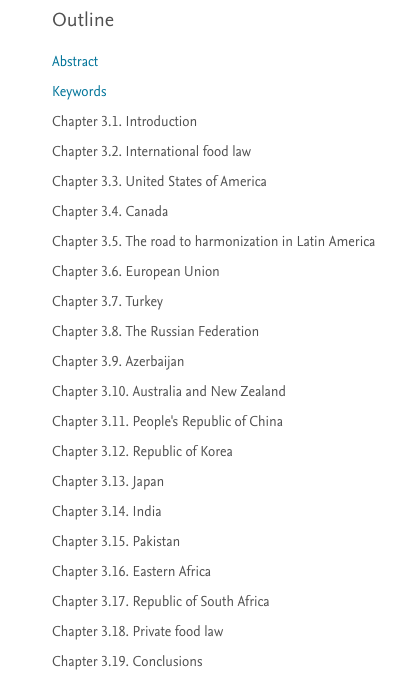
Against the background of global harmonization through scientific consensus, this chapter provides an inventory of approaches to the regulation of food and related issues in a variety of jurisdictions around the world. To each jurisdiction, a separate section is dedicated. Each section has been written by an author well versed in the jurisdiction at issue. The sections can be read as independent texts.