The objective of this research is to examine, collate and organize the main Brazilian regulations and food safety literature, highlighting key challenges for the Brazilian food industry. This is a qualitative study, using a specific procedure and an intentional sampling for data collection and analysis of open textual information. The results of this research show that there is some important challenges for the food industry, especially with regard to the general requirements that are applicable to any organization in the food chain, such as good manufacturing practices (GMP) standards and programs operational hygiene (SSOP), identification and analysis of risks of contamination and system hazard analysis and critical control points (HACCP).
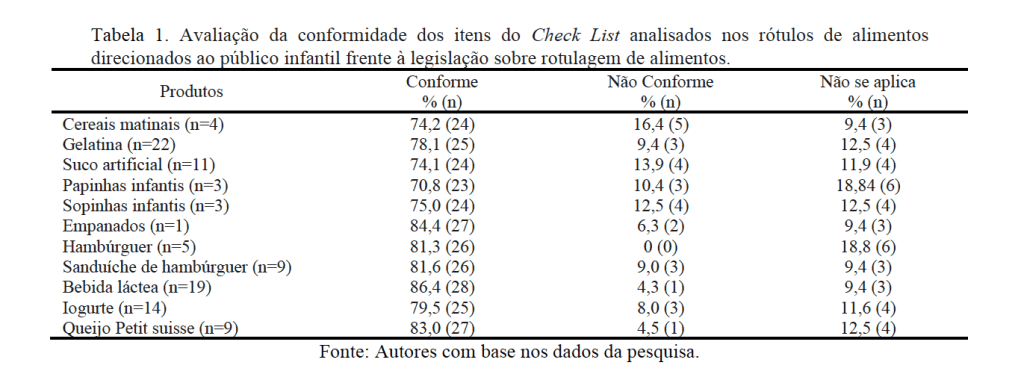
The offer of processed foods, especially the ultra-processed, is not recommended in the first years of life, since the consumption of these foods is associated with anemia, overweight and food allergies. The objective of this study was to evaluate the compliance of labels of processed foods intended for children with the Brazilian legislation in force and to analyze the levels of sodium, free sugars, sweeteners and total, saturated and trans fats described on the label. The nutrients were evaluated based on the PAHO Nutritional Profile Model. The results of the evaluation showed that the labels showed some non-compliance with the standards required by current legislation on food labeling.
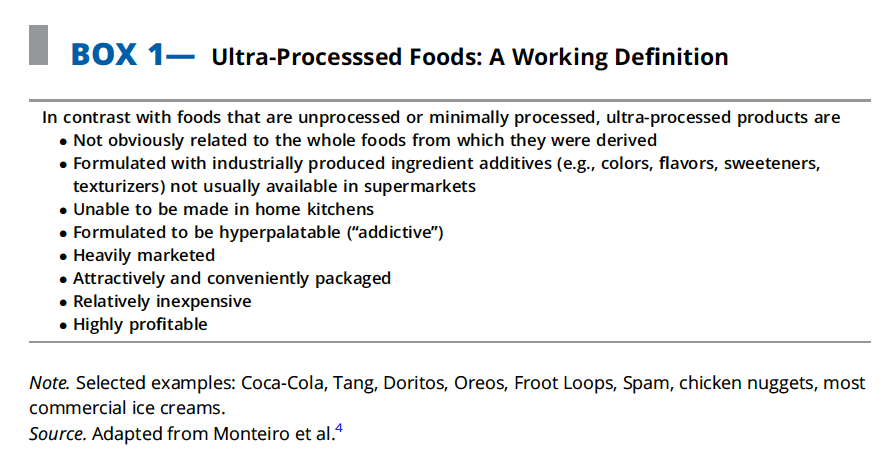
The coronavirus pandemic reveals an urgent need: the marketing of ultra-processed “junk” food must be stopped. Until now, the food industry has gotten away with pushing consumption of high-calorie, highly processed products—as often and in as many places as possible, and in increasingly large amounts—all in the name of profit In this business-first food environment, obesity and its associated type 2 diabetes, coronary heart disease, and, these days, severe outcomes from COVID-19, are collateral damage. Because poor health more strongly affects the most vulnerable members of society, public health advocates ought to be demanding immediate, forceful government action to discourage food industry production and marketing of unhealthful products.
Objective: To evaluate the perception and understanding of the new Mexican nutrition warning labeling (EAN in Spanish) through an online survey of Mexican adults. Conclusions: The incorporation of the EAN could change the preference towards healthier products, however, nutritional understanding is still nutritional understanding is still deficient, evidenced by the inability of participants to correctly participants’ inability to correctly identify the critical critical nutrients in excess in a product with the “2 seals” legend, and therefore “2 seals”, so the “n seals” legend on products with a small display area may not be small display area may not be sufficient to make an informed to make an informed purchasing decision.
The consumption of food supplements has increased considerably, especially whey protein. Since many users make their choices through the product label, it is important that this information may be transparent for good understanding. For this, there are responsible actors for overseeing whether the information is in accordance with the standard and thus offering safe and quality products to consumers. This study aimed to evaluate the labelling adequacy of whey protein food supplements sold in Fortaleza, in the state of Ceará/BR. A checklist based on Collegiate Board Resolution number 243/2018 was applied to 51 supplement labels, obtained from five stores specializing in nutritional products, thus excluding products with manufacturing data prior to July 2018 and with a foreign language without translation. The identifying labels were obtained from 29 different brands, 25 (92%) of which were domestically manufactured and four (8%) were imported. Non-conformities were found in the layout related parameters and the characters appearance with respect to the product designation, such as background color contrast in the label, designation readability, location of the product designation, boldface designation and designation complemented with the nutrition font from which it was extracted and the method of use. In addition, many filtered products did not contain information about conservation after opening the package. Regarding the product designation “food supplement”, only two (4%) products were suitable. The findings of this study showed that the labelling adequacy of whey protein supplements was not adequate to current legislation and that the industry will take time to adapt its labels to the new resolutions.



 infoAlimentario