Article – Qualitative exploration of the reasons for not using nutritional warnings after policy implementation in Uruguay

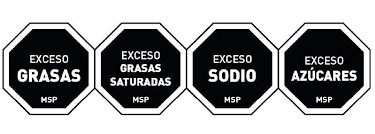
Nutritional warnings have gained popularity, particularly in the region of the Americas, to facilitate the identification of products with excessive content of nutrients associated with non-communicable diseases and encourage healthier food choices. Although warnings have been shown to be effective, an in-depth understanding of the reasons why some consumers do not use them is still lacking. The aim of the present work was to explore self-reported use of nutritional warnings and to identify the reasons for not considering nutritional warnings for making food purchase decisions after policy implementation in Uruguay. A non-probabilistic sample of 858 Uruguayan participants was recruited using an advertisement on Facebook and Instagram. Through an online survey, self-reported use of nutritional warnings was asked using a closed-open ended questions. Participants who reported not considering warnings to make their purchase decisions were asked to explain the reasons why using an open-ended question. Responses were analysed using deductive coding, based on the Behavioural Drivers Model. Thirty seven percent of the participants stated that the warnings had not influenced their purchase decisions. Motives for not being influenced by the warnings were related to lack of interest, attitudes, lack of perceived self-efficacy, cognitive biases and limited rationality when making purchase decisions. In addition, structural barriers, such as availability, cost and trust in the food industry also emerged from participants’ responses. Strategies to encourage the use of warnings should include communication campaigns and policies to address structural barriers related to the perceived availability and affordability of healthy foods.
Article/Paraguay – Knowledge of the adult population about food nutritional labeling

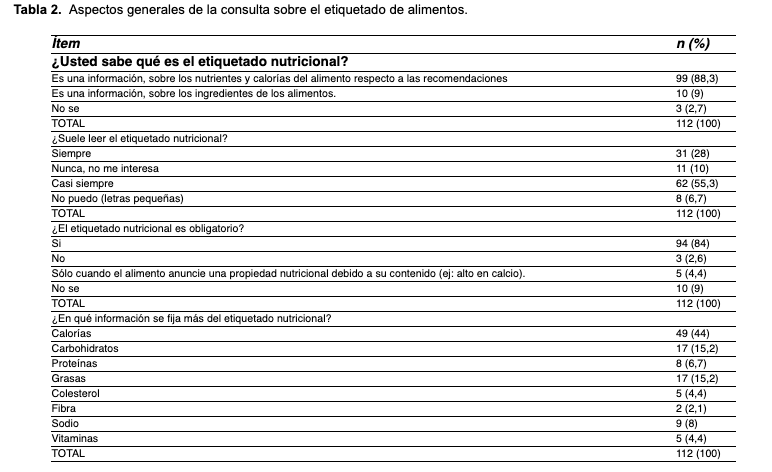
Consumers often report difficulties in interpreting the quantitative information contained in the nutritional labels of foods. The objective was to study the main knowledge about food labeling that the adult population of Paraguay has incorporated in the period of August 2021. This is a cross-sectional descriptive observational study in which male and female adults between 18 and 60 years old consumers of foods with nutrition labelling were evaluated. Sociodemographic data and knowledge about nutritional labeling of food was collected through an online survey with the Google forms tool. Seventy three percent was female, the average age was 36.9 years, 57.1% lived in Greater Asunción, 49.1% had a university education level, and 37.5% were health professionals. The general aspects about nutritional labeling revealed that 88.3% knew the concept, 55.3% said that they read it almost always, 84% knew that it was mandatory and 44% paid more attention to calories. When evaluating general knowledge, 91% knew the difference between expiration and preferential consumption, 71.4% knew the concept of indicative quantities, 62.5% knew which are the less healthy fats, and 71.4% correctly answered the concept of light food. The survey respondents had an adequate general knowledge about nutrition labeling, however, there was a considerable percentage of individuals who did not know the basic concepts, for which consumer-focused nutrition education interventions should be carried out.

Article – Study on the regulatory process for the labeling of ultra-processed foods: the Colombian case

This journal article describes from a characterization of Law & Journalism the scenario of institutional weakness
experienced by Colombia regarding the labeling of ultra-processed foods, evidencing a field where there were no
rules of the game, which had a structural impact on the regulatory system, that is, a section of the regulatory
framework (legal and regulatory) focused on protecting the right to health, safeguarding consumer sovereignty and,
in short, satisfying the general interest of a population immersed in a context of market failures. In this sense, this
article proposes a preliminary review from a narrative and theoretical-descriptive perspective and through a historical
account, if we consider the recent changes in the Colombian normative-regulatory model.

Article – Reformulation of Top-Selling Processed and Ultra-Processed Foods and Beverages in the Peruvian Food Supply after Front-of-Package Warning Label Policy

Front-of-package warning label (FOPWL) policies incentivize the food industry to reduce the content of regulated nutrients in products. We explored changes in the content of nutrients of concern (sugar, saturated fat, trans fat, and sodium) and the percentage of products in the Peruvian food supply that would carry a FOPWL before and after Peru’s implementation of FOPWLs. Longitudinal data on the top-selling foods and beverages (n = 94) were collected at three time points: three months before the implementation of the policy, four months after, and two years after. Using the nutritional information declared on products’ labels, we compared quantities of nutrients of concern and the percentage of foods that would carry a FOPWL at each time point. Between the first and the third data collection, a decrease in the median sugar content of beverages was observed (from 9.0 to 5.9 g/100 mL, p = 0.005), accompanied by an increase in the use of nonnutritive sweeteners. This change drove the reduction of the percentage of beverages that would carry a FOPWL (from 59 to 31%, p = 0.011). Among foods, decreases were observed in saturated fat (from 6.7 to 5.9 g/100 g, p = 0.002). The percentage of foods that would carry a FOPWL according to their nutritional profile declined from before to after implementation of the policy (from 82 to 62%, p < 0.001). The study shows that the industry reformulated products in Peru after implementation of its FOPWL policy.

Article – Sweetener purchases in Chile before and after implementing a policy for food labeling, marketing, and sales in schools

Background

Chile’s landmark food labeling and advertising policy led to major reductions in sugar purchases. However, it is unclear whether this led to increases in purchases of nonnutritive sweeteners (NNS).

Objective

To assess the changes in NNS and caloric-sweetened (CS) products purchased after the law’s first phase.

Methods

Longitudinal data on food and beverage purchases from 2,381 households collected from January 1, 2015 to December 31, 2017 were linked to nutritional information and categorized into added sweetener groups (unsweetened, NNS-only, CS-only, or NNS with CS). Logistic random-effects models and fixed-effects models were used to compare the percentage of households purchasing products and the mean volume purchased by sweetener category to a counterfactual based on pre-regulation trends.

Findings

Compared with the counterfactual, the percentage of households purchasing any NNS beverages (NNS-only or NNS with CS) increased by 4.2 percentage points [pp] (95% CI 2.8 to 5.7; p<0.01). This increase was driven by households purchasing NNS-only beverages (12.1 pp, 95% CI 10.0 to 14.2; p<0.01). The purchased volume of beverages with any NNS increased by 25.4 mL/person/day (95% CI 20.1 to 30.7; p<0.01) or 26.5%. Relative to the counterfactual, there were declines of -5.9 pp in households purchasing CS-only beverages (95% CI -7.0 to -4.7; p<0.01). Regarding the types of sweeteners purchased, we found significant increases in the amounts of sucralose, aspartame, acesulfame K, and steviol glycosides purchased from beverages. Among foods, differences were minimal.

Conclusion

The first phase of Chile’s law was associated with an increase in the purchases of beverages containing NNS and decreases in beverages containing CS, but virtually no changes in foods.