Panama – Deputies propose to discuss front labeling in the first debate of the Commission on Labor, Health, and Social Development

The bill 402, which establishes the mandatory nutritional labeling on all food at the national level, is on the agenda to be discussed in the first debate, once the Labor, Health, and Social Development Commission is installed.

The initiative presented by Deputy Jairo Salazar aims to promote healthy eating and protect the health of the population by supporting the national health system.

The project presented in the past legislative period was subjected to a consultation process with all sectors involved in the matter, which included the participation of the Ministry of Health.

According to the regulation, the established provisions are intended to be applicable to all products produced or imported in the country and intended for human consumption.

According to Deputy Salazar, his proposal will be beneficial, as it could be an effective tool to help consumers choose healthy foods, making the most of the potential of nutritional labels and health claims to improve their health.

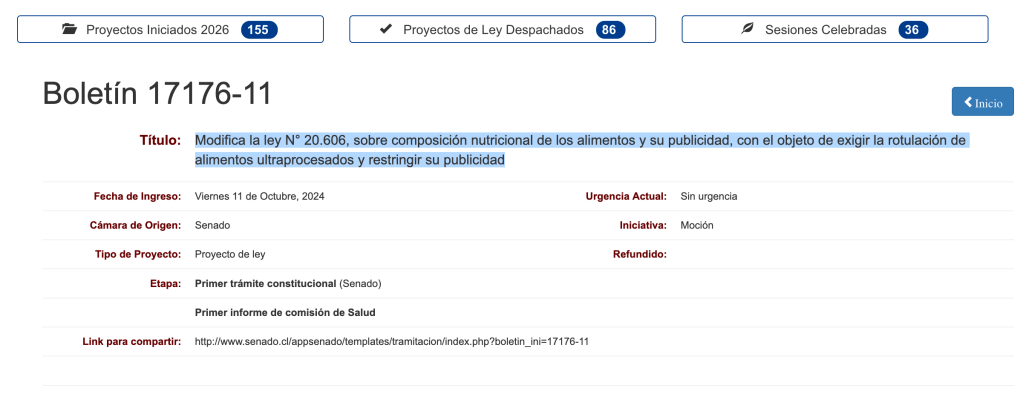
Chile – Senators propose amending Law No. 20,606, on the nutritional composition of foods and their advertising, with the aim of requiring the labeling of ultra-processed foods and restricting their advertising

The week of August 3, the Health Commission would begin voting on the amendments, most of which would focus on the definition of these types of products.

The Commission agreed to present indications by Thursday, July 30, after which they will proceed to vote on the proposed amendments. The idea is to legislate promptly considering the high rates of overweight and obesity in the population, and their incidence in non-communicable diseases.

The motion authored by Senator María José Gatica and sponsored by Senator Ximena Ordenes and Senators Juan Castro and Alejandro Kusanovic, as well as former Senator Francisco Chahuán, seeks to label as ultra-processed those food products that contain more than five ingredients formed from chemical-industrial processes.

Moreover, the initiative states that the advertising of these products cannot be directed at children under fourteen years old. It establishes that advertising will be understood as any form of promotion, communication, recommendation, propaganda, information, or action intended to promote the consumption of a specific product, including that developed on digital platforms and paid internet ads.

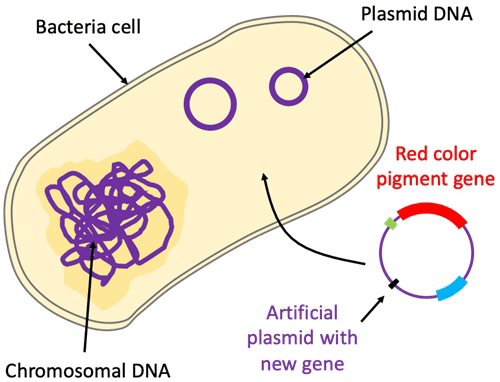
Argentina – New regulation approved for the commercialization of genetically modified microorganisms

The Secretariat of Agriculture, Livestock, and Fisheries of the Ministry of Economy of the Nation updated the procedures for the submission and evaluation of applications related to Genetically Modified Microorganisms (GMM in Spanish), thru new regulations that unify and simplify the currently existing procedures.

The measure, thru Resolution No. 96/2026, establishes a Regulation and a Single Form, which organizes the procedures into three types: authorization to conduct trials or experimental activities under controlled conditions with viable GMOs; risk assessment as a prerequisite for requesting commercial authorization; and determination of the absence of viable GMOs in products derived from GMOs.

The new framework replaces the previous scheme, which included separate procedures for the experimental stage and for the pre-commercial authorization evaluation. This new update allows for the organization of processes, avoids information duplication, reduces administrative burdens, and facilitates the submission of applications by developers, researchers, companies, and institutions within the scientific and technological system. Likewise, the new scheme reduces the duplication of required information and simplifies the application submission process, adapting to the different types of users and evaluation stages.