Brazil – New law defines the minimum percentage of cocoa in chocolates

The Government has published Law No. 15.404/2026, which establishes the criteria for the production, classification, and labeling of cocoa-derived products in Brazil.
Chocolates marketed in Brazil must comply with minimum percentages of cocoa content in their composition, as required by law. Additionally, manufacturers will be required to clearly indicate the amount of this ingredient on the labels of products sold in the country, whether they are of national or imported origin.
One of the fundamental advances introduced is the mandatory requirement to indicate the total percentage of cocoa in the product on the label. According to the law, this indication must appear on the front of the packaging, occupying at least 15% of the surface and being displayed with sufficient prominence to ensure its legibility.

The information will be presented in the format “Contains X% cocoa,” in accordance with the following percentages:

  • Cocoa powder: minimum of 10% cocoa butter.
  • Powdered chocolate: minimum of 32% total cocoa solids.
  • Milk chocolate: minimum of 25% total cocoa solids and 14% total milk solids or dairy derivatives.
  • White chocolate: minimum of 20% cocoa butter and 14% total milk solids.
  • Chocolate drink mix or coating: minimum of 15% cocoa solids or 15% cocoa butter.

The regulation will come into effect within 360 days, during which the industry must adapt to the new requirements.
Jamaica – BSJ proposes New Technical Standards for Alcoholic Beverages

The Bureau of Standards Jamaica (BSJ) announces a public consultation on several draft technical standards related to alcoholic beverages

  • DJS 211: 2026 Draft Jamaican Standard Specification for Liqueurs and Cordials public comments final

  • DJS 214:2026 Draft Jamaican Standard Specification for Wines


DJS 297: 2026 Draft Jamaican Standard Specification for Gin


DJS 377: 2026 Draft Jamaican Standard Specification for Aromatized/ Alcoholic Mixed/Ready to drink beverages


DJS 378_2026 Draft Jamaican Standard Specification for Vodka


DJS 379: 2026 Draft Jamaican Standard Specification for Brewed Products


DJS 380: 2026 Draft Jamaican Standard Specification for Whiskey


DJS 381: 2026 Draft Jamaican Standard Tequila

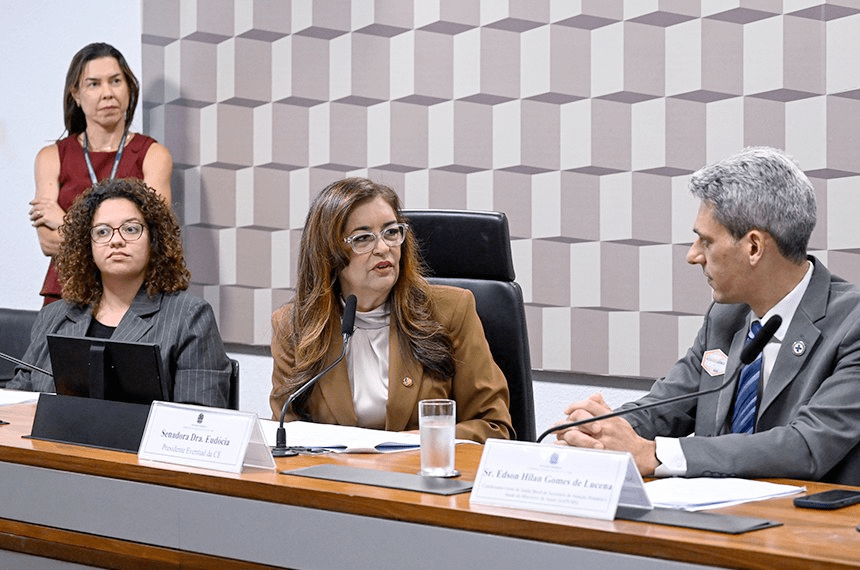
Brazil – Experts testify before the Senate Committee on the importance of imposing restrictions on ultra-processed foods in schools

The hearing was convened by the Senate Committee on Education and Culture to discuss Bill 4,501/2020, which prohibits the sale of ultra-processed foods, fried foods, and products with hydrogenated fats in school cafeterias. The author of the bill is Senator Jaques Wagner (PT-BA).

The bill by Jaques Wagner stipulates that schools must offer at least three options of healthy snacks per day, prioritizing fresh and organic foods, fruits, vegetables, and regional products.

Bruna Pitasi Arguelhes, representative of the Ministry of Development and Social Assistance, Family, and Fight Against Hunger, advocated for the adoption of selective taxes on ultra-processed foods and the limitation of marketing actions related to these products.

In their assessment, the current regulations are weak and facilitate access for children and adolescents to ultra-processed foods, especially in the school environment.

Bruna is a technical analyst of social policies at the National Secretariat of Food and Nutritional Security of that ministry. According to the data she presents (see the slides), there are school cafeterias in more than 90% of private schools and in approximately 22% of public schools.

According to her, regulating the sale of food in schools could prevent more than 300,000 cases of obesity in ten years. The studies she cited indicate that where laws exist that restrict the sale of unhealthy foods in school cafeterias, adolescents are 11% less likely to develop obesity.

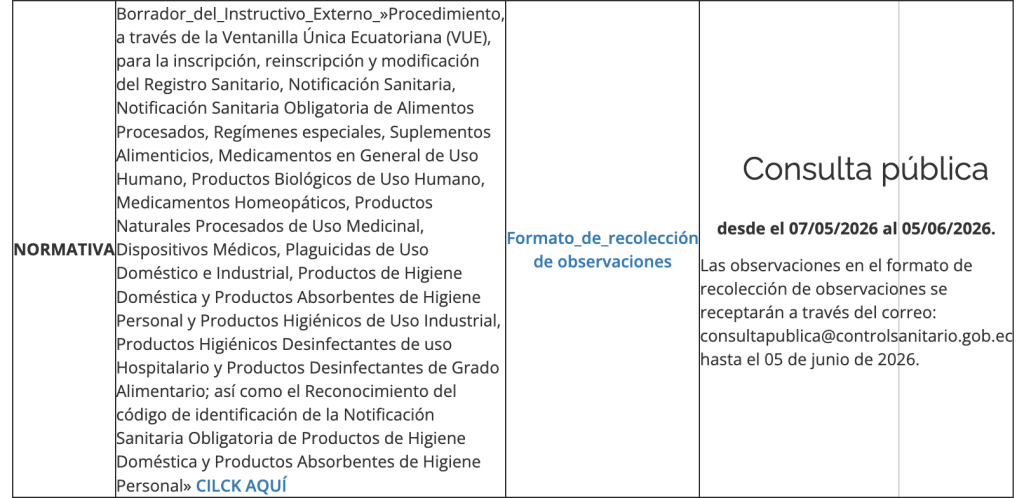
Ecuador – In consultation, new draft of the External Instruction for the Ecuadorian Single Window (VUE), for the registration of the Health Registration of Processed Foods, Special Regimes, Dietary Supplements

The National Agency for Regulation, Control, and Health Surveillance (ARCSA in Spanish) announces the public consultation of the Draft External Instruction “Procedure, thru the Ecuadorian Single Window (VUE), for the registration, re-registration, and modification of the Sanitary Registry, Sanitary Notification, Mandatory Sanitary Notification of Processed Foods, Special Regimes, Dietary Supplements, General Use Human Medicines, Biological Products for Human Use, Homeopathic Medicines, Processed Natural Products for Medicinal Use, Medical Devices, Domestic and Industrial Pesticides, Domestic Hygiene Products and Personal Hygiene Absorbent Products and Industrial Use Hygienic Products, Hospital Use Hygienic Disinfectants, and Food Grade Disinfectants; as well as the Recognition of the identification code of the Mandatory Sanitary Notification of Domestic Hygiene Products and Personal Hygiene Absorbent Products.”

Comments will be accepted until June 5, 2026.

Brazil – National Health Surveillance Agency (Anvisa) approves the 8th edition of the Brazilian Pharmacopeia

The National Health Surveillance Agency (ANVISA in Portuguese) approved four Collegiate Board Resolutions (RCC) related to the Brazilian Pharmacopeia (FB). The regulations were reviewed at the 8th Public Meeting of the Collegiate Board in 2026.