México – Advertisers struggle to comply with labeling and advertising permits

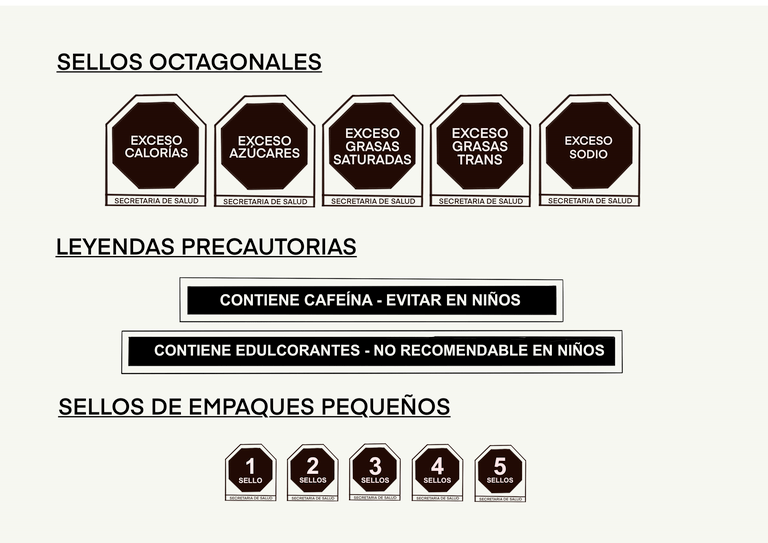
Mexico’s advertising industry faces new challenges as a result of the new front-end labeling regulation, which came into effect on March 8, and which requires advertisers to request advertising permits from the Federal Commission for Protection against Health Risks (Cofepris) to promote pre-packaged food and non-alcoholic beverages that include certain elements in the front-end labeling.

Luis López Linaldi, founding partner of the firm Solórzano Linaldi, explains that since that time, the labeling of prepackaged food and non-alcoholic beverages with excess calories, sugars, trans fats and sodium has been modified. Now, this front labeling system is introduced as a reference parameter to define whether or not certain restrictions apply to the advertising of food and non-alcoholic beverages.

The 3 main changes in the Regulation of the General Law of Health on Advertising

Advertising of pre-packaged food and non-alcoholic beverages must be congruent with the front labeling and, if applicable, include warning seals, precautionary legends, recommendation or acknowledgement statements.

The use of children’s characters, cartoons, celebrities, mascots or interactive elements in the advertising of pre-packaged food and non-alcoholic beverages that have warning seals and are directed to infants is prohibited.

The advertiser must obtain authorization before broadcasting the advertisement with warning seals on free-to-air television, pay TV, movie theaters, internet and other digital platforms.
Article/Paraguay – Reading, interpretation and use of nutritional labeling in adults in a neighborhood of Asunción

Introduction. Nutritional labeling informs the consumer about the type and content of nutrients, favoring the appropriate selection according to their needs or health conditions. Objective. Evaluate the reading, interpretation
and use of nutritional food labeling in the purchase decision of adults from the Villa Morra neighborhood of Asunción consulted in June 2018.

Materials
and methods. Cross-sectional descriptive study, with the application of a structured questionnaire through an interview, with questions about sociodemographic data, reading frequency, reasons for reading or not, use of nutritional labeling, content reviewed by the consumer, interpretation of the terms contribution and Percentage of Daily Value (%DV) and agreement with the implementation of front labeling.

Results. Of 100 interviewees, 73% reported reading (always and sometimes) the nutritional labeling, 48% of these use it for the selection and purchase of food and 75% of the general population you do not know or do not interpret the terms of portion and %DV. The reasons associated with reading were “concern about the health of their family” (36%), “being on a diet” (33%), and “curiosity” (23%); not reading was referred to for reasons such as “due to lack of time” (61.7%) and “because it is not well visible, it is very small” (28%); 91% think implementation of the front labeling of food as an alert method is necessary.

Conclusion. The reading of nutritional labeling is frequent, but its correct interpretation and use is not, which is why it is urgent to establish educational campaigns aimed at the population and implement front labeling to facilitate and speed up reading and interpretation.

Bolivia – SENASAG updates Food Product Labeling Regulations for Human Consumption

The National Service of Agricultural Health and Food Safety (SENASAG in Spanish) published by means of the ADMINISTRATIVE RESOLUTION Nº042/2023, the update of the Labeling Regulation of Food Products for Human Consumption. The update incorporates the implementation of the procedure for the use and issuance of certificates of approval of labels online and digital signatures.

Mexico – In the Senate, a bill is proposed to amend the General Health Law to include GMO labeling on food and beverages

In the Plenary Session of the Senate of the Republic, legislator Ana Lilia Rivera presented the initiative to reform articles 212 and 215 of the General Health Law, in order to incorporate in the content of the front warning labeling of food and non-alcoholic beverages, the indication of those products that contain components or ingredients derived from genetically modified organisms.

The Senator argued that the traditional forms of production, marketing and consumption of native corn, which are part of Mexico’s food and cultural heritage, have been gradually displaced to make way for large-scale industrial agricultural production systems, based on the use of genetically modified seeds to make plants resistant to pests and tolerate herbicides, such as glyphosate, producing foods that, even when processed, contain this type of highly dangerous agrochemicals.

Canada – List of Permitted Emulsifying, Gelling, Stabilizing or Thickening Agents (Lists of Permitted Food Additives)

Date modified: 2023-03-29

This List of Permitted Emulsifying, Gelling, Stabilizing or Thickening Agents sets out authorized food additives used to form or maintain a uniform emulsion of two or more phases in a food, impart a particular food texture through the formation of a gel, maintain a uniform dispersion of two or more ingredients in a food, or modify the viscosity of a food. It is incorporated by reference in the Marketing Authorization for Food Additives That May Be Used as Emulsifying, Gelling, Stabilizing or Thickening Agents.