Guatemala – Congress of the Republic promotes a roadmap aimed at strengthening regulatory frameworks and public policies related to the right to food

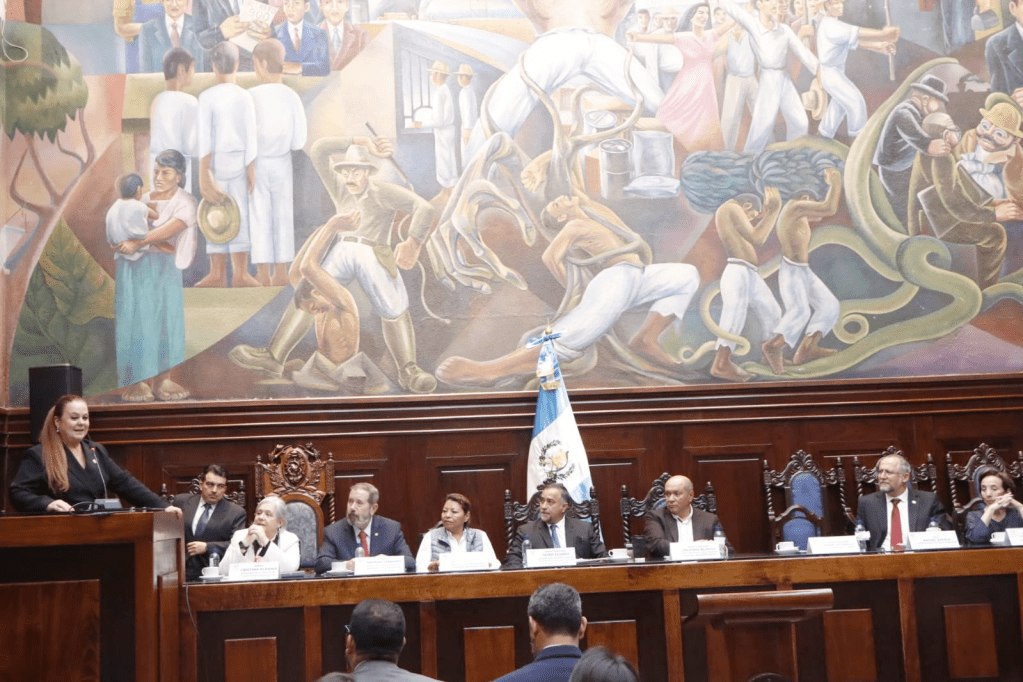
In the Congress of the Republic, the I National Dialog #FoodFirst was held, a space that brought together parliamentarians, ministers and deputy ministers, public institutions, academia, and international cooperation to position food as a priority on the country’s political and social agenda.

The initiative, driven by the Parliamentary Front Against Hunger in Guatemala, continues the commitments made after the signing of the #FoodFirst 2025 Pact, promoting a roadmap aimed at strengthening regulatory frameworks and public policies related to the right to food.

One of the main highlights of the meeting was the presentation of a bill for the construction of kitchens in public educational centers. The proposal seeks to improve the conditions in which food is prepared, contributing to the strengthening of school feeding programs from a perspective of safety, dignity, and sustainability.

Article: The right to food: What do the constitutions of America and the Caribbean say?

Introduction:

Many American and Caribbean countries consider the right to food as constitutional right. Chile does not have this explicit right in the Constitution.

Objective:

To describe comparatively how the right to food is explicit in the constitutions of American and Caribbean countries, generating inputs for those countries that do not have this constitutional right, such as the case of Chile.

Data sources:

This research was carried out on platforms: Food and Nutritional Security (SAN-CELAC), Right to Food in the World (FAO) and Constitute Project which presents constitutions of the world.

Revision method:

A revision was made of all available constitutions of American and independent Caribbean countries, dependent territories and overseas departments in the Region. Subsequently, in those countries which explicitly consider the right to food in constitutional texts, a review of general characteristics and right to food-associated concepts, suggested by FAO, was carried out. The review was carried out between June and September 2020.

Results:

Of the total of countries reviewed (n= 42), 40.5% presented the right to food in constitutional text. The most frequently associated concept was food security.

Conclusion:

Most of the revised constitutions accompany the right to food with food safety, availability and accessibility characteristics, and include kinds of judicialization, concepts that should be incorporated into the new Magna Carta of Chile.