Nutrient profiling is the science of classifying or ranking foods according to their nutritional composition, for reasons related to disease prevention and health promotion. To be effective, policies such as front-of-pack nutrition labeling (FoPNL) must have an adequate nutritional profile model, since it will determine which products will be eligible to receive a FoPNL. This study aimed to determine the percentage of packaged food and drink products available in Brazil that would be subject to FoPNL under two different legislations: Brazilian and Mexican. This is a cross-sectional study in which we collected information on food products (photos of the ingredients list, the front label, the barcode, and the nutrition facts table) from one of the largest stores of a supermarket chain in the city of Belo Horizonte-MG, Brazil, from March to May 2021 (~6 months after the publication of the Brazilian legislation about FoPNL and a year and a half before the legislation came into force). The products were classified in relation to the BNPM (added sugars, saturated fats, and sodium) and the MNPM (energy, free sugars, saturated fats, trans fats, sodium, non-sugar sweeteners, and caffeine).
nutritional profile
Article – Brazil: Evaluation of the labeling and nutritional profile of processed foods intended for children
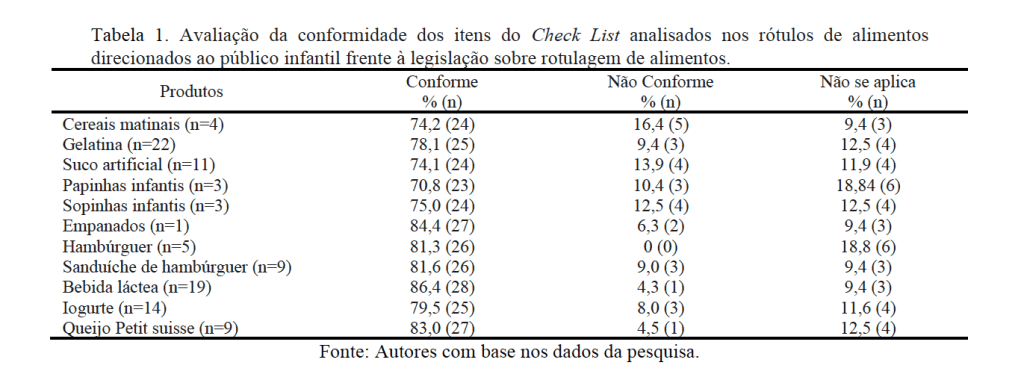
The offer of processed foods, especially the ultra-processed, is not recommended in the first years of life, since the consumption of these foods is associated with anemia, overweight and food allergies. The objective of this study was to evaluate the compliance of labels of processed foods intended for children with the Brazilian legislation in force and to analyze the levels of sodium, free sugars, sweeteners and total, saturated and trans fats described on the label. The nutrients were evaluated based on the PAHO Nutritional Profile Model. The results of the evaluation showed that the labels showed some non-compliance with the standards required by current legislation on food labeling.
 infoAlimentario