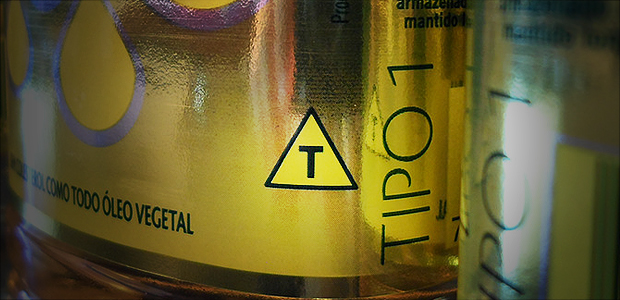
Peru – Consumer Defense Commission warns of risk in labeling of foods with GMOs

The president of the Consumer Defense Commission and Regulatory Bodies of Public Services in Congress, Katy Ugarte, expressed her strong opposition to the proposal that would limit information regarding the presence of genetically modified organisms in packaged foods, arguing that this measure would undermine consumers’ right to receive clear and comprehensive information.

During the first ordinary session, the commission’s president voiced her concerns regarding the proposal included in Ministerial Resolution No. 010-2025-PCM, which suggests mandatory labeling only when the content of genetically modified components exceeds 3%. “The Consumer Protection and Defense Code, in its article 37, stipulates that all foods containing genetically modified organisms must indicate this on their label, without exceptions or thresholds. We cannot allow this right to be restricted,” the legislator emphasized.


Brazil – IDEC files appeal against withdrawal of labeling on foods with a percentage less than or equal to 1% of GMOs

The Institute for Consumer Protection (IDEC in Portuguese) filed an appeal before the Supreme Federal Court against the decision that establishes that the identification on the label of foods with a percentage less than or equal to 1% of GMO in their composition is unnecessary, adopted by the 2nd Chamber of the Superior Court of Justice (STJ), in October of last year.

The institute maintains that the decision is contrary to Brazilian legal principles and violates fundamental rights, as well as constitutional norms of consumer protection and human dignity, essential to the Brazilian economic and social order. “The Federal Constitution enshrines the rights to good citizenship, human dignity, pluralism, self-determination, information, healthy food, food security and sovereignty, health, equality, culture and tradition and a balanced environment, rights that are not negotiable and whose decisions are contrary,” the document states.

The appeal requests that the STF reinstate the decisions taken by the TRF-1 (Federal Regional Court of the 1st Region) that prohibited the Federal Union from allowing or authorizing the marketing of any food containing GMOs (Genetically Modified Organisms), without express reference to that information on its labeling, regardless of the percentage, and that forced it to take measures to inspect and withdraw those products that do not comply with the decision.

Peru – Indecopi proposes draft technical regulation for labeling of transgenic foods

The National Institute for the Defense of Competition and the Protection of Intellectual Property (INDECOPI in Spanish) published on its website the draft Supreme Decree that approves the Technical Regulation on Labeling of Genetically Modified Foods, as provided by a Ministerial Resolution of the Presidency of the Council of Ministers.
The purpose of the draft Technical Regulation is to establish the rules for the labeling of packaged foods containing genetically modified components, whether domestic or imported, in order to protect consumers’ right to information. According to the proposal, products that include genetically modified components must indicate on their labeling the phrases: “Genetically Modified Food” or “GM Food”. For packages smaller than 10 cm², the acronym “GM” may be used.
Its provisions will apply to producers, manufacturers or importers of packaged foods that fall under the tariff subheadings detailed in Annex 1 of the technical document. The draft regulation seeks to ensure that consumers can make informed and responsible purchasing decisions.

Brazil – GMOs should only appear on the label if they represent 1% of the product

Information on the use of genetically modified (transgenic) ingredients only needs to appear on the product label if these represent at least 1% of the total.

The conclusion is from the 2nd Panel of the Superior Court of Justice, which concluded that the limit, imposed in article 2 of Decree 4,680/2003 , is compatible with the Brazilian legal system.

With this, the panel granted the special appeal filed by the Union and the Brazilian Association of Food Industries (Abia) to overturn a ruling by the 1st Region Federal Regional Court that required this labeling in all cases.

The case concerns a public civil action filed with the aim of prohibiting the Union from authorizing or permitting the marketing of any food, packaged or in natura , that contains GMOs without express reference to this information on its labeling.

Panama – National and International Public Consultation to Review the Content of the Draft Resolution on Genetically Modified Foods

The Ministry of Health published a National and International Public Consultation to Review the Content of the Draft Resolution on Genetically Modified Foods.
The objective of the Ministerial Resolution is to regulate Law 48 of August 8, 2002, which creates the National Commission of Biosafety for Genetically Modified Organisms and dictates other provisions.
The Law establishes and coordinates the policies of the Panamanian State regarding the regulation of the management of genetically modified organisms and their derivatives and products containing them, in order to prevent risks and minimize impacts on the environment, biological diversity, human health and agricultural production that may be caused as a result of activities carried out with these organisms.