Mexico – Ministry of Economy has postponed the third phase of the front labeling of food products

The Ministry of Economy (SE in Spanish) has postponed the implementation of the third phase of front labeling for food products until 2028, which was originally scheduled to commence on January 1st. The reasoning provided was to “avoid generating negative economic impacts on the inputs that make up the food baskets of various social assistance programs,” despite the fact that the labels do not lead to an increase in product prices.

In an agreement published today in the Official Journal of the Federation (DOF in Spanish), the agency led by Marcelo Ebrard Casaubón stated that, due to their characteristics, the products included in the food baskets of social programs “are not susceptible to reformulation” and represent “nutrient-dense foods” for the “approximately over 9 million” beneficiaries of these programs.

Mexico – Secretary of Public Education defends front labeling: helps to make healthier food choices

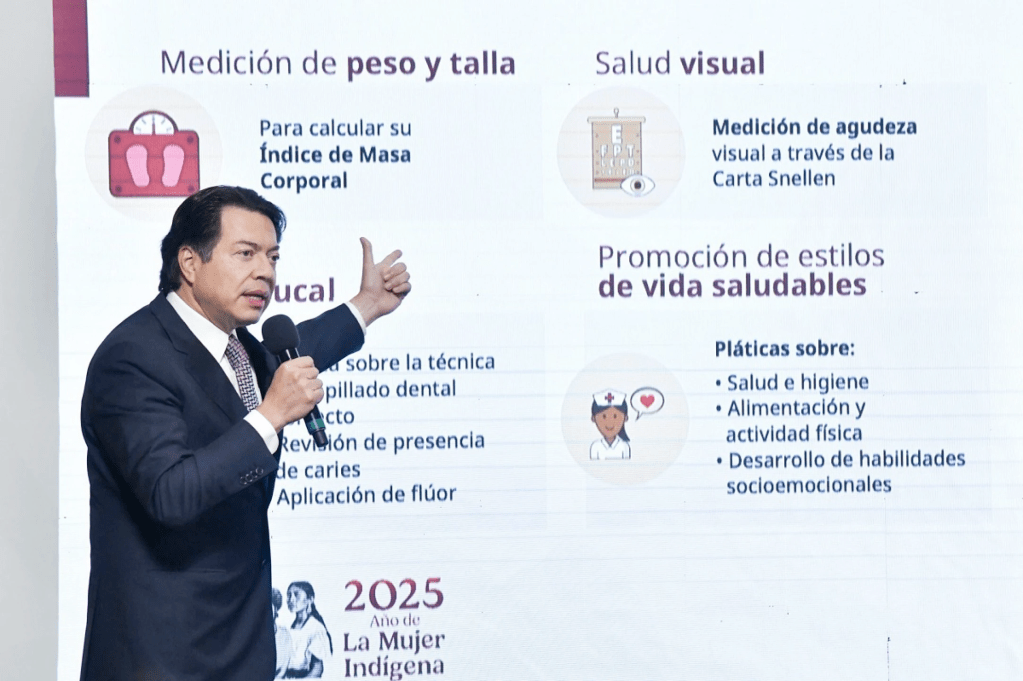
The Secretary of Public Education, Mario Delgado Carrillo, urged Mexican school communities and families to learn about the front labeling of processed foods, a key tool to choose healthier options and reduce diseases.

The recommendation is part of the “Live healthy, live happy” campaign, promoted by President Claudia Sheinbaum Pardo, whose goal is to form the healthiest generation in the country’s history.

Costa Rica – Bill on Front Labeling with Nutritional Warnings for Food Products and Beverages Reintroduced in the National Assembly

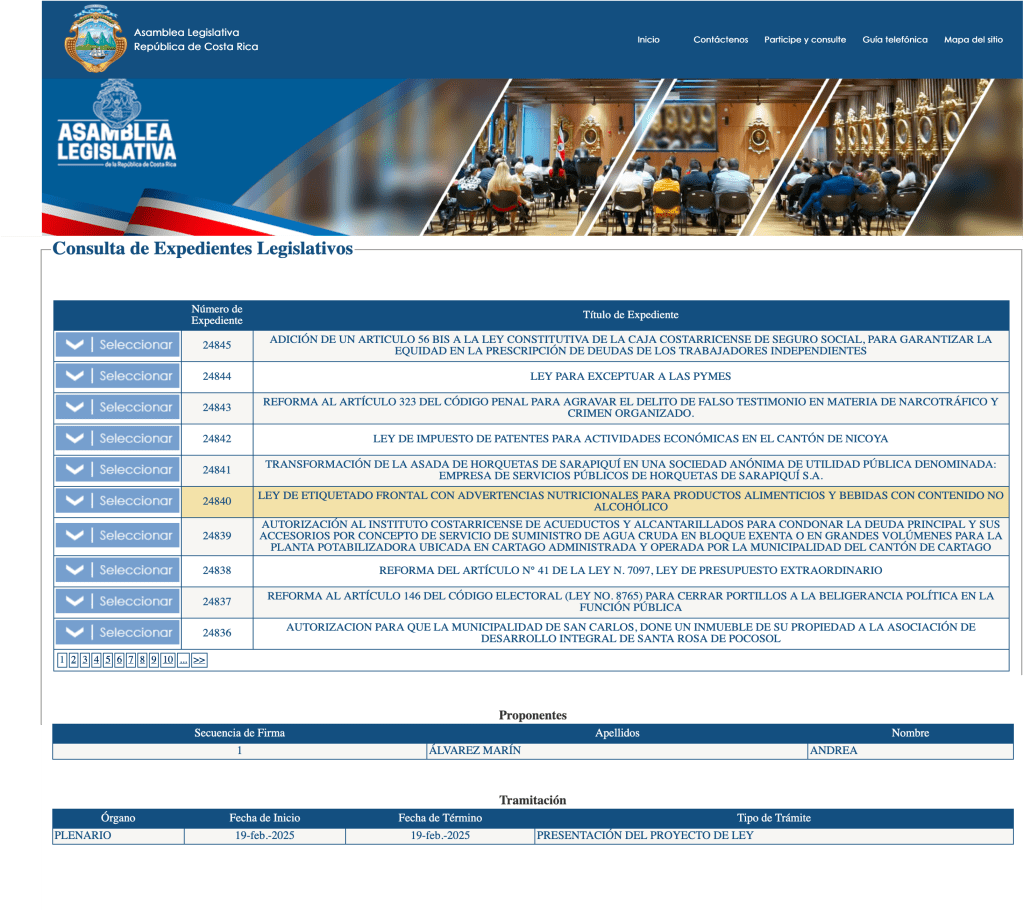
On the same day that Deputies of the Legislative Assembly of Costa Rica sent to the archive File No. 23,861, on the draft Law on Front Labeling with Nutritional Warnings for Food Products and Beverages with Non-Alcoholic Content, the deputy of the National Liberation Party, Andrea Álvarez, again presented the draft law to include warnings on the nutritional labeling of food products and non-alcoholic beverages. The initiative, now processed under file 24.840, defends the use of front seals or labels that allow citizens to identify products with a high content of calories, sugars, sodium or fats. It also seeks to warn about the use of sweeteners.

Dominican Republic – Dominican Healthy Organization presented observations on the resolution on Front Labeling of Foods

The coalition Dominicana Saludable presented details of the process and content of the draft resolution on Front-End Nutritional Warning Labeling (EFAN in Spanish) that is being managed by the Ministry of Public Health.
The entity informed that the EFAN resolution project has been in process for more than two years and that so far we do not have a final document, much less an official regulation.
It is worth noting that this is the closest we have been to the EFAN Resolution, since last Monday the 13th was the deadline for the public hearing to propose the changes that the public considered important.
We hope that the official document will be released as soon as possible, although we know that strong interests linked to the food industry are pressuring so that this resolution does not come out and if it does come out that it does not comply with the standards established by the Pan American Health Organization and other entities in the Region that have made their recommendations to the Ministry of Health.

Mexico – Cofepris recognizes Supreme Court decision in favor of front labeling on food and beverages

The Federal Commission for the Protection against Health Risks (COFEPRIS in Spanish) recognizes the decision of the Supreme Court of Justice of the Nation (SCJN Spanish) to reiterate the constitutionality of the provisions that regulate the front labeling for prepackaged foods and non-alcoholic beverages, to indicate products that exceed the maximum limits of energy content, added sugars, saturated fats, sodium and other critical nutrients and ingredients established by such provisions.

In this sense, the plenary of the highest court of the country determined that front labeling fulfills a constitutionally valid purpose, by inhibiting or discouraging the consumption of certain foods to avoid chronic non-communicable diseases; to make effective the right to nutritious, sufficient and quality food, as well as to protect the right to health of the population.