Brazil – Anvisa, the Ministry of Health, and PAHO hold an event on monitoring food regulation in Brazil

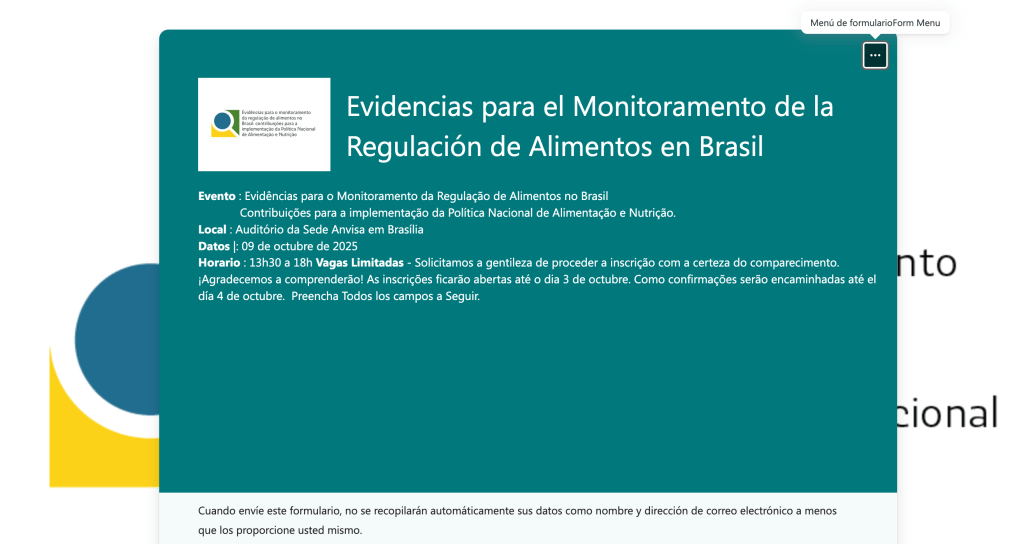
The National Health Surveillance Agency (ANVISA en Portuguese), the Ministry of Health, and the Pan American Health Organization (PAHO) will organize the event “Evidence for Monitoring Food Regulation in Brazil: Contributions to the Implementation of the National Food and Nutrition Policy. The meeting will be held in the Anvisa auditorium in Brasília on October 9, from 1:30 p.m. to 6:00 p.m.

The objective of the event is to discuss the advances and evidence related to monitoring food regulation in Brazil as a strategy to support the implementation of the National Food and Nutrition Policy (PNAN), with an emphasis on:

  • Presentation of the project “Monitoring Food Labeling in Brazil: Database Organization, Strategic Information Analysis, and Development of a National Monitoring System.”
  • Presentation of the characterization of food and beverage labels according to the NOVA classification (which divides foods into four categories based on the level of industrial processing they have undergone: natural or minimally processed foods, processed culinary ingredients, processed foods, and ultra-processed foods).
  • Presentation of study results on restricting the use of industrially produced trans fats in foods to support Anvisa’s Regulatory Outcome Assessment (ARR) on the topic.

Argentina – Authorities continue to modernize food regulation for international trade

The Revenue and Customs Control Agency (ARCA in Spanish) has added Resolution General 5731/25, which incorporates the National Single Window Regime for Foreign Trade in Argentina (VUCEA in Spanish) to include the import notice and the import authorization for food products from the National Institute of Foods (INAL in Spanish) – National Administration of Medicines, Foods and Medical Technology (ANMAT in Spanish).

The Regulatory Decree 35/2025, which amended the Argentine Food Code, enabled the modernization of procedures related to the import and export of food, thereby facilitating trade and enhancing public health protection.

The implementation of this decree was carried out through ANMAT Disposition No. 537/2025, which established new guidelines for obtaining import notices and authorizations, adapting the system to the challenges of the global context and technological advancements.

Among the main achievements are the simplification of procedures, significantly reducing the time and administrative steps required to import or export food, the recognition of international standards, integrating high surveillance sanitary certifications from countries such as Australia, Canada, the European Union, and the United States, among others, as well as the guidelines of the Codex Alimentarius.

Chapter: Food regulation around the world

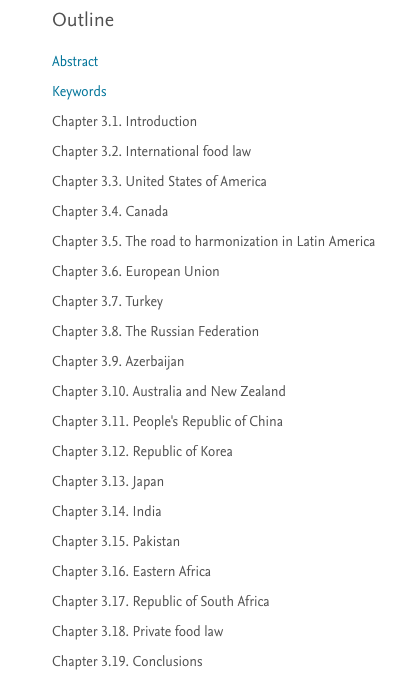
Against the background of global harmonization through scientific consensus, this chapter provides an inventory of approaches to the regulation of food and related issues in a variety of jurisdictions around the world. To each jurisdiction, a separate section is dedicated. Each section has been written by an author well versed in the jurisdiction at issue. The sections can be read as independent texts.

The Americas – Brazil: The main changes expected in food regulation in 2022

In both 2020 and 2021, there have been important changes and developments at the regulatory level for food and dietary supplements. Now, what other changes can we expect in 2022?

  • As of October 2022, frontal nutritional labeling must begin to be implemented in Brazil, in addition to changes in the nutritional table. The main challenge is to harmonize the nutritional labeling of the Mercosur bloc, of which Brazil is a part.

  • Another relevant issue, from which we can expect changes in 2022, refers to the area of food additives. The Mercosur bloc, which has been reviewing the harmonized regulation of food additives for years, is expected to reach an agreement and could make the update next year.