USA – FDA Works to Further Improve Nutrition, Reduce Diet-Related Chronic Disease with Dietary Guidance Statements on Food Labels

The U.S. Food and Drug Administration today issued draft guidance that provides food manufacturers with recommendations on how and when to use Dietary Guidance Statements on the label of food products to ensure the label statements promote good nutrition, provide greater consistency in labeling, and assist consumers in making informed choices. This guidance is part of the FDA’s overall goal to help reduce the burden of chronic disease and advance health equity through improved nutrition. 

Today’s eating patterns in the U.S. do not align with current federal dietary recommendations, which focus on the entirety of the diet and how foods and beverages work together to affect health. Dietary Guidance Statements are statements in food labeling which are based on key recommendations from consensus reports, such as the Dietary Guidelines for Americans, 2020-2025, that discuss how a food or food group can be a part of a nutritious dietary pattern. The statements may include symbols or pictures that convey to consumers that a food or a food group may contribute to, or help maintain, a nutritious dietary pattern.

Article – Information on food additives on food labels in Brazil: a critical analysis

Questions about the safety of food additives and their consumption have been raised in recent years. The increased exposure to these substances, either by intake of ultra-processed foods or by the broad use and combination of various categories of additives, may be related to higher risks to consumer health. This article comments on the results of a study that quantified and characterized food additives found on the labels of 9,856 packaged foods and beverages available in Brazilian supermarkets. The study adopted a field diary method to record and analyze nonconformities in the lists of ingredients. The objective of this article is to discuss the use of additives identified on the labels and the limitations of Brazilian legislation, which should guarantee the right to information and health.

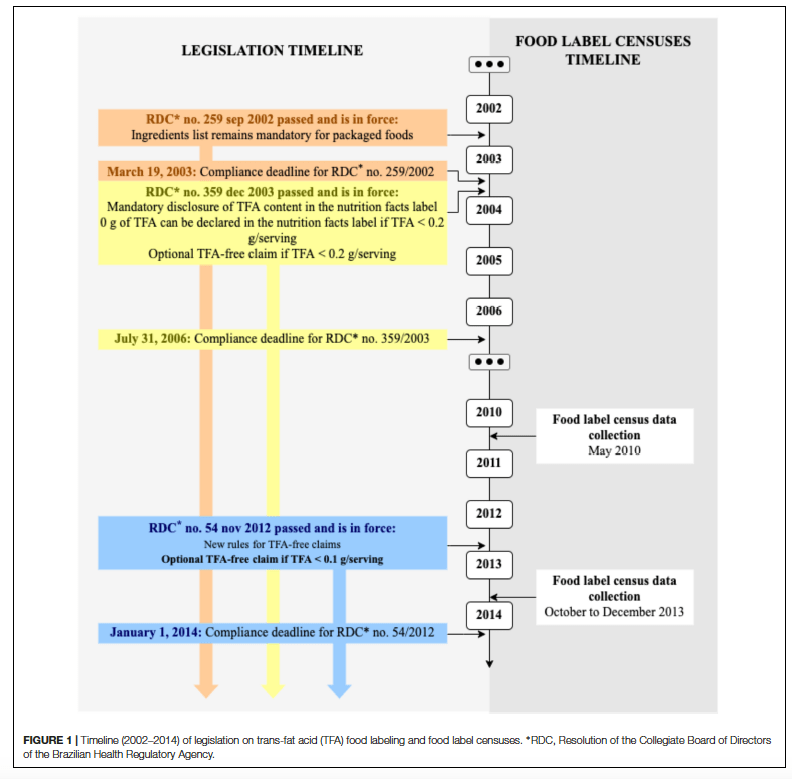
Article: Trans-Fat Labeling in Packaged Foods Sold in Brazil Before and After Changes in Regulatory Criteria for Trans-Fat-Free Claims on Food Labels

According to Brazilian and Mercosur legislation, food labeling is mandatory for all ready-for-sale foods packaged in the absence of the consumer. Labels must contain descriptive information on packaged foods and beverages, including the ingredients list and nutrition labeling ). The nutrition facts label must contain quantitative descriptions of energy value, carbohydrates, proteins, total fat, saturated fat, TFA, and sodium. Although TFA information is mandatory, current legislation has limitations that make it difficult for consumers to correctly identify TFA in food products by using food labels (. One such example is the possibility for manufacturers to declare a TFA content of 0 g in the nutrition facts label when the product contains less than or equal to 0.2 g of TFA per serving, without any distinction between naturally occurring TFA and i-TFA.

The Americas – Opinions: Food Labels As A Business Opportunity In The Caribbean: Thinking Outside The Package

Author: Daphne Ewing-Chow

Would a front of package food labeling system that indicates whether food items are high in “bad for you” nutrients such as sugar, fat, or sodium result in the mass reformulation of foods? Would it change consumer habits? And if it did, would this be good or bad for business?