By means of Joint Resolution 16/2025, the Secretariat of Health Management and Secretariat of Agriculture, Livestock Farming and Fishing repealed Article 1396 of the Argentine Food Code.
The Ministry of Health of Rio Negro requested the repeal of Article 1396 of the Argentine Food Code (CAA), since it is in conflict with the STANDARDS FOR FOOD LABELING AND ADVERTISING, Joint Resolution SPRyRS No. 149/2005 and SAGPyA No. 683/2005, which incorporates Resolution Grupo Mercado Común (GMC) No. 26/03 “Mercosur Technical Regulations for Labeling of Packaged Foods” and renders the aforementioned article null and void.
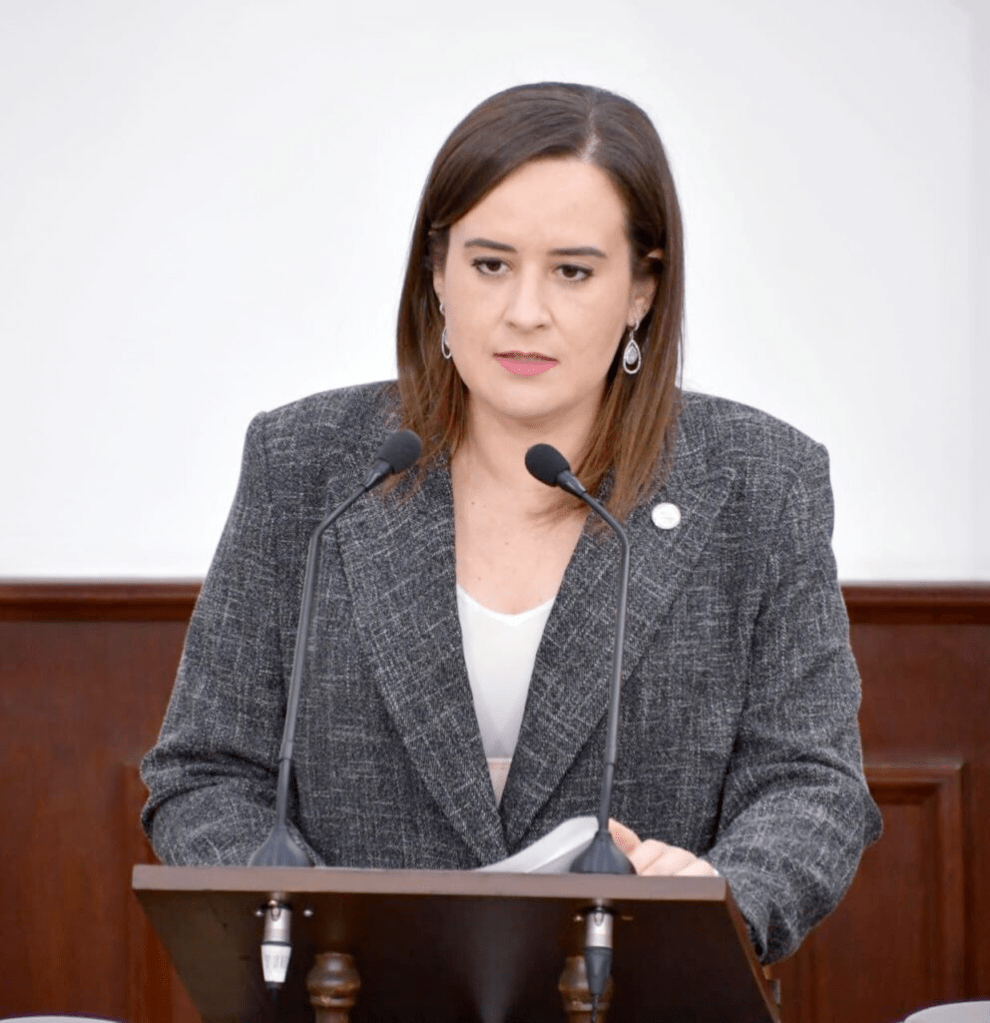
During a session of the State Congress, a resolution proposed by Deputy Beatriz Fraustro was approved, urging the Federal Commission for the Protection Against Sanitary Risks (COFEPRIS) to take the necessary actions and conduct studies to promptly address the ban on the additive known as erythrosine or E-127 in the production and sale of both domestic and imported food and beverages.
The legislator noted that the United States Food and Drug Administration (FDA) recently prohibited the use of Red 3 dye in food, beverages, and ingestible medications.
She elaborated that this additive is a synthetic dye derived from petroleum, commonly used to impart a bright cherry red color to food and beverages.
The National Health Surveillance Agency (ANVISA in Portuguese) has published Normative Instruction IN No. 356/2025, which amends Normative Instruction – IN 211/2023 on the technological functions, maximum limits and conditions of use of food additives and processing aids authorized for use in food.
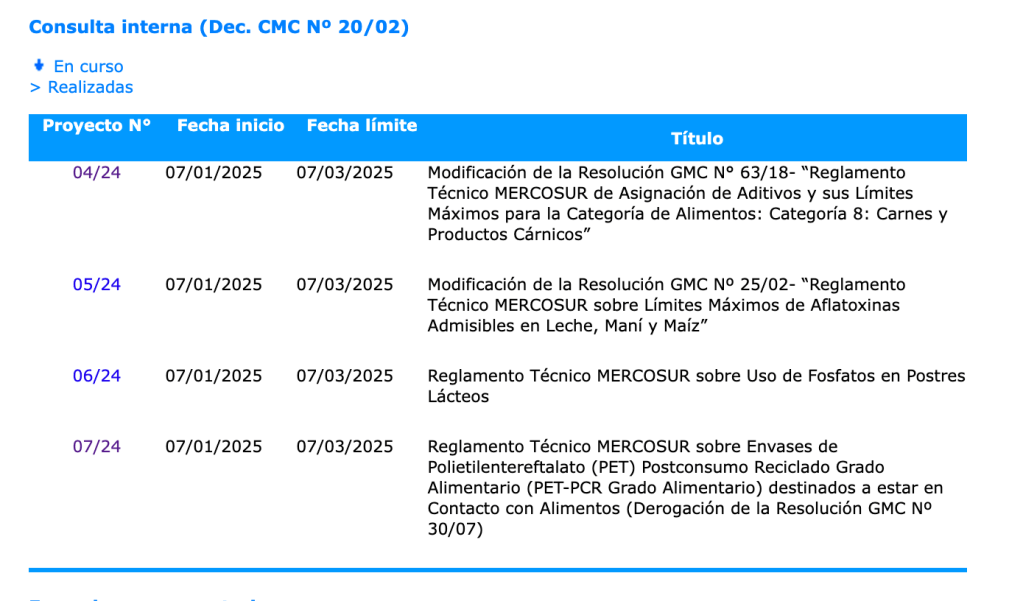
Modification of GMC Resolution No. 63/18 – “MERCOSUR Technical Regulation for the Allocation of Additives and their Maximum Limits for the Food Category: Category 8: Meat and Meat Products”.
Modification of GMC Resolution No. 25/02 – “MERCOSUR Technical Regulation on Maximum Allowable Limits of Aflatoxins in Milk, Peanuts and Corn”.
Reglamento Técnico MERCOSUR sobre Uso de Fosfatos en Postres Lácteos.
MERCOSUR Technical Regulations on Food Grade Recycled Postconsumer Polyethylene Terephthalate (PET) Containers (Food Grade PET-PCR) intended to be in Contact with Food (Repeal of Resolution GMC Nº 30/07).
In view of the pronouncement of the Food and Drug Administration (FDA) of the United States on the food coloring erythrosine, the General Directorate of Environmental Health and Food Safety (DIGESA in Spanish) specified that the studies received by the FDA on this ingredient also known as red 3, causes cancer in male laboratory rats exposed to high levels; but that there is no evidence to show that it causes cancer in humans. In this context, the FDA has given manufacturers that use this colorant in food until January 15, 2027, to reformulate their products. In a statement, DIGESA revealed that in Peru no foods with red colorant 3 have been registered that exceed the maximum limits established by the FDA and the international Codex Alimentarius. However, in view of the FDA’s preventive pronouncement and future evidence, DIGESA requests the food industry to start the gradual replacement of the red coloring by other natural additives, as appropriate, with a deadline until January 15, 2027. The Ministry of Health has ordered the National Institute of Health -INS/CENAN, to carry out an exhaustive review of the national and international scientific evidence and to analyze if there is additional evidence to date on this additive and its effects on health.


 infoAlimentario